
‘Barbie’: one big mess of virtue signaling that does nothing to address the issues it inanely raises

Barbie is a phenomenally crafted film. Not phenomenal in the way it looks – any company can inject millions into turning plastic backdrops and silly dancing into a fun film. (Note: the film cost a reported US$145 million to make, much of this funded by Mattel). No, Barbie is phenomenal in the fact that such a notorious company as Mattel has the proverbial balls to drop a totally tone-deaf, oversaturated, rottenly woke, tokenistic and patronising movie such as this on us in the midst of global recession and an ecological crisis that it’s played a major part in contributing to. It’s as if the producers are saying: Forget the escalating cost of living and the frightening state of our environment… Barbie will fix things for you, if only through two hours of mind-melting pink-paletted ridiculousness. Or they’re just having a laugh at everyone else’s expense.
Variety magazine praised director Greta Gerwig for bringing ‘a nuanced commentary’ on being a woman (yawn), while one loon named Jamie Jirak of ComicBook.com demanded Ryan Gosling receives an Oscar for his performance. For fuck’s sake, he’s playing a dimwitted doll. Variety, of course, is the bastion of all things U.S. and needs to push the nation’s desperate new capitalist agenda while Jirak could be forgiven for just being an idiot.
You’re going to want to go see the movie anyway, even if there is a slew of negative reviews to counteract the mindless praise from influencers who wouldn’t know iniquitous product placement if it landed in their laps. If anything, see it for the fun, colorful chaos that it is.
Indeed, Mattel has been so cunning in having even the heaviest of critics duped that it enjoyed a 24-hour monopoly on the internet – first placing an embargo on any official reviews until today. Then by cosying up to Silicon Valley’s top companies to totally take over the web. A few quick screenshots of last Monday night’s web-scrolling unveiled not one mention of the Barbie movie in any critical sense. Not even Rotten Tomatoes was able to have its usual ironic say and their ultimate review that came out today ends up being fully glowing.

_____________
Over the past two days, when many internet users Googled the word ‘Barbie’, they’d be greeted by a constellation of pink stars filling their mobile screens. That’s right. If something is looking non-credible on celluloid, give ’em the ol’ razzle-dazzle, glitter in their eyes, smoke and mirrors, and all that – that’ll deter them from realising the shitstorm the film actually is.
Something suss was certainly happening online before the official release of ‘Barbie’, and only big money like Mattel’s can buy that kind of media manipulation.

But to the film itself. Margot Robbie plays the titular doll, just six months after playing a character who’d snort coke and suck c*ck to get anywhere she could in Hollywood (Babylon). While Robbie plays the doll part perfectly, it’s not the first time Stepford stylings have cropped up in her oeuvre. There was Babylon, of course, with its over-the-top decadence (so long as her character played things sensitive and dumb); prior to that her role as the second wife to Wall Street swindler Jordan Belfort in The Wolf of Wall Street; and even I, Tonya which saw her play the part of white trash pawn, existing for the sake of others’ profiting.
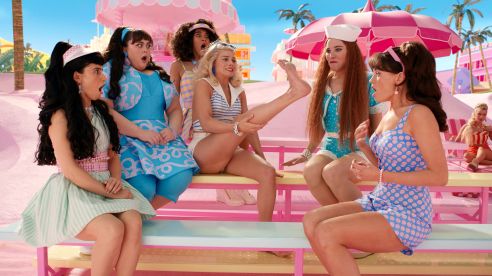
In Barbie, Robbie’s character’s biggest problem arises when she suddenly gets flat feet and can’t wear high heels. Everything is party-party, same-same in Barbieland right up until that moment when Barbie can’t fit into her shoes- and suddenly starts thinking about her own mortality. Sound familiar? The viewer could replace flat feet with swollen feet and the one-size message would remain the same.
The film starts out pleasantly enough, with an homage to Stanley Kubrick’s 2001: A Space Odyssey lending a kind of gravitas to the proceedings, only instead of a monolith with apes going gaga around it, Barbie is the gargantuan object of desire of a bunch of doll-loving little girls.
Helen Mirren is roped in to try and up the credibility stakes with a narration that goes on about girls once upon a time only being able to play with baby dolls, limiting their scope and ambition, that is until Barbie came along to show young women… yada yada yada, insert load of bollocky feminist crap here. Even Mirren can’t convince us that Barbie is a totem of feminist wonder. She’s just a toy – one that sells three units per second, and has made many a fat-cat millionaire fatter and richer.
Anyway, back to the movie’s plot, if you could call it that. Due to the sudden debacle of flat feet, Barbie goes on a journey to the ‘Real World’ in search of her owner who she suspects is going through a difficult time which is being channeled into her doll (hence leading to the flat feet situation). The break away from same-same party-partying suddenly makes way for a tidal wave of doll talk about the world’s socio-political and cultural problems. And this is when the woke ideals go into overdrive, with virtue signaling virtually all over the place and viewers not knowing what they’re listening to nor what to believe.
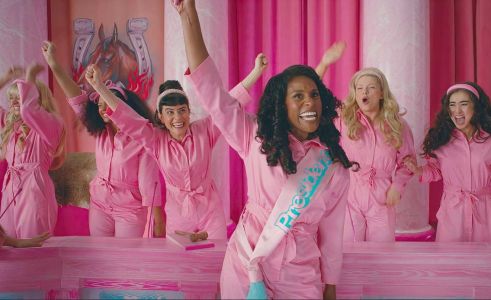
While there are high-five protests coming from everyone – from Latina Barbies and Black Barbies, to big-sized Barbies, even Barbies in wheelchairs – there is no clear message; in fact throughout the whole film nothing is clearly conveyed, leaving the viewer in a kind of haze. One big happy pink haze.
Nothing is brought up about the world’s eco problems – of which Mattel is one of the biggest creators of. There’s no extrapolation on the criminal activity of Ruth Handler – Barbie’s tax-dodging inventor. Nothing about the cocaine-laden womanising of John W. Ryan who was the guy responsible for Barbie’s design (the intitial design was inspired by a sex doll bought in Berlin). Nothing about the generational trauma Barbie has caused with her original impossible figure and conservative values.
But there’s plenty of chatter about what women can and cannot do (and don’t you ever say women cannot do anything because Barbie tells us that women can do anything even when she’s standing there in her heels doing nothing). Nothing but noise, noise, noise, and very silly dancing.
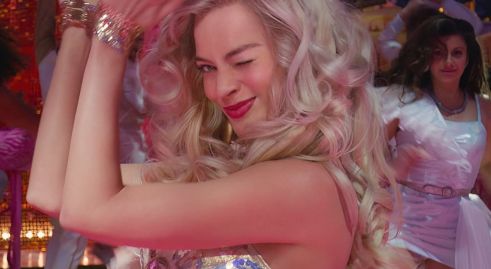
I did check in with a media colleague to ask what her teen daughter thought of the movie and she gave it a thumbs-up and four-and-a-half-stars out of five. But then, teens aren’t equipped with cultural studies and the knowledge of world socio-economic imbalance. They don’t hear of the sweatshop labour behind the toy manufacturing industry, don’t realise how bad those billions of plastic dolls are for the environment, nor understand the cultural chaos or generational trauma caused by one singular toy.
For decades, Barbie’s unrealistic proportions promoted unhealthy body ideals and perpetuated gender stereotypes. And when in the 1990s, Mattel began diversifying its doll range, the real reason lay more in the fact that it had to keep up with the times since the Spice Girls’ call for diversity was ruling the airwaves. There’s even a scene in the film where a Spice Girls song is played to visuals of a Barbie doll being bastardised (hair chopped, arms popped off, we’ve all been guilty of it…).
In the current economic climate, maybe save on not buying merch and see the movie instead. It’s stupid but fun. Kind of like Stereotypical Barbie, come to think of it!
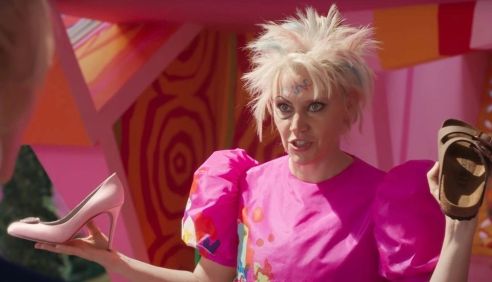
In the film, when Barbie gets to the ‘real world’, she encounters ‘Weird Barbie’, played seemingly begrudgingly by SNL’s Kate McKinnon. Hers is a character that is supposed to represent all those Barbies whose hair got cut when young girls finally had that moment of realisation that, well, this bitch is all bullshit.
Try as the filmmakers might to push the rhetoric that Barbie is responsible for getting millions of women into the workforce, and is now giving tens of subcultures visibility through its newer diverse range of dolls, we’re not buying it.
And forget the patronising experience every other character is having in the film, poor Ken – who presumably represents the traditional white male currently in a cultural glut – is kicked around like some useless eunuch. Patriarchy is relentlessly and unabashedly knocked about in this film – possibly because the parent company wanted to give one of Mattel’s original patriarchs, John Ryan, a good kick in the balls for his coke-snorting and womanising that did damage to their brand and stranglehold of the doll market. It’s a pity it didn’t do as good a job in poetic cummuppance when it came to Mattel’s matriarch, Ruth Handler. Where in real life Ruth evaded paying billions in taxes and was a shrewd businesswoman, in the movie she’s played by Cheers’ Rhea Pearlman as a delightful doting grandmother-type whose sole mission it is to empower women. No suggestions here from Ruth on how to try to evade the tax system or how to rope in your sexist business partner when he gets too sexually abusive – just all the great things Barbie has done for womankind.
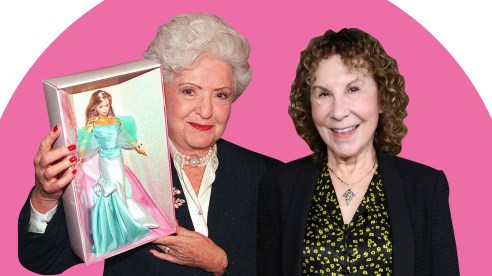
Barbie’s inventor, the shrewd business-driven Ruth Handler alongside Rhea Pearlman who plays her in the new ‘Barbie’ movie.
I’m not here to bag the variety aspect of Barbie the movie or Barbie the doll that is now available in hundreds of different styles. I’m just asking for balance in any picture about the world’s most notorious toy.
Not-so-fun fact: each year, 60 million Barbie dolls are sold, contributing emissions equivalent to burning 380 million gallons of gasoline. Worldwide, toys make up at least 6 percent of all landfill plastics, while the environmental damage caused by the creation and discarding of toys include the acidification of our waters, eutrophication (plastics harming algae and fish), carbon emission leading to ozone depletion, and of course landfill – and that’s not considering the socio-political damage Barbie has played a major part in before it went pseudo-woke.
It’s great that the film celebrates inclusivity to the fullest (except for poor Ken who is as redundant as the plastic bump on his crotch). Heck, it even highlights the existence of a ‘Sugar Daddy Ken’ (real) with his sissy male partner (exaggerated). But if you’re going to go truly woke, at least fess up to your true homogenic, racist, homophobic and sexist history. And for gods’ sake, do something that actually contributes good to our environment. Surely making all Barbie dolls out of recyclable materials is a wiser way to go.
In the current economic climate, maybe save on not buying merch and see the movie instead. It’s stupid but fun. Kind of like Stereotypical Barbie, come to think of it!
Lisa Andrews & Antonino Tati

‘Barbie’ is in cinemas July 20.
PS: ‘Barbie’ is just the first and one of 45 movies which Mattel Films intends to co-produce. Get ready for more mind-melting “movie adverts” for the company’s many toy products. For a better picture of the Mattel brand, watch the ‘Barbie’ episode in the Netflix series The Toys That Made Us.

Discover more from
Subscribe to get the latest posts sent to your email.
