
Embracing the Madness: an interview with Róisín Murphy
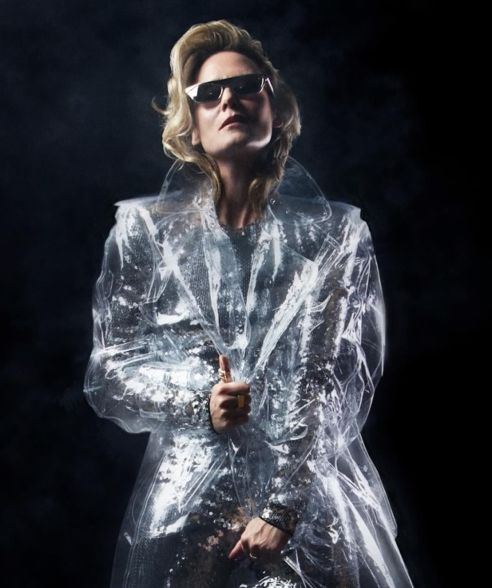

Róisín Murphy has been making music for close to 30 years. And it is music that has alway, always stood out from the common crowd. Cream magazine has interviewed the artist on several occasions, combining these chats into the article, below.
Here, she talks of dyslexia and drug-taking, both of which have contributed to the artist’s unique, some might say warped, songwriting style.
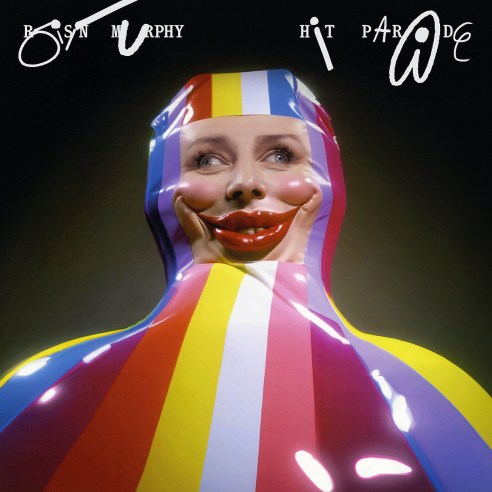
This year, Róisín releases her sixth solo studio album, Hit Parade, and while these days she’s less inclined to attribute her songwriting to the influence of illicit substances, the record stands out as oddly distorted and wonderfully unique.
Upon hearing Hit Parade in full, you realise that strangeness hasn’t waned for this adventurous artist; indeed things have only gotten weirder, but still so very brilliant.
Antonino Tati
Singer Róisín Murphy fell into music when she accidentally bumped into producer Mark Brydon at a house party. “Do you like my tight sweater?” she purred upon nearly spilling a drink over the guy. “See how it fits my body?”
It was a chat-up line that was not only original but which led to a strong relationship both in and out of the recording studio. The pair quickly went on to form electro outfit, Moloko, with Do You Like My Tight Sweater? ending up as the title of their debut album.
The name Moloko may have seemed familiar to you when you first heard it in this musical sense. If you’re of Spanish heritage, you might have thought you heard muy loco meaning ‘batshit crazy’. If you’re cultural background is Greek, you’re mother may have warned you that it sounded suspiciously like ‘wanker’. In Russia it simply means ‘milk’. To movie buffs, it’s the beverage sculled in A Clockwork Orange to give the film’s bad boys a boost of ‘ultraviolence’. It’s also a name that inspired the nightclub frequented by the strung-out protagonists in Trainspotting.
“We were just attracted to the word: the sound of it, the look of it,” says Murphy matter-of-factly.
Like the various connotations of their name, Moloko’s audience is a broad and multicultural one. An ethos of ‘everyone is okay and everything is beautiful’ pervades the duo’s discography, where pop, rock, blues, house and jazz are fused and fed through synthesisers only to come out the other end sounding like a sort of distorted, warbled, funked-up and electrified, psyche-tinged sub-genre of dance music.
“Actually, our music is kind of perverted,” says Róisín when I first speak with her in 1994. “Whatever we try to do, it’s coming out wrong. I don’t think we want to make a joke of music but we certainly find reverence a bit boring. Some people are so into acid jazz and ’70s funk, so serious about it that it doesn’t allow them room to create. The only way of creating something new – and we’ve at least tried – is to not be so reverent about it, not to adore it so much that you can’t tamper with it.”
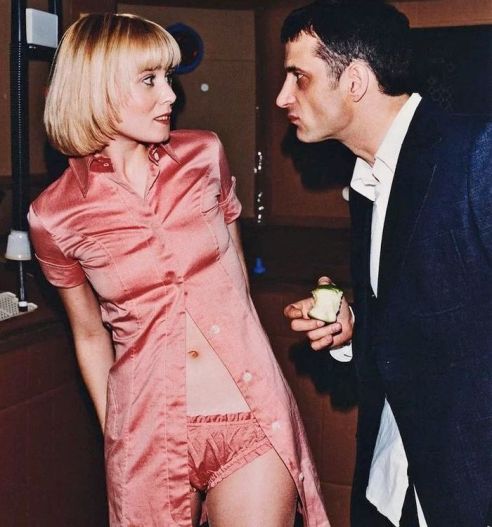
Moloko back in the mid-1990s.
Moloko went so far as to throw crockery and cutlery into the mix, finding “little bits and knick knacks” around the house and using these as instruments in the studio. As a solo artist, too, Róisín often throws odd objects into the audio mix.
“The first thing I took into the studio with me was my notebook,” she tells of the recording of her debut solo record Ruby Blue. “I thought I could make as much noise as I could with that notebook so I started throwing coins down it, hitting it with hard things, scraping it across the microphone, dropping it in the far side of the room… Whatever permutation you could possibly imagine you could do with a notebook, I did it.”
‘Mad’, or perhaps latching on to the trend of autonomous sensory meridian response (ASMR) early on, it’s all part and parcel of Murphy’s law to defy normalness. For starters, she often dresses like she’s been fumbling through her wardrobe in the dark.
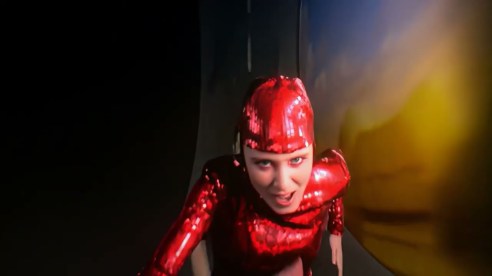
“Ooh, I do like a bit of glitz. I have from the start. I remember I once got some red sequins and designed a suit for the video for Flipside and it was this catsuit that went up and around my head. I was like a little red sperm; a red sequinned gimp. I came out onto the set and everybody went ‘Ooooooh...’.”
Murphy also has a penchant for penning incoherent, or at least cryptic, lyrics that have made her songs appear nonsensical and profound all at once.
The single Fun For Me, for example, was chockful of fairytale references juxtaposed with bastardised idioms that listeners found familiar at first, only to suddenly hear them distort into oddity. But there’s a method to this madness. Or at least a cause for it.
“I was dyslexic at school, awful at English,” admits Róisín. “And writing is something I never could do. But the way I spell things is fucking amazing. I think being dyslexic gave me an archaic influence in the way I write words; made me a bit more loopy. I think I’ve achieved a lot in making records with charm. There’s no fun in records that don’t have any fucking charm.”
She continues on the warped writing tip: “I like putting ambiguity in my lyrics, and I like words and phrases that work on different levels, just as I like music that works on different levels. Now I’m in a medium in which nobody can tell I’m actually dyslexic.”
There’s also a great sense of kink in Murphy’s lyrics, with more than a hint of queer innuendo: “I dreamt that the bogeyman went down on Mr Spock” (from Fun For Me), and “Gimme new kicks, I wanna go deeper… I’m a pure new pleasure seeker” (Pure Pleasure Seeker).

Drug-influenced is another tag commonly connoted to Moloko and Murphy’s music. In 1994, she wasn’t afraid to admit that boozing it up and taking illicit substances played a big part in her art.
“I’m glad I’ve taken drugs, in my social life. But in the studio you have to have total control. You can get ideas when you’re out and about, and you can store them. That’s the trick, to remember to bring a Dictaphone or to write it down or to remember it somehow. I’m not saying I always do. Sometimes I just wake up with a hangover. But even beyond their influence during the act, when I’m off my head, I’m a different person than I ever would have been if I had never taken drugs.
“Drugs really opened me up; done a lot of good for me, but they’ve done some bad, too. I can’t really work it out…”
So what other lollies were once high on this girl’s party favours list?
“Before I ever experienced pharmaceuticals, marijuana was my proper drug. But I think once you experiment a bit further, marijuana just becomes a part of your life. If you listen to our music, it’s totally obvious we take drugs and smoke marijuana. [A long pause…] This is actually the first interview where I’ve admitted that.”
And the first time she’d admitted this, for sure: “E’s great for possession; great for allowing spirits in. I think it’s more mischievous and, certainly for me, a whole other personality can take hold. I don’t really like acid. I’ve heard too much about it and have had too many weird expectations for it not to be a let-down.”
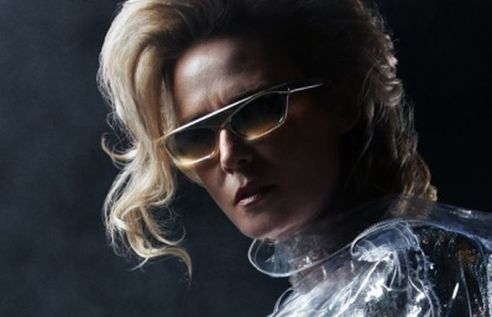
Fast forward ten years and Róisín tells me she is pretty much put off by illicit substances now.
“At 19, when I first spoke with you, I was bright enough to know I hadn’t had enough life experiences to write emotional or personal songs, and it would have been a lie for me to have sang, ‘Ooh I’ve been sooo hurt, baby’. So instead I delved into my imagination, tried to experiment, and found out about songwriting there.”
I ask her, “So do you remember saying ‘If you listen to our music, it’s totally obvious we take drugs and smoke marijuana’?
“Did I actually say that?” she wonders, genuinely shocked. “I don’t smoke pot anymore but I went through periods of time when I did, like most artists I know. I think I’m not alone in being bored of certain chemicals. The journey is so similar every time you do it that it gets to a point where you can do it with your eyes closed and know exactly what’s going to happen. And the music that went along with those drugs became as predictable as the drugs themselves. Sometimes you have to say, ‘Well that part of my life is over. I’ve done that; been there’.”
Still, the music of Róisín Murphy remains colourful, cryptic, very much obscure. Fortunately, she’s never had to compromise her sound in the name of record company profit, always managing to inject oddity into her art.
“True. I haven’t had much in the line of obstacles in terms of my art. I haven’t had anybody coming up and telling me what to do, nor have I had huge marketing constraints put upon my creativity. I don’t know any different to how I’ve always been, and neither does my record company, really.”
With or without the aid of extracurricular substances, this writer, for one, is glad the kooky lyrics are still intact.
Róisín Murphy’s new album ‘Hit Parade’ is out September 8, 2023 on Ninja Tune.
Discover more from
Subscribe to get the latest posts sent to your email.
