
Upon the release of fun film ‘IF’, 12 other movies that feature imaginary antagonists
I never had an imaginary friend as a kid. My partner had one. Oddly enough his faux buddy was a ‘lady in red’ who would sidle up to him and dance on occasion – but not when he was alone, more so when he was in crowds of people – since crowds made him anxious and his ‘lady’ would provide him comfort in her smooth moves.
The made-up antagonists in new movie IF (itself an abbreviation for ‘imaginary friends’) are more on the obvious, childish side but that doesn’t detract from it being a good movie. It’s actually lots of fun. There’s a pink dinosaur, a sunflower dude, a bedsheet of a ghost, a teddy bear, and so on, all whipped up and presented in live-animated glory.
The story centres around Bea (Cailey Fleming), a girl who can see all the imaginary friends of the world and who goes on a mission to help them find new kids to support, since the kids that imagined them have all grown up and forgotten about them.

Seeing these colorful characters come to life is like watching Toy Story on acid. There’s even a fun montage to the soundtrack of Tina Turner’s Better Be Good To Me but the song tends to creep into the film’s soundtrack a little too often – as if the producers were hoping more to score an Apple Music hit rather than apply an appropriate soundtrack for the movie.
Ryan Reynolds plays Calvin – an apparent nod to the popular comic strip ‘Calvin and Hobbes’ — who helps Bea on her mission to reunite IFs with other kids. And Reynolds does a wonderful Wonka-esque job at tip-toeing the fine line between cutesy and cool in this role.

I liked the film and I’d go so far as to say it’s not just a movie for kids but one for anyone who understands the importance of a vivid imagination, be it to get us out of boring moments, scary times or, like in the case of my partner, act as support in overwhelming social situations.
Here are 11 other films in which imaginary protagonists work closely – sometimes too closely – to the central characters.
Harvey (1950)
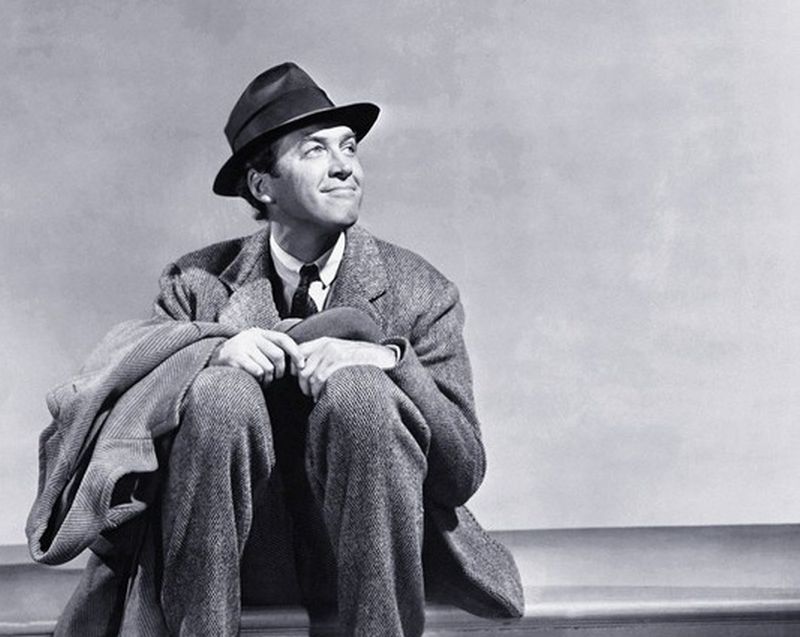
Dowdy in name and in character, Elwood P. Dowd (James Stewart) is a drunk who begins having visions of a giant rabbit called Harvey. Elwood lives with his sister and niece who worry he is going insane. In the process of trying to have him committed, his sister admits she occasionally sees Harvey herself. The director of the mental home, Dr. Chumley (Cecil Kellaway), tries to reconcile his duty to help Elwood with his own growing experiences with Harvey, putting all manner of meta thought into everybody’s head, including the viewer.
 With Elwood offering his pseudo ‘business’ card to everyone he meets (and having it rejected) and with everything constantly being pushed his way – cigarettes, alcohol, bullshit excuses – the film could be seen as one big push for early 1950s commerce while setting up everyday men who possess active imagination as, well, mad men. The script is pretty scruffy but, still, Harvey is a charming enough film to be considered a classic.
The Shining (1980)

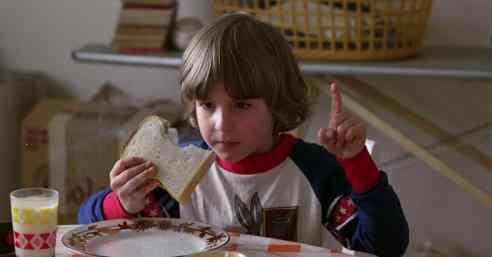
If you’ve not seen The Shining, be sure to make it the next film to watch on your next retro cinema binge. It’s one of the most remarkable horror/thriller films made. While analysts will argue there’s a lot of imaginary peeps popping in and out of this movie, it is Jack Torrance’s son Danny’s imaginary friend Tony who is possibly the creepiest. While Tony doesn’t appear as a human to film viewers, he does channel through Danny and comes out talking squeakily through the kid’s own voice. In Stephen King’s original novel, Tony is a projection of hidden parts of Danny’s own psyche, heavily amplified by Danny’s psychic “shining” abilities. In the end it’s revealed Danny Torrance’s middle name is actually ‘Anthony’, making Tony seem like a part of a split personality.
Drop Dead Fred (1991)
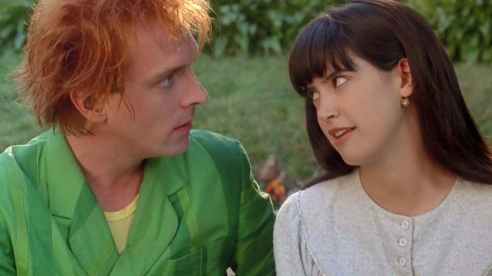
This black comedy, fantasy film stars Phoebe Cates as a young woman named Elizabeth who has an imaginary friend named Drop Dead Fred, played rambunctiously by Rik Mayall (of The Young Ones fame). It follows Elizabeth as she is haunted by Fred in adulthood, and while the movie received generally negative reviews, it’s kind of become a bit of a cult flick today.
The Naked Lunch (1992)

When pest exterminator William Lee (Peter Weller) begins to hallucinate from being exposed to mind-altering insecticides, he becomes entangled in a world of espionage involving talking bugs. Commissioned to write a report about a mission, Lee discovers his typewriter is also an insect. The standout imaginary bug in the film has got to be the giant beetle who tries to coax Lee into putting powdered drugs on his lips. Freaky but fun stuff.
True Romance (1994)
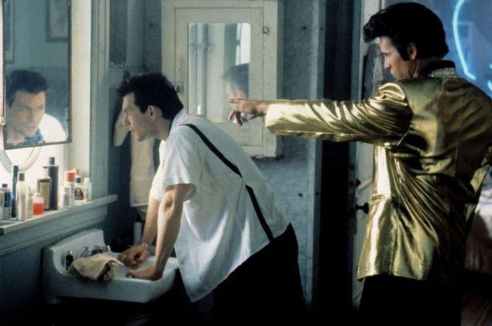
A huge fan of Elvis Presley named Clarence (Christian Slater) meets a woman named Alabama (Patricia Arquette) while at the movies on his birthday, whom he quickly discovers is a hooker. Worley manifests an apparition of Elvis (played by Val Kilmer) to work through problems and decide his course of action in the new relationship. In a dark twist, and convinced by his hallucinated Elvis, Clarence kills Alabama’s pimp (Gary Oldman) and is soon sought after by the mob.
Donnie Darko (2001)
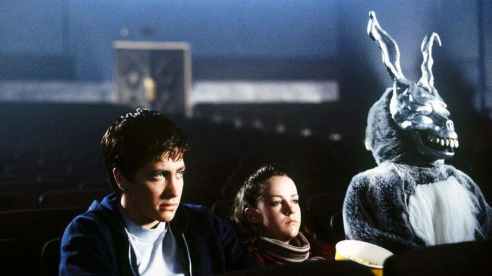
During the presidential election of 1988, emo teenager Donnie Darko sleepwalks out of his house one night and conjures a giant, demonic-looking rabbit named Frank, who tells him the world will end in 28 days. When Donnie returns home, he finds that a jet engine has crashed into the roof of his house, half of it jutting through his bedroom. Is Donnie suffering from mental illness, living in a parallel universe, or is the world actually about to end?
Hide And Seek (2005)
Following his wife’s apparent suicide, psychologist David Callaway (Robert De Niro) moves with his nine-year-old daughter Emily (Dakota Fanning) to upstate New York. Here, Emily makes an imaginary friend she calls ‘Charlie’ but their friendship starts to erk David when he discovers their cat dead in the bathtub (incidentally, his wife also died in a bathtub). David is insistent his daughter has dissociative identity disorder and it doesn’t help that she keeps drawing pictures of herself with two heads.
Z (2019)

Not to be confused with the 1969 film Z, or the 1999 film Z, the 2019 film is about a couple constantly being terrorised by their eight-year old son’s imaginary friend. Despite the plot having all the marks of B-grade schlock, critical reception for the film has been mostly positive and it even has a 97% on Rotten Tomatoes (but on the subject of imaginary, how much can we rely on that site being authentic these days?).
JoJo Rabbit (2019)

From the twisted mind of New Zealand writer, director and actor Taika Waititi, JoJo Rabbit centres on a young Nazi torn between following the commands of his totalitarian idol, Hitler, and following his heart which pines for a headstrong Jewish beauty. The real awkwardness of this is that the Hitler follower is just 10 years old and the Jewish girl he meets has been hiding in the attic of his mother’s house (she played superbly by Scarlett Johansson). Scrap that. The real issue is that JoJo’s imaginary mate is none other than Adolf Hitler himself.
Paper Man (2010)
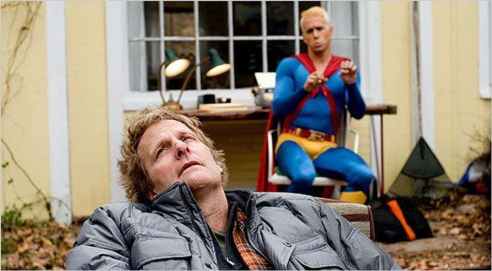
IF is not the first film in which Ryan Reynolds is nicely tied into a storyline of imaginary friend. In Paper Man he plays the role of Captain Excellent, an superhero concocted by a kid named Richard Dunn who grows up to become a writer and is suddenly faced with his old underpants-wearing buddy in adult life. When Richard gets a bad case of writer’s block, his imagined super-dude comes back to mind to wreak all havoc.
Tully (2018)

Housewife and mother of three Marlo (Charlize Theron) is overwhelmed by the responsibilities of parenthood, until the arrival of a nanny named Tully (Mackenzie Davis). Although Marlo believes her to be real throughout much of the storyline, Tully is actually a manifestation of her freer, younger self, created from the stress of motherhood paired with extreme sleep deprivation and exhaustion.
Imaginary (2024)
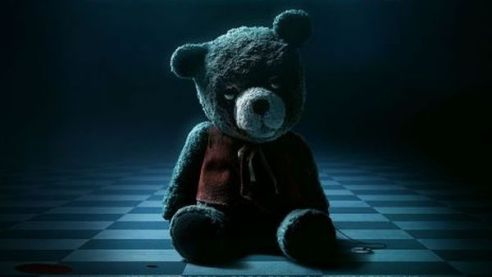
When children’s book author Jessica (DeWanda Wise) moves back into her childhood home with her family, her stepdaughter, Alice, finds a stuffed bear named Chauncey. As Alice’s behavior becomes more and more concerning, Jessica intervenes only to note that Chauncey is more than the stuffed toy bear. Things soon get bear-shit crazy. While imaginary folk feature in a stack of horror movies – like Dark Water, Session 9 and The Orphanage – in Imaginary, the vivid, vicious bear pretty much takes centre-stage. Of course the genre of horror is packed with imaginary beings – or ghosts or spectres – but despite their ubiquity, you wouldn’t exactly call them friends.
Discover more from
Subscribe to get the latest posts sent to your email.
