
Jimmy Somerville has just gone viral on TikTok with a quarter million different clips using his song ‘Smalltown Boy’: an interview from the vault
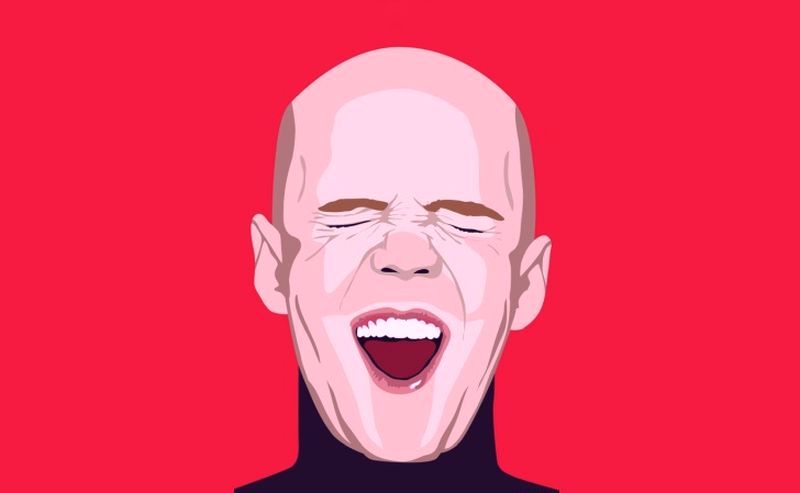
In June 2024, forty years on from its initial release, the Bronski Beat song Smalltown Boy has gone viral. For no singular reason there is a sudden surge of videos featuring celebrities and Gen-Xer mums dancing in their kitchens to the gay club anthem, a song that once infuriated social conservatives.
On TikTok alone, there are at least 250,000 different clips that feature the song, garnering over two billion views. “Everything is going so crazy in the world,” said Somerville in response to the song’s sudden resurgence, “but here on TikTok, there’s all these people finding the moment to have a bit of fun … It’s made me smile and warmed my heart.” And no doubt injected some well-deserved royalties into his bank account.
The internet was hardly even a thing when the following interview took place in 1994. Jimmy would never have dreamed his song would be running so rampant online. And the only thing going viral was the strain of HIV through LGBTQIA communities.
Being his out, outspoken and often outraged self, goodness knows what Jimmy would have done with such a powerful tool as the net. In this interview, he’s frank to the point of telling me about how he used to enjoy fucking a priest in a graveyard from time to time. Imagine if TMZ and TikTok had been around then…
——–
In 1984, when a chameleon boy called George was dressing up in frocks, and a woman named Annie was donning pinstripes and singing ‘Who’s That Girl?’, something more than just gender-bending was going on. Gay sexual politics were taking to the streets in a blatantly more radical and latently more pragmatic manner than in the late ’60s. News of a big disease with a little name was still blurry, but those who recognised the presence and threat of HIV and AIDS were making their awareness heard. Amid the propaganda and the protesting stood one relatively ambiguous pop star with big ideals. His name was Jimmy Somerville and the band he marched with was Bronski Beat.
“I believe 90 per cent of the stories in the media are just crap. I mean those stories about Keanu, the poor man, give him a break. He has no problem with gays. He’s very gay-friendly, but because somebody is gay-friendly, suddenly they have to be labelled a closet. Give them some space.”
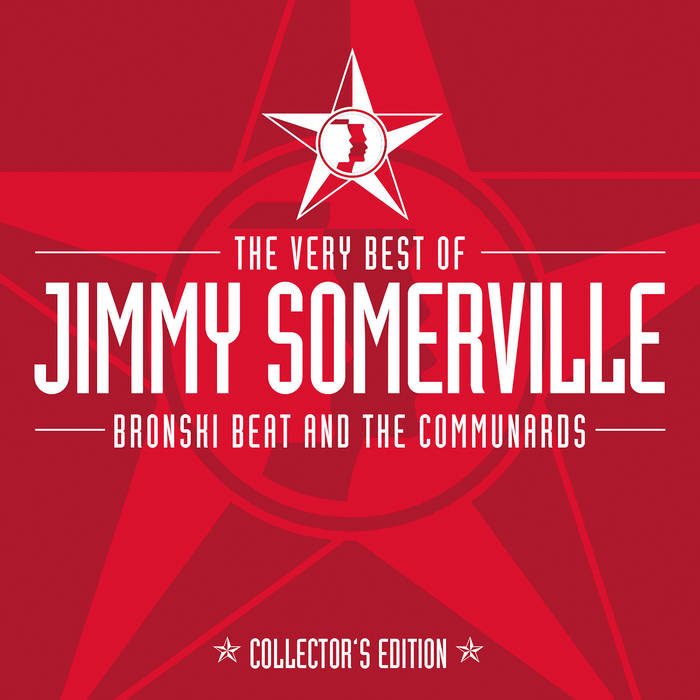
The Russian phonetics of the very name ‘Bronski’ alluded to left-wing politics, and the themes of gay rights and sexual awareness continued when Somerville and fellow band member, Richard Coles, gave the Beat a break to form The Communards who enjoyed massive success with dance floor staples Don’t Leave Me This Way and Never Can Say Goodbye. A small amount of solo success for Somerville followed thereafter, but since then he’s taken time out from his pop career to “live life to the full as a gay man in the here and now”. These days, Jimmy stands a certain distance from the soap box but recalls the heady occasions when just about anything he’d say was turned into a sexual/political sound bite.
“I was so hungry for identity and energy back then that I took on everything. As much as I think that gender-fucking and drag are great fun, being an ordinary person with a t-shirt on can be just as loud,” he says.
Especially when that t-shirt reads ‘Act Up: Silence = Death’, referring to the need for people to start talking unashamedly about the AIDS epidemic. Although a once grim topic, Somerville can now laugh as he recalls the time he unsuccessfully tried to get Depeche Mode’s Dave Gahan to wear an ‘Act Up’ t-shirt.
“Of course, Little Miss Indignant started having a tantrum, but I can kind of laugh at it now.”
Somerville admits he put a lot of noses out of joint with his earlier energetic activism, and not just within the straight community…
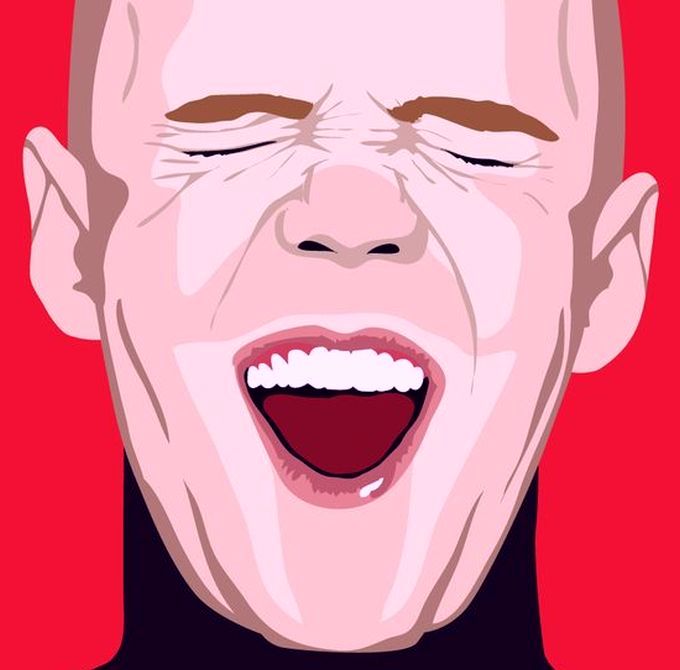
“I think more gay men found me too radical and too noisy. It’s that whole syndrome of ‘We’d rather just keep our voices down and get on with it’. But at that time, I was realising what AIDS was and how it could affect our politics and culture; that it was going to do so much damage to the progress we’d made. So I thought it was time to get vocal, to get angry. Then AIDS affected me in a profound way: I was sharing a house with some friends and one of them was dying. For two years I watched him deteriorate. If anything, it made me realise my own mortality and understand the importance of friendships and love. That is definitely reflected in all of my songs. In the end, my songs are about love and death and life.”
Somerville’s solo work, hence, sees heavy themes balanced with light ones. Just when his lyrics seem to be plunging too far into the depths (‘He wanted a man, not psychiatry; all he got was a hospital bed and some pills’), up pops something tragically trivial (‘My nails are a mess but I couldn’t care less’). The combination of emotion and exuberance is deliberate, says Somerville, and is part of a deeper tradition in gay culture.
“Gay people take all the tragedy and all the pain and turn it into this kind of celebration. We’re a very resilient group of people, and that’s what I love. I think that’s something gays should be proud of.”
Part of that pride, he adds, is the gay community’s courage and humour in bringing together its masculine and feminine elements, specifically with drag.
“I’ve done drag many a time. It’s one of the most liberating experiences in the world. There should be drag classes in every country’s education curriculum. I think all men should go through this process of transformation from a ‘man’ to a ‘woman’, not just for fun; they have to actually try and become the character and the personality. I think if more men did this, they would actually realise who they really are.”
Now that we’re living in an era where LGBTI+ icons are just a Google-search away, and an age where, thankfully, we’re steps closer to seeing the final chapter of the AIDS epidemic, Somerville insists we shouldn’t be complacent toward certain issues.
“It’s so easy to think about safe sex when you’re not having sex, but if you’re in the throes of passion, it’s difficult to apply that disciplined approach. The idea of safe sex is still something fairly new in a sense, for some people. Sex is something that’s with you when you’re young, and if you explore it when you’re very young it’s kind of difficult to adopt a different way of thinking. I know I’ve done things and the next day thought, ‘What the fuck have I done?’. But I’m not going to sit back and torture myself, because it’s done. Otherwise I’d just become a mess.”
Somerville’s philosophical approach to living, as opposed to the evangelical zeal he’s displayed in the past, doesn’t stop here. In an interesting parallel between life and art, he discloses that he once used to see a closeted man of the cloth but that their sessions weren’t exactly for confession.
“I used to fuck with a priest. There’s this great little cemetery in North London where people cruise, and I met this guy there with a shaved head who was really hot. I had two incidents with him, and the next time I saw him was on High Street and he was a priest! I was absolutely outraged. But he seemed to be a cool guy, quite together, and I don’t think he had any guilt… Why didn’t I continue it? Well, you know, I did him twice, which is enough, really – his dick was no surprise to me after the second time.”
Somerville says the affair occurred just prior to the release of the much-publicised film Priest, and although he could obviously relate to its steamy scenes, the film’s exploration of institutional repression and hypocrisy engaged his ever-present political streak.
“I’m so outraged that the church is this little safe haven for fucked-up queers. I think it’s about time this is addressed and those hypocrites are exposed.”
Perhaps inching closer to his soap box again, Jimmy says he wasn’t the happiest about a straight actor taking a gay role in the aforementioned film, and that one aspect of the perpetuation of stereotypes in film is the casting of straight actors in gay roles.
“I didn’t go see Priscilla because I didn’t want to see a bunch of straight men pretending to be drag queens. I’d rather see a movie with real drag queens. I’ve been around too long and I’m too much of a fag to watch somebody who’s not a fag play a fag.”
But on the other hand, he doesn’t mind seeing gay actors playing straight roles, as long as they’re out and proud in real life. “I think if you’re going to be gay and out, that’s great. To the public, it’s like, ‘Here’s this gay man playing a straight role. He could very well be my brother, my boyfriend, my husband, or the man next door who I assumed would be heterosexual’. It starts to get rid of all that mysticism and all those stereotypes.”
At this juncture – with straights playing gays and gays playing straights on our movie screens – Keanu Reeves’ name drops into conversation, with Somerville admonishing the gay-whisper brigade.
“I believe 90 per cent of the stories in the media are just crap. I mean those stories about Keanu, the poor man, give him a break. He has no problem with gays. He’s very gay-friendly, but because somebody is gay-friendly, suddenly they have to be labelled a closet. Give them some space.
“In gay culture, because we don’t have too many out-and-proud famous people, as soon as there is the slightest [suggestion] that somebody famous such as Keanu could possibly be gay, people jump on it. It’s just hunger for out and visible icons.”
Checkout the Smalltown Boy video compilation here as well as celebrity dance videos from Courtney Cox, Jennifer Garner and skater Tony Hawk.
Hear Bronski Beat’s Smalltown Boy (The Absolute. Rework) here.
Listen to The Very Best of Jimmy Somerville Bronski Beat and the Communards on Spotify.

Discover more from
Subscribe to get the latest posts sent to your email.

One Response to “Jimmy Somerville has just gone viral on TikTok with a quarter million different clips using his song ‘Smalltown Boy’: an interview from the vault”
[…] song of the year was a 40-year-old Bronski Beat club hit whose viral success probably wasn’t as organic as reported. (Seriously, people just happened to ask their parents how to dance to “Smalltown Boy” right at […]
LikeLike
Comments are closed.