
Celebrating 45 years of Stanley Kubrick’s ‘The Shining’

Jack Nicholson with Stanley Kubrick on the set of ‘The Shining’.
This year marks the 45th anniversary of Stanley Kubrick’s perennial film, The Shining.
Cream delves into the archives of one of cinema’s greatest auteurs, while also taking a peek at a new coffee table book, published through Taschen, that dives deep into Kubrick’s masterful thriller/horror.
On 7 March 1999 at age 70, director Stanley Kubrick died in his sleep of a heart attack. This year marks the 26th anniversary of his passing and the 45th anniversary of the release of one of his greatest known films, The Shining.
Dancing close to the fire, Stanley Kubrick never allowed himself to play by Hollywood rules. With a career spanning 16 movies in 49 years, he wasn’t the most prolific of directors, but practically all of his works have gone down in history as auteur classics.
As an average student growing up in New York, by the time he left school Kubrick had begun dabbling in photography and was being sent far and wide for photojournalistic assignments. During his time as a photographer, Kubrick’s fascination with film was fuelled by the complex and fluid camera style of Max Ophüls. Shooting documentaries, his heart was set on film and in 1953 he directed Fear and Desire, about soldiers fighting on the frontline in an imaginary war. Later in life, being unhappy with his debut movie, Kubrick bought back all the prints so that they would never be seen again.
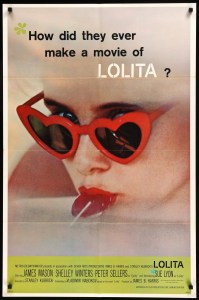 Working with Kirk Douglas on Spartacus in 1959, Kubrick’s perfectionist streak unnerved both cast and crew, causing friction between cinematographer, screenwriter and lead actor. In 1960, he moved to England where he began filming the controversial Lolita in which a 14-year-old girl flirts madly with her stepfather. The film caused quite a stir, equally if not more to do with the unscrupulous interaction of Kubrick’s bohemian subjects than with the film’s sensitive pedophilic subject matter.
The success next of the overwhelmingly titled Dr Strangelove or How I Learned to Stop Worrying and Love The Bomb in 1964 allowed Kubrick to work on further projects such as 2001: A Space Odyssey (1968), the violently controversial A Clockwork Orange (1971), Barry Lyndon (1975), and The Shining (1980), the latter putting Jack Nicholson on the Hollywood map. While the film did not align Kubrick’s name with blockbuster success, the director probably couldn’t have cared less. So long as the right audiences ‘got it’.
The Shining did, however, gain critical acclaim over time while also picking up broader audiences, year on year. While it initially did not perform well at the box office – some critics calling it a disappointment due to its length and perceived deviations from the source material (the original novel by Stephen King) – The Shining remains one of Kubrick’s most watchable films, appealing to all generations. And, because the film bordered more on thriller than traditional ‘gore’-type horror, it catered to, and continues to appeal to, broader cinematic tastes.

The cover art of a new book through Taschen, ‘Stanley Kubrick’s The Shining’, plays on the film’s unsettling but appealing colour scheme and symbolism.
A new book, Stanley Kubrick’s The Shining, published through Taschen, gathers hundreds of hours of exclusive unheard and unseen interviews with various cast and crew of the film, allowing readers to enter through the proverbial back door of The Overlook Hotel to witness Kubrick’s endless rounds of script rewrites, his unorthodox approach to coaxing the best out of his actors, and his tedious efforts in obtaining the ultimate in special effects. At times, Kubrick would stand or sit over his actors to intimidate them into more fearful reactions.
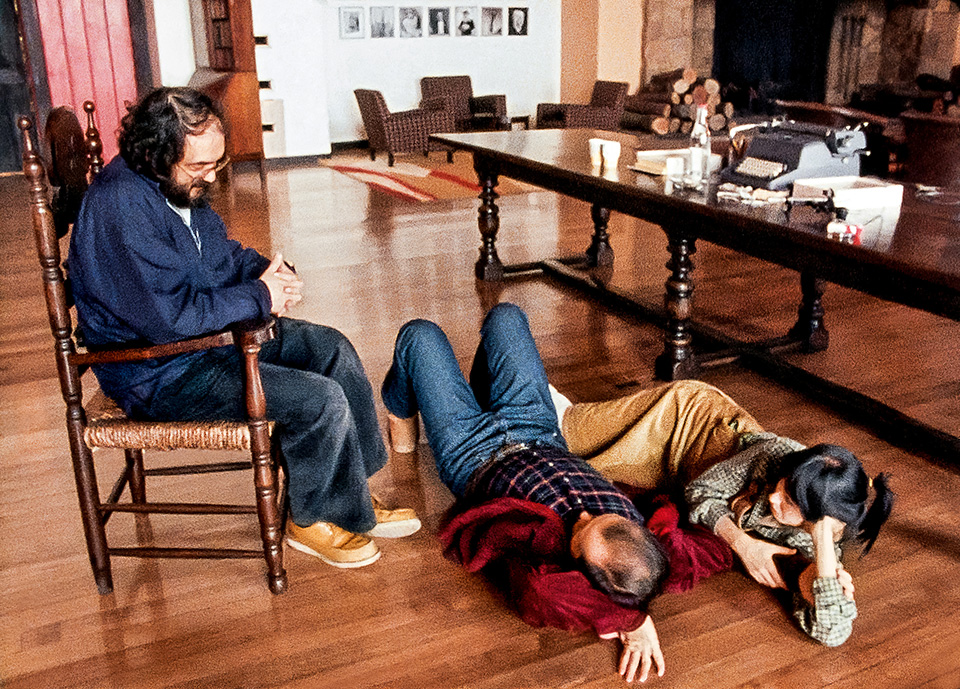
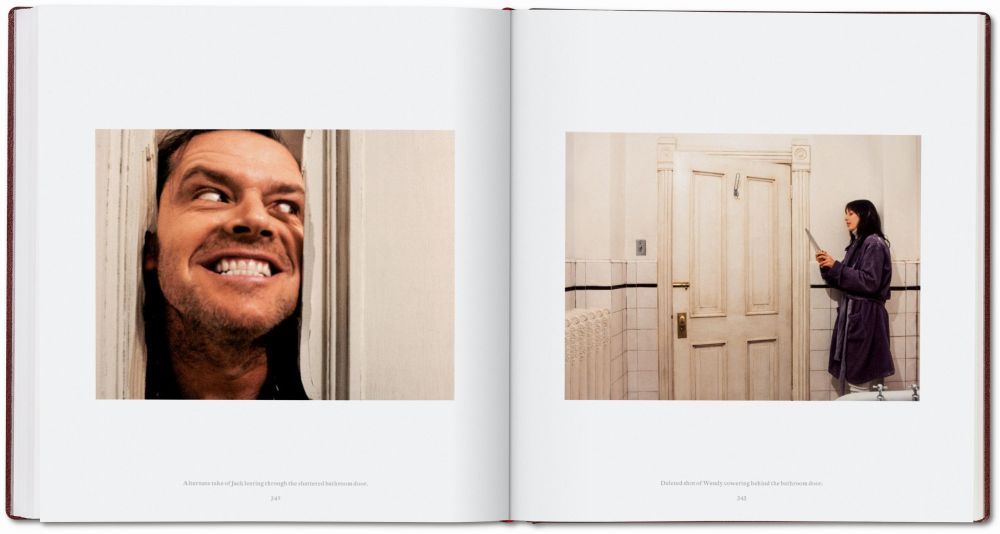
With his films sharing themes of de-humanisation, Kubrick was deeply interested in the human condition, spending hours reading psychology books. He used this information to bring out the best performances of his actors by rigorously manipulating their emotions, so as to achieve unparalleled performances. Actors would be made to perform dozens of takes without breaks. During repeated takes in the making of The Shining, actress Shelley Duvall was kept at such a state of heightened terror that in the infamous bathroom scene, her screams were real.
To another of Kubrick’s epic classics, A Clockwork Orange, Malcolm McDowell was temporarily blinded during the aversion therapy scene as the clamps used to keep his eyes open cut into his cornea. Behind the scenes, Kubrick would develop extremely close relationships with his cast members, only to stop contacting them the moment a film was put to bed.
Kubrick was hands-on in pretty much every aspect of production. That infamous scene of blood gushing out of the elevator saw the director working closely with the effects crew to ensure the perfect hue of blood was created, and gallons of it.
The making of the actual blood has two theories circulating – that boar’s blood was used, or that the effects creators mixed gallons of water with wallpaper paste and plenty of red food colouring. No spoilers here, you’ll have to read the book to see which story is true.
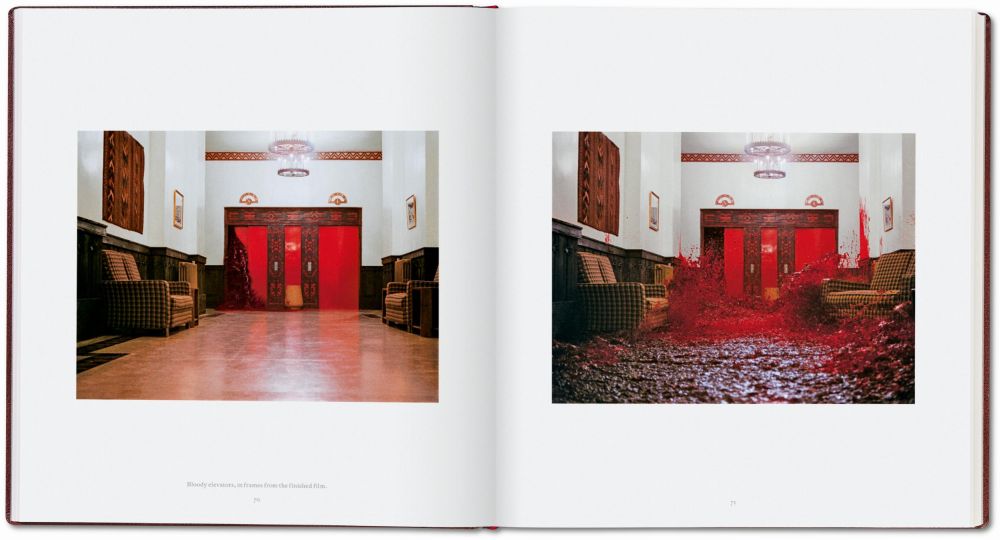
The colossal two-volume collection, designed by M/M Paris, includes hundreds of never-before-seen production photographs from the Stanley Kubrick Archive as well as pics from the personal collections of cast and crew, and rare documents and correspondence. It all adds up to what might well be the holy grail for fans of The Shining to get their hands on.
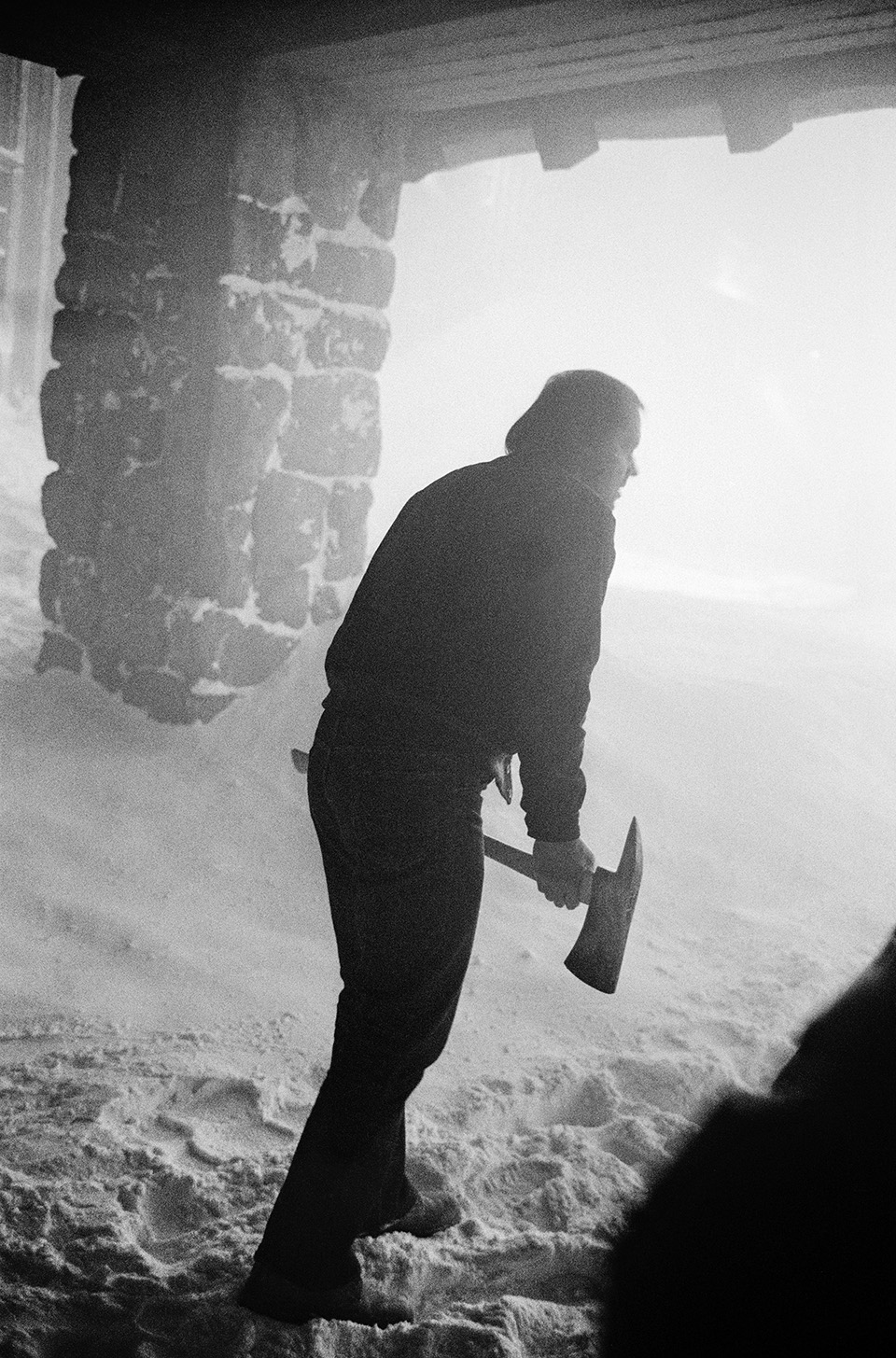
A man renowned for his nightmarish interpretation of life, that Kubrick died in his sleep is both ironic and poetic. He remains one of the most influential film-makers of all time, and his works are regularly recycled in popular culture. Who hasn’t uttered those infamous two words ‘Heeeere’s Johnny!’ at some point in their lives? As for Jack Nicholson’s definitive smile as psycho writer Jack Torrance, you can see traces of it in the actor’s actual son Ray Nicholson when he smiles deadpan-style in recent horror movie Smile 2. Check out the film’s poster art, right.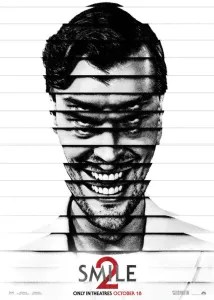
The line “Me so horny, me love you long time” in the rap song by 2 Live Crew is a sample lifted from a hooker’s dialogue in Full Metal Jacket. The giant chocolate slab surrounded by apes in the remake of Charlie and The Chocolate Factory is a shopped scene from 2001: A Space Odyssey, simulated again in the Barbie movie of 2023. And more filmic references and remakes of Kubrick classics are sure to continue threading through cinema and culture.
A biopic encompassing the life and artistry of the bold and challenging visionary that was Stanley Kubrick should surely be in the works, too.
Thereyns Koo & Antonino Tati


‘Stanley Kubrick’s The Shining’ by J. W. Rinzler, edited by Lee Unkrich, is available as a two-volume set, RRP $305.00, published by Taschen and distributed through Thames & Hudson in Australia.
Film Study: ‘Eyes Wide Shut’ and its voyeuristic look at adult relationships
Film Study: ‘The Exorcist’ and where horror suddenly became more complex

Discover more from
Subscribe to get the latest posts sent to your email.

Leave a Reply