Have you ever looked at your bank account and wondered where all your money went? It’s easy to feel overwhelmed when you think about improving your financial situation. Big changes can feel hard to manage, but the truth is, you don’t have to take giant leaps to get your money under control. Sometimes, it’s the small, everyday habits that help the most.
In this blog, we will share simple habits that can help you feel more confident and in control of your money.
Track Your Spending Every Day
Knowing where your money goes is one of the most powerful things you can do for your financial health. Many people don’t realize how small purchases can add up quickly. That daily coffee or occasional takeout may seem harmless, but over time, they can make a dent in your budget.
You don’t need fancy apps or complicated spreadsheets. A simple notebook or a free mobile app can work just fine. Try logging every dollar you spend for at least a month. You might be surprised by how much you’re spending in certain areas.
Check Your Bank and Credit Accounts Often
Many people avoid checking their bank or credit card accounts regularly, especially if they’re afraid of what they might see. But this habit can lead to late fees, missed payments, or even fraud. Making a point to check your balances, recent transactions, and due dates at least once a week can help you stay on top of things.
Also, keeping an eye on your accounts makes it easier to spot any suspicious activity. If you see a charge you didn’t make, you can report it quickly. This habit also supports healthy credit behavior. When you’re more aware of your spending and payment history, you’re more likely to build a positive credit profile. Keeping up with bills and watching your usage helps with credit checks, too, since companies often review your credit report before approving loans, apartments, or even some jobs.
Make a Simple Budget and Stick to It
Budgetingdoesn’t have to be stressful or complicated. You don’t need to account for every single penny. The goal is to create a general plan for where your money should go each month. Divide your income into categories like rent, groceries, transportation, debt payments, and savings. Leave some room for fun spending, too, so you don’t feel deprived.
Once you’ve set a basic budget, try to follow it as closely as you can. If you notice yourself going over in certain categories, think about how you can adjust your spending next month.
Budgeting helps you live within your means and avoid relying on credit cards or loans. Over time, this simple habit can give you more control and peace of mind about your finances.
Set Small, Realistic Saving Goals
Saving money doesn’t always mean putting away large chunks of cash. In fact, starting small is better than not starting at all. Choose one goal to begin with—like saving $5 a day or $50 a month—and stick to it. It could be for an emergency fund, a vacation, or just a rainy day. The key is to make it automatic and consistent.
You can set up a recurring transfer from your checking account to your savings account. That way, you won’t have to think about it every time. Over time, those small amounts add up. Reaching your savings goals, even small ones, feels good and can motivate you to keep going. You’ll build a habit of saving without feeling like you’re missing out.
Cook at Home More Often
Eating out is convenient, but it can take a big chunk out of your monthly budget. Even one meal at a restaurant can cost as much as groceries for two or three home-cooked meals. By cooking at home more often, you’ll likely spend less and eat healthier at the same time. This doesn’t mean you need to stop eating out completely. Just reduce the number of times you do it each week.
Start by planning simple meals ahead of time. Make a grocery list and stick to it. Cook in batches, so you have leftovers for lunch or dinner the next day. The money you save from eating at home can go toward your other financial goals. Once you get into the habit, you may find that you enjoy it more than expected.
Use Cash for Certain Spending
Using cash instead of cards can help you become more mindful of how much you’re spending. When you swipe a card, it’s easy to lose track of your budget. But when you use cash, you see the money leaving your hands, and that can help you slow down and think twice before making a purchase. It makes your spending feel more real.
No matter where you are in the world, try using cash for things like groceries, dining out, or entertainment. Withdraw a set amount at the start of the week and use only that. When the cash runs out, you know you’ve reached your limit. This habit helps you stay within your budget and avoid unnecessary debt. It’s a simple change that makes a big difference.
Pay More Than the Minimum on Debts
If you have credit card debt or loans, paying only the minimum each month keeps you in debt longer and costs more in interest. Even paying just a little more than the minimum can help you pay off your balance faster. It shows lenders that you’re serious about paying down what you owe, and it can improve your credit score over time.
Make it a habit to round up your payments. For example, if your minimum payment is $45, try paying $60 instead.
You’ll reduce the total balance more quickly. If you get extra money—like a bonus or a tax refund—put a portion toward your debt. These small actions can save you a lot in the long run and reduce your financial stress.
In conclusion,improving your financial health doesn’t have to be hard or overwhelming. You don’t need a perfect plan or a big paycheck to start making progress. What matters most is building small habits that lead to better decisions. These daily choices shape how you manage your money over time. They help you feel more in control and less stressed.
Get More Bang For Your Buck! Book Your Editorial Post Here
Would you like an article on the Cream magazine website that contains a direct linkto your client’s site or to any particular web page?
Cream is the only publication online that takes on the traditional aesthetic of magazine layout and design, incorporating interesting graphics, clever hacks, interesting interviews, and even practical quotes and funny comic panels.
You could say it was Australia’s version of Mad magazine, if Mad were still being published.
Cream also offers editorial posts that help drive regular business your way!
The new ‘retro-modern’ look of Cream harks back to a pre-internet time when things were cleaner on the publication front – certainly more appealing. What we lack in pop up ad windows (thank goodness, sighs the reader), we have plenty of in comic-style graphics that mock the inanity of AI and the irreverence of modern culture.
Cream was established in 1997 as a rather progressive magazine. Having grown with its audience, its content has changed over the decades but its tongue-in-cheek ethos has always been maintained.
Most importantly, our editorial messages are clear and not drowned out in a sea of annoying pop-ups, clunky embeds, or paywall ransom to the reader. Rather, the writing in Cream is purposely thought-out, cleverly balancing the educational and the entertaining.
The magazine has a fairly even skew in its female to male readership, leaning more toward the female (57% F: 43% M), with readers falling mainly into generational groups of Gen X, Millennials, and a handful of media-studying Gen Zedders.
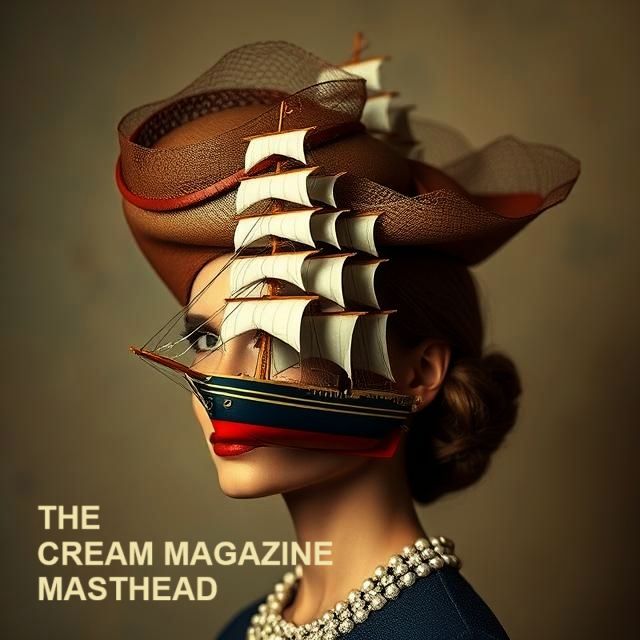
If you would like to see your product or service presented in a popular, positive, stylish and/or quirky slant, send us a quick message and we’ll be happy to work with you. For other contact details, click on our ‘masthead’ graphic, below.
(With a little help from DeepAI because their artwork is so gloriously munted)
CONTRIBUTING WRITERS
Mango Adonis
Lisa Andrews
Cassie Fox
Heather James
Keilah Keiser
Merilee Kern
Michael Mastess
Annette McCubbin
Ben Roccamante
Laura Solis
Antonino Tati
ADVERTISING
For ad enquiries, send us a message through the form below. Please also hit us up if you would like to receive a copy of the Cream New Retro Modern notebook. These notebooks are tailored specifically to media buyers and public relations representatives, and will tell you where we are heading to on the new media horizon. The waters might be choppy right now, but we hope to navigate them alongside you till we’re all back to smooth sailing again. The notebook – which will contain our audience profile and content outline – is free and will be sent out at the start of September 2025. Please include your name, title, company name and postal address for us to send your notebook to.
Name:
Warning
Email:(required)
Warning
Website:
Warning
Message:
Warning
Warning.
Submit
Δ
EDITORIAL CONTRIBUTIONS & GUEST POSTS
Writers! If you have an editorial suggestion or finished article and would like to submit it to Cream magazine, please email the editor antonino@pobox.com.
If you would like to become a regular contributor to the publication, please email a brief introduction of who you are or where you’ve been, with a link to your published work.
Cream sometimes publishes posts from paying clients. These are usually of a lifestyle and/or entertainment nature and fall into the section Fabulous Miscellanea. If you would like to see your brand in this section, simply fill in the contact form below and we’ll send you some info!
Name:
Warning
Email:(required)
Warning
Website:
Warning
Message:
Warning
Warning.
Submit
Δ
ACKNOWLEDGEMENTS
Cream magazine acknowledges the traditional owners of Country throughout Western Australia, where the publication is based and mostly operates from. We pay our respects to Elders past and present, and trust that their teachings will help lead this nation into a better and even more enlightened direction. Respect, too, to all the Indigenous communities on other continents, too.
Thank you to our regular readers and commenters. Cream likes to keep our Comment channels open so that you can have your full say. We are all about free speech and think it is important that you are part of the discussion.
Thank you to TikTok, YouTube, Instagram and other social media platforms for some of the really cool content between our articles, well worth resharing. Keep up the goo-goo-g00d job. No, that wasn’t AI predicting the text there; it was the spirit of John Lennon that suddenly took possession of the writer’s hands. Back again.
Thank you to all the photographers and illustrators whose works have been published in past issues and iterations of Cream magazine. Some of your works are occasionally republished and a byline is added where we have it on file. If for some reason we don’t have a credit beside your work, please get in touch and we’ll add it; maybe even a link, if you ask nicely.
“This is not a fashion magazine. If I wasn't mistaken, I'd say it was some kind of cover-up. But I do like the asymmetrical story.”Anna Wintour“Stop it, please. How will my capitalist software and pharmaceutical ventures thrive with all this discord?”Bill Gates“I taught them everything they know.” Alfred E. Neuman"Wow." Andy Warhol
The editor and this season’s intern rummaging through emails from web re-design companies, frantically writing back that we’re all good on the aesthetics front, thanks. Or perhaps we’re at our desks surfing eBay for that fourth leg we’ve each desperately wanted.
MORE TESTIMONIALS
“I was so envious of how beautiful it all looks, I wanted to throw my phone at the screen.”Naomi Campbell“Riveting. It really does feel like the internet inside the internet.”John Malcovich“A teachable moment - each and every post, even the promos. YOU get comic relief! YOU get comic relief!”Oprah Winfrey"What she said. Mamma is boss and I don't mess with her. Except sometimes in the bedroom where we take turns in rearranging the décor."Gayle King
CONTACT INFORMATION
Postal address: 7A Bourke Street, North Perth, Western Australia, 6006.





















Leave a Reply