
Chocolates and other candy you’re probably mispronouncing…

It may not surprise you that in the US, they celebrate ‘National Candy Month’ in June. As for ‘Obesity Awareness Month’, we’re not sure if or when that gets a mention but it probably should. But back to the sweet stuff: candy – or ‘lollies’ as we call them in Australia – come with baggage both good and bad.
Did you know, for example that (depsite our smartass quip in the previous paragraph) less than two percent of calories in the American diet are supplied by candy? The greatest percentage comes from fast food desserts like doughnuts, cakes and cookies.
Rewinding to Europe during the middle ages, the high cost of sugar made candy a delicacy, available only to the wealthy. These days, since most candy is made by dissolving sugar in water, lollies can be bought for a couple of bucks a kilo at Red Dot.
Candy, lollies, sweets, choccies – whatever you like to call them, be sure you’re pronouncing your favourites correctly. As it turns out, many of us have been pronouncing the following brands and products wrong…
Antonino Tati
Nougat (“Noo-ga”)

Known for its sweetness and deliciousness, nougat is crafted by combining sugar or honey, roasted nuts, whipped egg whites, and (more often in Europe) chopped candied fruit. Highly chewy in texture, classic nougat serves as a key ingredient in a variety of candy bars and chocolates (think Milky Bars, Snickers and of course the classic Mars Bar). While a lot of people tend to pronounce the candy as ‘noo-gart’ or ‘noo-gant’, the correct pronunciation is ‘noo-ga‘.
Bonbons (“Bohn-bohs”)

Say au revoir to the way you used to pronounce ‘bonbons’. Being the most mispronounced sweet of them all – bonbons means ‘candy’ in French: small treats usually filled with liqueur or other sweet, alcoholic ingredients. While a lot of people tend to pronounce these sweets as they see it (‘bon bon’ as in ‘good good’), the correct pronunciation (in the true French style) is actually “bohn-bohs” (with the ‘n’ in ‘bohn’ practically disappearing).
Guylian (“Gill-ee-ahn”)

When it comes to getting your hands on some delicious Belgian chocolate, look no further than Guylian. Considered one of the more luxurious chocolate brands in the world, Guylian has been pleasing tastebuds since 1958 with its iconic chocolate sea shells. Despite its prestigious reputation, the brand tends to be mispronounced as “gooy-lee-ahn” when the actual pronunciation is “gill-ee-ahn” (said with a hard G).
Ferrero Rocher (“Feh-reh-ro, ro-shay”)

The combination of chocolate and hazelnut is a divine one, and it’s safe to say the introduction of Ferrero Rochers in the 1980s helped us reach this conclusion. Due to its Italian roots, the pronunciation of this confectionary can be a tongue twister, but the right way to say it is “feh-reh-ro, ro-shay”.
Kinder (“Kin-der”)

Also produced by the Italian confectionery company Ferrero, Kinder chocolates have been adored by many folks for years. The correct pronunciation of this chocolate is not “kinda” but “kin-der”. Yes, it is the first half of the word ‘kindergarten’ and does indeed mean ‘children’ in German, while children across the globe are the brand’s main consumers. And Mums who need a bit of an early arvo sugar rush.

M&M’s (“Em-and-ems”)
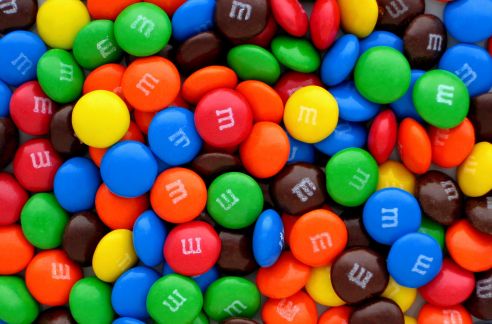
Having been around since the 1940s, M&M’s have gained the reputation of being an easy multi-coloured chocolate to pack into party loot bags. Despite their being incorrectly branded with an apostrophe between the ‘M’ and ‘s’, M&M’s remain a regular in corner stores and supermarkets the world over. It’s easy to stumble on the pronunciation of these sweets, as many people pronounce them as “em-en-ems” (like the rapper’s name). The trick here is to emphasise the pronunciation of the ‘and’ and say “em-and-ems”. Or just complete a basic English course online.
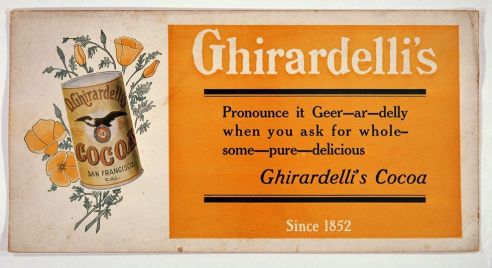
Ghirardelli ‘Geer-ar-delly’

There’s a scene in Armistead Maupin’s original Tales of the City where Laura Linney’s character is conversing with Thomas Gibson’s about how to pronounce ‘Ghirardelli’ (both Tales of the City and Ghirardelli chocolates stem from San Francisco). The proper pronunciation is ‘Geer-ar-delly’ and, since the chocolate has been available for over two centuries, we have no excuse not to call it by its proper name. FYI, you can get these delicious choccies from Dan Murphy’s.
This article was worked on in conjunction with language tutor site Preply.
OTHER ODD FACTS ABOUT CANDY:
- Different heating levels determine types of candy: hot temperatures make hard candy, medium heat will make soft candy, and cooler temperatures make chewy candy.
- Germans consume twice as much candy as Americans.
- The ancient Chinese, Egyptians, and Arabs used to make confections by mixing various fruits and nuts in honey.
- 65% of American candy bars were introduced more than 50 years ago.
- A one-ounce (28 grams) piece of milk chocolate contains the same amount of caffeine as a cup of decaffeinated coffee. We didn’t realise decaf had caffeine in it, either, so there’s something…


Discover more from
Subscribe to get the latest posts sent to your email.
