
An interview with Peter Hook of Joy Division & New Order fame – touring with his band The Light in 2026

Peter Hook, affectionately known as Hooky, has been around the music block plenty of times. As bassist and co-founder of Joy Division, he and his bandmates transmuted into New Order following the death by suicide of troubled frontman Ian Curtis. Consequently, New Order’s music has been a tragic-beautiful blend of melancholy and hope.
Since parting ways with New Order in in 2007, Hook had to deal with legal battles – about who owns what song, and about royalty appropriation – all of which has left a certain antagonism between he and the band. Money and propriety will do that to a friendship.
Now it seems Hook and New Order have come to amicable agreements, because when on tour with his band The Light, Hook cuts loose on classic New Order numbers, as well as playing plenty of his own original material, of course.
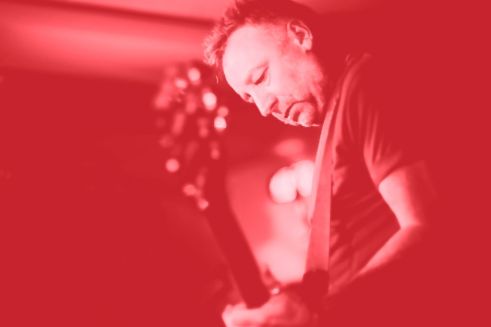
Next year will see Peter Hook & The Light touring Australia again, playing Adelaide on July 13, Brisbane July 16, Melbourne July 17, Sydney July 18, and Perth July 20. Talk about stamina. You can check out the venues, below, but in the meantime here’s an interview Cream conducted with Hook where he talks about the beginnings of one of the biggest bands in the world, that mucky middle bit, and what could have been the end…
Interview by Antonino Tati
Hi Peter. What made you realise it was the bass guitar you wanted to specialise in?
At the start, I didn’t know what a bass guitar was. Then we saw the Sex Pistols in 1976 and decided to form a punk group. Barney [Bernard Sumner] said to me, “You should play bass guitar”, so I went yeah, not knowing what the hell a bass guitar was. I went to the shop the next day and bought one but said to the guy, “It’s only got four strings and mine mate’s guitar has got six, and he said “That’s ’cause your mate has a guitar guitar and you’ve got a bass guitar.”
You learn something new every day! Bass was a pivotal part of the Joy Division and New Order sound. Consider that moody rumbling of yours on Love Will Tear Us Apart to start. Do you often like to change the bass up when playing live?
I’m actually guilty of playing a couple of versions of Love Will Tear Us Apart myself. We have the classic version, and we have a piano version that we play, so I am guilty of [changing things up]. I have reached the stage where I’m happy to acknowledge that people come and see you because they want to share something with you and what they want to share with you is that joyous song. The contradiction in that joyous song is that Ian Curtis wrote it about his disintegrating marriage which was not joyous at all. The lyrics are very, very bitter and very, very sad, yet the song is actually very joyous.
Malcolm McLaren had created a great mashup of Love Will Tear Us Apart with Captain & Tennille’s Love Will Keep Us Together. Have you heard it?
Yes, and I love it. I used to play it at every DJ gig I did. Incidentally, it was because Malcolm McLaren sold me my ticket to the Sex Pistols that fateful night in ’76 [when Peter joined Joy Division]. So I did feel the whole thing had come full circle. We actually played his version on the Joy Division Classical Tour and it felt really nice to do so.
“We were starting to go into electronica, hell for leather. And because it was brand new, you were on the cusp of a revolution; a post-punk revolution.”
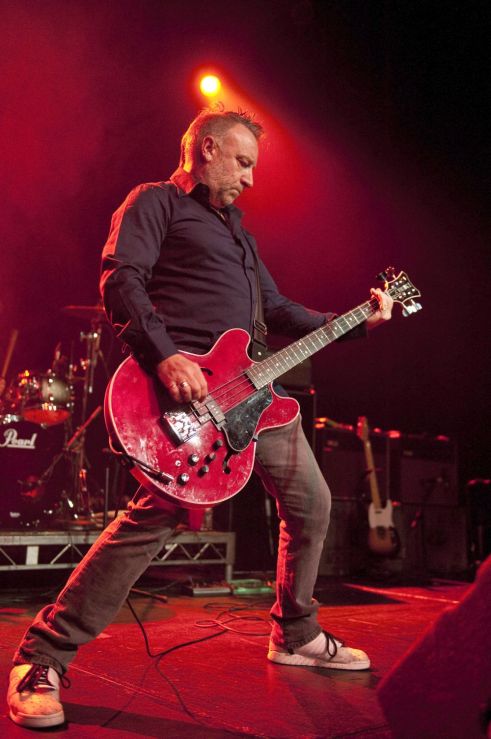
You and the other members of Joy Division, and then New Order, were an elusive lot. You didn’t do a lot of interviews or TV appearances. I’m wondering how you coped when the fame first came?
Our manager Rob Gretton used to say to me and Barney, “You two are a pair of fucking idiots so shut it, and let Ian do the talking.” Ian was always very eloquent – after all, he did deal with words, and he was much better at being in the spotlight than we were. The thing is, when Ian died, and we went [on] to New Order, Rob said, “I take it you won’t want to talk about Ian’s death, so let’s not do any interviews. Let the music speak for itself.” Which was what we pretty much did with Joy Division, anyway, and so we just carried it on into New Order.
“We were so busy trying to make up for the loss of Ian – which was huge – that we didn’t really have time to consider wanting to talk about anything. So, we we got let off the hook, really.”
Strangely enough, that added to our allure because the less we told about ourselves and the less we put our pictures on the [record] covers – we hardly put the titles on the cover – the more it piqued people’s interest.
Interesting, indeed.
They were hearing great music and it’s quite normal to want to know who’s behind the great music. But because we denied it them we became more interesting. Which, for a bunch of fucking idiots like us, it was quite handy.
Onto a more serious subject, you were there when Ian Curtis would have epileptic fits, and had to hold his tongue on several occasions.
Yes.
How hard did it hit you when he died?
Very hard, sad and difficult. I felt like I was partly at fault, and I think there were people around Ian, and around us, who felt equally at fault – for not knocking it on their head. But I think if you had knocked it on the head I’m not sure it would have done Ian much good.
When you morphed into New Order, the band’s sound took a somewhat more optimistic turn. Was that planned?
I’d love to tell you that there was some master plan behind it but there wasn’t. We’d been flirting with new pieces of equipment in Joy Division, including sequencers and drum machines, and our manager had decided to use all our money to buy all this equipment on a gamble it would pay off. He didn’t know anything about the equipment, he’d just heard it was the best thing since sliced bread. We had about 30,000 pounds worth of gear and yet we had no money. Then began the experimentation. The first sequenced song that we wrote was a song called Cramp [which ended up as the B-side to New Order’s fourth single Temptation]. Everything’s Gone Green was very electronic. Truth on Movement was very electronic. We were starting to go into electronica, hell for leather. And because it was brand new, you were on the cusp of a revolution; a post-punk revolution. In my estimation, we were the only working class band that had that equipment and we got that equipment through Joy Division’s demise and success. All the other bands were very middle-class.
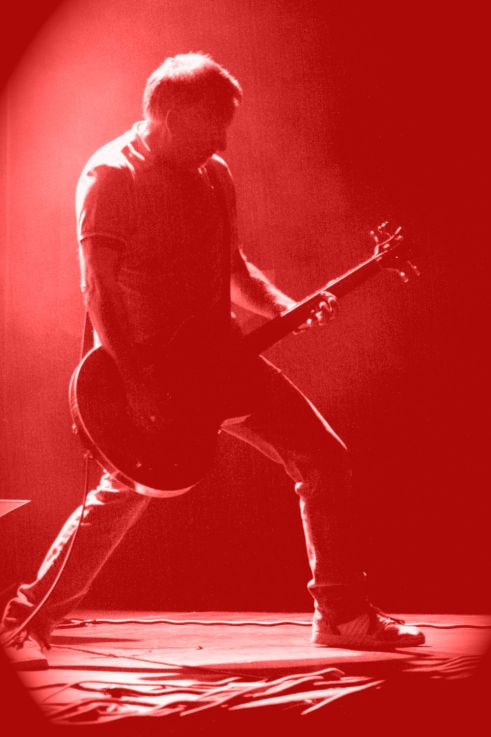
The examples of electronica you’ve helped create truly stand the test of time. Blue Monday certainly does, and whenever it’s remixed it is able to capture the club sound of any given era, if not kickstart a new one. Is it because you guys laid the foundation of something malleable to start with?
I think we laid down the foundation but we were just doing what felt natural. Just throwing ourselves into it with scant regard to anything else, and we worked our balls off to make it and it was a fulltime job being in the group. I’d have to say, without a hint of shame, that those accolades are deserved because of how hard we worked. Despite the remixes decades on, Blue Monday captures a moment in time in the same way that Love Will Tear Us Apart did for Joy Division. It is unique and whenever I hear it, I’m startled. The original sounds like it’s been made today.
So, despite shying away from the limelight, New Order ended up as one of the greatest bands in the electronic genre?
Yeah, I suppose we did. And by the way, you can do interviews like this with me any time [chuckles from the praise].
“Record companies are dishing out music that’s great for the club for two minutes, for when you’re off your tits or just high on life, but it doesn’t have soul.”
What do you think of music being made today by other artists? Often it takes up to eight songwriters to whip a up a song of about four lines, which is popular for about a week, then discarded because something newer has come along. Is today’s music going to be dismissed decades down the line, or will we be celebrating Cardi B, The Weeknd, and Taylor Swift 40 years from now?
To my mind they’re all instantly forgettable. The technology might be different but you still need good songwriters. With eight songwriters you’re always going to have a compromise with the product and it isn’t going to work. And if it doesn’t work, you just move on to the next one. In contrast, there’s a depth to songs by artists like Neil Young or Loudon Wainwright because they’re not written by eight songwriters. Record companies are the drivers here. They’re dishing out music that’s great for the club for two minutes, for when you’re off your tits or just high on life, but it doesn’t have soul.
Do you like the newer means of music distribution: streaming and downloads as opposed to physical records?
I am amazed and very happy to be listening to my Spotify, and paying each artist that I love 0.35% out of one pound – which is what I get when someone plays my track on Spotify. We all love the ease, but putting a record on has a lot of soul. When I’m putting a record on I’m going back to something that felt very wonderful and comfortable for me and I think that that’s moving through generations now. And the record companies have gone back to manufacturing vinyl because they can make a lot more money selling a record than they can with a download. They make significantly more than the artist does and the whole thing has become very unfair and very biased against the artist.
I think it’s been that way for some time, mate. So what else have you done to bring in the income?
I’ve been very lucky in that when New Order split up in 2007, I DJ-ed quite successfully for three years and then I realised I was really missing playing my own music and that was why I started Peter Hook & The Light. I was sick of the members of the band doing nothing to celebrate this wonderful thing we created. It’s like we just put it away in a box and hid it as though we were ashamed of it. Suddenly, I’m thinking I’m going to celebrate Joy Division without them two twats.
So you guys aren’t on speaking terms?
What makes you think that? [Laughs].
Well, lawsuits tend to have that effect on people.
No, we are not on speaking terms in any way, shape or form. I think their behaviour as human beings has been despicable and they’ve got a long way to go to change that. [I hear noise in the background]. My wife is just groaning in the background there. [Most likely with a semblance of reason, like she just wished the kids would make up and get on with it].
To round off the interview, Peter, I’d like to play a little word association.
Good god, you’re like my therapist.
It might be therapeutic.
Well alright then.
Digital downloads.
The ease is wonderful – and also as a musician it allows you to work remotely, so I have to thank technology for it.
Manchester vs London.
For me, we’ve won and we always have won. Most Manchester musicians, as soon as they’d gotten a modicum of success, would move to London. Like Noel Gallagher and Oasis, and all the rest of them that just hightailed it. The thing is, as I’ve got older and I’ve become more mellow, I’ve realised that where you are helps and I’m glad to suffer the slings and arrows of misfortune of still living in Manchester.
Moving on… Rishi Sunak.
Well he’d be no use in a fight, would he?
He’s somewhat of a git, isn’t he?
Yes. The political climate in England has been abysmal. And it’s not much better ’round the bloody world. Looking at Russia at the moment… oh my god, you just sit there with such despair at the inhumanities that people heap on each other. You know we shouldn’t be doing this. We’re supposed to be educated human beings; we’re supposed to be empathic but the way we’re treating each other is terrible. Anyway, I’m gonna find it very hard to vote for Rishi Sunak.
Boris Johnson.
A once-in-a-lifetime occurrence.
Donald Trump.
Another once-in-a-lifetime occurrence; and I think these once-in-a-lifetime occurrences are getting much too much. [For the record, there can only be one once-in-a-lifetime occurrence, but Hooky definitely has a point].
Brexit.
Brexit has fucked me right up, mate. From what I can see in England, it’s been the biggest mistake we’ve made in our political history and I blame it all on bloody David Cameron because he makes Rishi Sunak look butch. It’s been a tragedy for us. These politicians make some dreadful mistakes. You sit there in front of the telly and you’re like, “I can do better than that”.
Reality TV.
I watch a hell of a lot of reality TV and I end up shouting at the TV a lot. I got asked to do Celebrity Big Brother but I was in rehab for alcoholism so I’m glad I didn’t do that one. And I got asked to do I’m A Celebrity, Get Me Out Of Here three or four times, and the family threatened to go on strike if I accepted. So I was banned, if you like, and I think their judgement was best. So I passed the gig on to Shaun Ryder of The Happy Mondays and he passed it onto Bez. And Bez won Celebrity Big Brother in the end.
What did you think of Pete Burns in Celebrity Big Brother?
That was car-crash TV, that was. I’d known Pete for a while and he was a character – a very strong character.
Yes. I once styled a shoot with him and had to return tens of thousands worth of Versace clothing, virtually ripped to shreds by Pete Burns.
He was a beast.
One more question to round off the interview; what would you be doing if you weren’t making music?
I would have achieved my ambition of working in a scrap yard. All I wanted to do was tinker with old cars. I’m so happy there. Tony Wilson of Factory Records once described me as the only musician he knew who could fix your Cortina then go into a recording studio and put down a killer bassline.

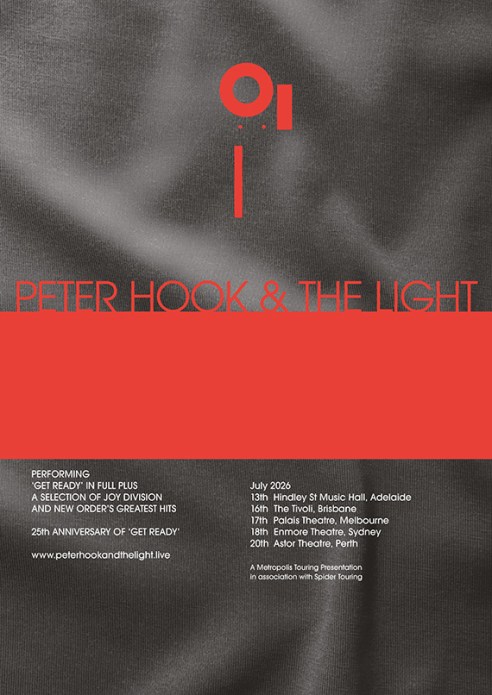
Peter Hook & The Light tour Australia in July 2026. Dates and venues below.
PETER HOOK & THE LIGHT | 2026 AUSTRALIAN TOUR DATES
Monday 13th July – ADELAIDE, Hindley St. Music Hall
Thursday 16th July – BRISBANE, The Tivoli
Friday 17th July – MELBOURNE, Palais Theatre
Saturday 18th July – SYDNEY, The Enmore Theatre
Monday 20th July – PERTH, Astor Theatre
Tickets:
Pre-sale: Thursday 11th September @ 10:00 am local
General Public On Sale: Modnay15th September @ 10:00 am local
From: metropolistouring.com
[Hear parts of this interview in the audio clip, above; the audio also houses a couple of Joy Division and New Order tracks.]





RTRFM | 80s and 90s Alternative Music Special | Presented by Antonino Tati & Simone Harle

Discover more from
Subscribe to get the latest posts sent to your email.
