
World Octopus Day… Here are 8 fascinating facts about these slippery creatures


October 8 is World Octopus Day. Convenient date and appropriate month name. And why shouldn’t these astonishing creatures have their own day of recognition? Heck, Cream even featured an octopus on top of the head of one of our models back in 1999 when pop culture was going through a really odd stage.
Octopuses (note, the plural isn’t and has never been octopii) are vital players in maintaining the ocean’s balance, helping ecosystems thrive while inspiring scientists with their problem-solving skills and unique behaviours. Here are eight fun facts about these eight-legged creatures of the sea.
Compiled by Antonino Tati
01. Octopuses each have three hearts that pump blue blood
Octopuses have three hearts: two of these that pump blood to the gills, and one that pumps blood to the rest of the body. Their blood is blue because it contains copper-based substance called hemocyanin, which is more efficient than hemoglobin in cold, low-oxygen environments.
02. They are super-smart
These creatures are highly intelligent. They can solve puzzles (well the Sudoku book might get a bit wet), open jars, use tools, and even recognise individual humans. Their problem-solving abilities rival those of some mammals and birds.

03. Each of an octopus’s eight arms has a mind of its own
Two-thirds of an octopus’s neurons are in its arms, not its brain. Each arm can independently taste, feel, and respond to stimuli, even if disconnected from the body (for a short time).
04. These slippery beings are masters of escape
They can squeeze through any opening so long as it’s larger than their beak (the only hard part of their body). This makes them notorious escape artists in aquariums.
05. They are instant camouflage artists
Octopuses can change colour, pattern and texture instantly to match their surroundings, thanks to specialised skin cells called chromatophores, leucophores, and iridophores.
They can also “disappear” in their own ink. When threatened, an octopus shoots out a cloud of ink that dazzles and confuses predators and hides their escape. The ink can also dull a predator’s sense of smell.
07. They do, unfortunately, live short but intense lives
Most octopuses live only one to two years. Shortly after mating, the males die, and the females stop eating and die after guarding their eggs, making it a tragic but biologically efficient life cycle.
08. They have no bones and so are even more flexible than we thought
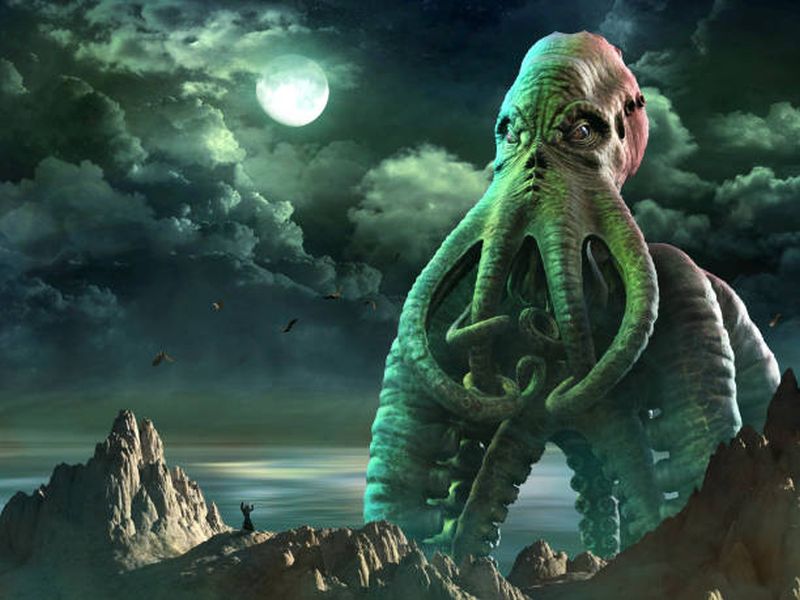
Being completely boneless, octopuses can flatten and slip into impossibly tight spaces. This gives them a huge survival advantage in rocky crevices and coral reefs. Now, if these creatures had fore thumbs, we humans would be doomed. It’s no wonder so many powerful creatures in fantasy, sci-fi and anime end up looking and behaving ‘octopus’ like.

Discover more from
Subscribe to get the latest posts sent to your email.
