
From the Vault: an interview with Suede frontman Brett Anderson, new album ‘Antidepressants’ out now
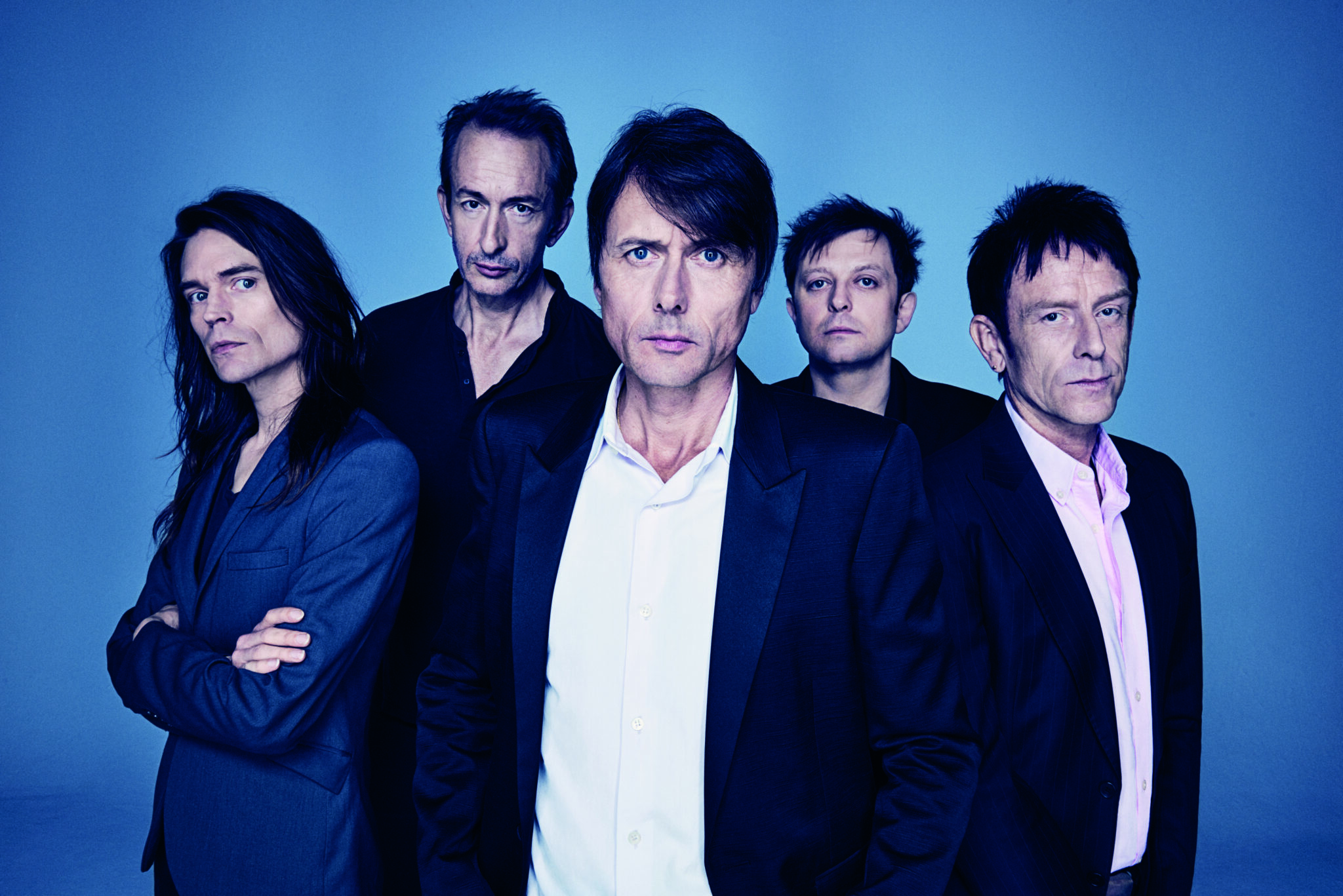
Suede today, with frontman Brett Anderson still penning brilliant songs, the latest heard on their 2025 album, Antidepressants.
Suede had a massive impact on the music scene back in the early 1990s: a time when Britpop ruled the roost and beneath it a bunch of alternative music genres, each unique but with a certain sellable pop sensibility. Far from joining the shoe-gaze brigade that began with Happy Mondays and culminated with Blur and Oasis, lead singer Brett Anderson and his band put pop to the test by making it ambitious, ambiguous and arty all at once.
With a little alliteration in their lyrics, and plenty of catchy riffs from their guitar strings and synths, the band delivered a brand of head candy that kept ringing in listeners’ minds way after the records ended.
Some of their best songs have been straight-out glam rock; others sci-fi lullabies that could best described as cinematic-like soundtracks to those strange thoughts that wake you at four-o’clock in the morning.
Fey but sensible frontman Brett Anderson spoke with me about androgyny, money, drugs, isolation, and the various elements of the pop life in between.
Interview by Antonino Tati conducted in 2011.
Hi Brett. Your debut self-titled album was the fastest-selling record at the time. How did it feel to be so huge so suddenly?
It was a big shift; and a lot of fun. When you’re four blokes going from living on baked beans to being in the international spotlight, you’re going to have a good time with it. We were doing something really original at that time. You have to look at it in context. Other bands were using rock clichés and there weren’t many people writing about their own lives. Suede reminded people that you can look at the world around you and you can document that, rather than try to live your life through John Lennon’s [a dig at Oasis there, I’m pretty sure].
Your music has never been mundane and there’s always a certain ambiguity to it, where people of all facets of life can relate.
I think that’s the most interesting form of writing, where the listener can bring something to it as well. If you know exactly what a song’s about, there’s a lack of mystery to it. I’ve always thought the best writing is something more open-ended.
‘Suede’, the debut LP, went on to win the 1993 Mercury Prize, and you went on to donate the 25,000 pounds to cancer research. That’s quite an astonishing act for a band who was being branded by the conservatives as troublesome rock’n’rollers.
We didn’t like the concept of just giving rock stars whole loads of money, willy-nilly. We felt there were other people that needed it more. At that time, for us, it was about the award, not about the cheque. We figured we’d all sort of had issues with cancer in our lives and so thought it would be good to pay it forward.
When the unit sales income started to come in, did things begin changing for you on a material level? Did you find yourself behaving more decadently?
Well, money changes everything, doesn’t it? You get opportunities and possibilities with it that you’ve never had before. But I’ve never been the sort of person that pursues money for its own sake. Money’s just something that comes into my life through me doing what I love doing. I think once you start pursuing money and making music for the wrong reasons – trying to second-guess the market and trying to just write music that’s going to get played on the radio – then you’re in all sorts of trouble. Over half of what you do has got to be a love for what you do.
A lot of your songs have stood the test of time. Just the other week a friend of mine, Mauricio Alpizar, had a runway show for his label and used ‘She’s In Fashion’ for the soundtrack. It sounded as fresh then as it did decades prior.
Nice. Whenever we play, a lot of those songs sound incredibly contemporary. It doesn’t feel like we’re playing songs from 10, or even 20, years ago. I think if a song’s a good song, it’ll hold a current power.
On a contemporary level, in aesthetics, I sort of look at the new generation and spot a lot more kids with a Brett Anderson-influenced image than, say, a Liam Gallagher one. I think your look has successfully filtered through, compared to the lad look, for example.
It’s a very cyclical thing, fashion. A whole look will be in for a while and then it’ll be out again. But I know what you mean, that slightly androgynous look that we kind of pioneered in the early Nineties keeps coming back into fashion.
“When you’re [then] four blokes going from living on baked beans to being in the international spotlight, you’re going to have a good time with it.”
I’d like to talk about one particular album ‘Dog Man Star’. It’s a trippier LP compared to the previous ones and those that followed it. Were you dabbling in illicit substances during the songwriting for it?
You know, there’s a lot more interesting elements to the music than the drugs. I’d say the sense of isolation on that album is a much more interesting factor than the drugs on that album. If you’ve got to boil it down to one element, it’s about isolation: the inability to communicate with one other being.
Surely you agree that the opening lyric alone – ‘Dog Man Star took a suck on a pill, stuffed his cerebellum with a curious quill’ – could allude to an artist inspired by drugs to write songs? Would you say drugs have been an influence to your songwriting?
It’s difficult for me to say. I don’t know what would have happened if… Well, you can’t sort of rewrite history but I certainly wouldn’t say that taking drugs is in any way inspirational.
What about The Beatles’ peak period, or David Bowie’s early days? Weren’t those artists inspired while under the influence?
I can’t speak for them but I think inspired people are the kind of people that tend to gravitate toward drugs. But drug-taking, per se, doesn’t make you inspired.
Fair enough. In your songwriting it seems you’ve never had to compromise the thoughts and words that flowed from your pen, or indeed, quill. Were there ever times where you felt your writing was ‘way out there’ that you actually did have to curb it; to make it more ‘understandable’ for the listener?
I’ve always written wanting to communicate. I don’t want to just sit there and write a stream of psychobabble. The songs that I find amazing are songs that speak to me, not just a series of nonsense words. I’ve also kind of liked writing in a classical sense. Songs that have a timelessness to them and not just a contemporary currency.
Does it erk you when you hear common songs on the airwaves of the ‘Ooh baby, twerk it’ sort?
That sort of music is just business, isn’t it? It’s a completely different genre. I wouldn’t even describe it as music. It’s just ‘product’ and doesn’t compare, really.
Do you find you’re more yourself when on stage?
It’s an artificial situation being on stage. The very act of being up there is unnatural; it’s not like you’re sitting at home having a cup of tea. It’s not you; it’s a particular version of you. I don’t know how to answer that, really, but I express myself in a way that feels natural to me. And you know, there’s nothing quite like the energy you can harness from 50,000 people. It’s spectacular.
Have you ever felt uncomfortable about the bisexual allusions toward you?
Well, I don’t feel comfortable with the misinterpretation of it. The androgyny of the band definitely comes from the fact that Suede started in the late Eighties which was a time of Ecstasy and rave culture. There was a sense that sexual barriers were being broken down. It wasn’t about what sex you were; you were an emotional being rather than a sexual being. And a lot of the imagery of Suede comes from that era. But it wasn’t specifically supposed to be foppish. And a lot of the open-mindedness in songwriting that we’ve talked about was borne of that time. That said, I regret the way the media inevitably tried to put you in a box and limit you.
So the ‘Too Fey or Two Faced’ headlines were something you didn’t like seeing?
Some journalists, with all due respect, will never let the truth get in the way of a good story.
“There was a sense that sexual barriers were being broken down. It wasn’t about what sex you were; you were an emotional being rather than a sexual being. And a lot of the imagery of Suede comes from that era.”
Do you wish you could take back some of your quotes, like the one where you said you were “a bisexual man who’d never had a homosexual experience”?
I was talking about the way I approached songwriting when I said that. I was saying I like to put myself into other people’s shoes; write from other people’s points of view. It wasn’t as crass a statement as it seems.
Of course not, and I don’t think fans saw it that way. Suede had a certain affect on critics and public alike where people either really ‘got’ and liked you, or didn’t get you and disliked you. Did you like the challenge of simultaneously uniting and dividing?
Yeah. I think the duty of a good band is to polarise people. Who wants to see an act that everyone likes? I’d rather be in one that some people love and some people hate. And you’re right, that’s just what Suede did.
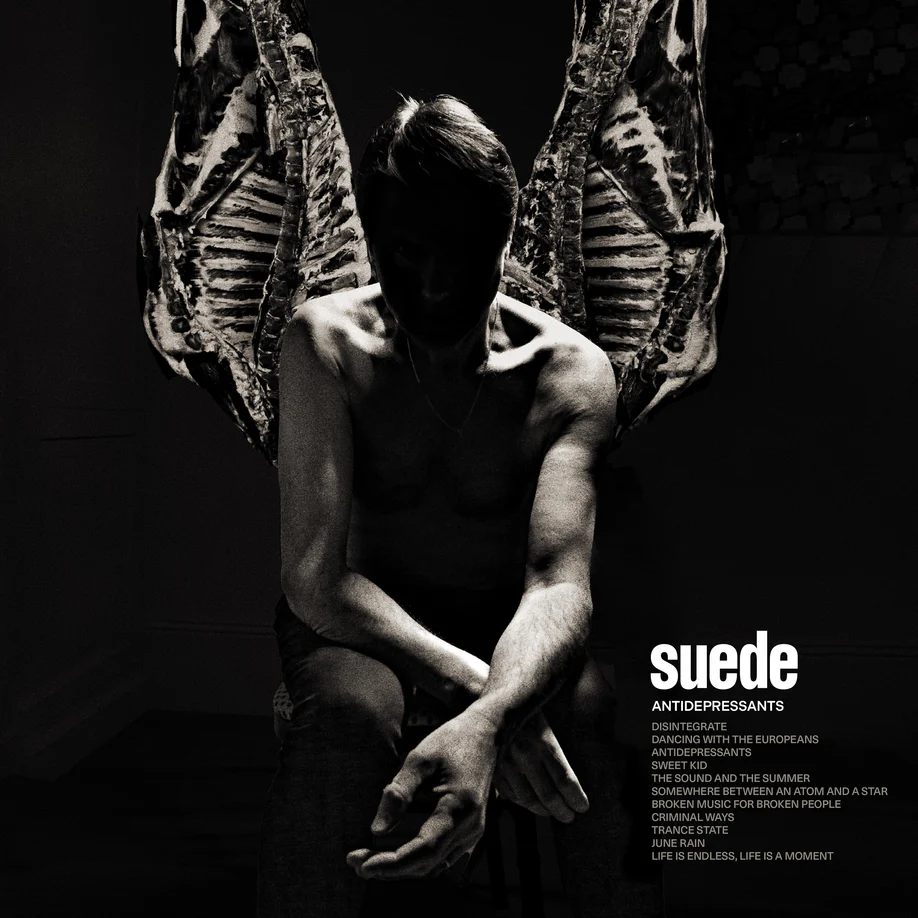
Suede’s new album ‘Antidepressants’ is out now.
It is their tenth studio album, and can be described as a post-punk record that explores themes of mortality and modern disconnection.

Why Madonna’s ‘Veronica Electronica’ is not all it’s cracked up to be… just kind of broken

Where have all the good songs gone? A critique on the sad postmodern state of contemporary pop music
Codes And Conventions (an unconventional album by Cream’s founding editor Antonino Tati)

Discover more from
Subscribe to get the latest posts sent to your email.
