
Climate change is making a mess of weather forecasting: 6 reasons why our weather reporters might want to start looking for new careers

For better or for worse, today is World Meteorological Day. And with so many other special occasions coming up on our social calendars, we figure this is one party that’ll be a real downer – especially given the state of global warming. Not a lot to celebrate on that front, we’re afraid.
This supposedly important day was created to commemorate the coming into force of the “Convention Establishing the World Meteorological Organisation on 23 March 1950” (source: the World Meteorological Organisation, of course).
It’s supposed to showcase the “essential contribution” of meteorological and hydrological services (agencies that monitor and forecast the world’s water cycle). Note for next Monday’s board meeting: the ice caps are melting real fast. Again, not a lot to celebrate.
Recently we read an article that said the Bureau of Metereology in Australia (aka: BOM) has admitted it cannot get its weather predictions right. The agency has faced significant criticism regarding the accuracy of its forecasts and the usability of its newly redesigned website that cost a hurricane of an amount of $96 million for its revamp in late 2025.
Sorry to rain on your parade today folks, but it looks like a lot of you won’t have the same job in four or five years time, especially with the rapid changes in Ai technology – which would likely get things closer to the correct degree than any seven-year-studied scientist in a musty lab coat might.
Here, Cream presents six reasons why the Bureau of Meteorology is all but redundant these *transeasonal* days.
Article by Lisa Andrews & Antonino Tati
01. There’s plenty of alternative private weather services
Readers have access to countless weather providers – including apps and global forecasting companies – that can aggregate satellite data and offer hyper-local forecasts in a matter of seconds. Which brings us to…
02. Everychanging technology and automation
Artificial intelligence and automated forecasting models can generate predictions with minimal human input. This raises the question of whether a large centralised agency such as BOM is still necessary for routine forecasts, especially when it pisses millions of dollars down the drain – which is good potential bot-making money wasted.
03. Perceived inefficiencies or beureaucracy
As a government body, BOM has faced criticism for being slow to innovate and adapt – compared to fresher, keeer private-sector competitors. Some argue this makes it less responsive to changing user expectations. You could say its resting on its laurels – except the laurels are probably prickly and dry during winter and damp and mushy in summer. Note to self: try to invent a laurel that is transeasonal and adapts to the day-to-day (extreme) changes in the weather wherever we might be located in the world.
04. The work of BOM is hyped up by legacy media if while things are looking grim
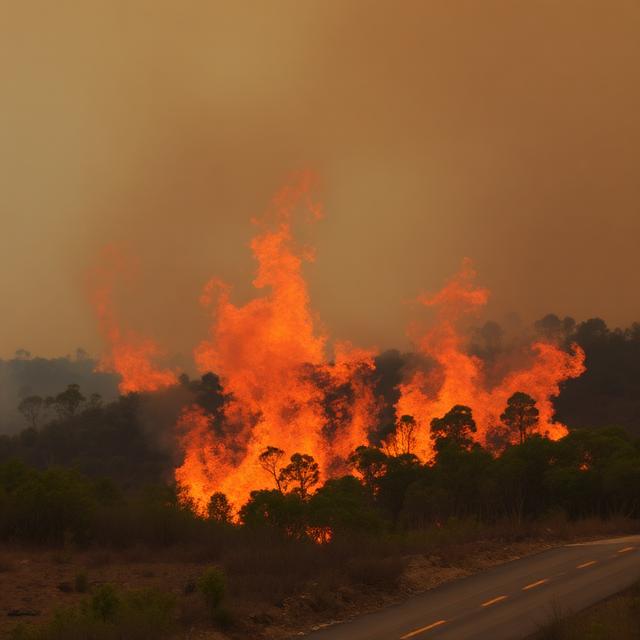
Ever noticed how your general weather reporter tells you about extreme changes in local temperatures and the fallout effects of global warming without flinching. There’s never any true scientific explanation for why there’s a sudden flood in Queensland at the peak of summer, sudden rampant bushfires, or why tens of sharks are suddenly circling any given beach off the coast of W.A. Just big cheesy white smiles that spout things like, “The sun’s really going to shine tomorrow” (ie: 42 degrees in Sydney) or “better grab that raincoat from the back of the closet” (in the middle of an Australian Christmas). Whether the truth being hidden behind plastic smiles is a coping measurement or something done to keep the masses calm, there’s really nothing to smile about, Annika.
05. Public criticism and trust issues
There have been periodic debates about forecasting accuracy, climate communication, and data handling. For some critics, these issues reduce confidence and reinforce the idea that weather-forecasting alternatives are preferable.
06. Competition from tech platforms
Major tech companies like Google and Apple now integrate weather forecasts directly into their platforms. For many users, these built-in services have effectively replaced direct interaction with official agencies.

Discover more from
Subscribe to get the latest posts sent to your email.
