
How Tokyo is Redefining the Corporate Getaway for Creative Professionals
The traditional business trip, once defined by sterile boardrooms and rigid itineraries, has undergone a radical transformation over the past few years. For decades, corporate travel was viewed purely as a functional necessity. Professionals would fly into a city, attend their scheduled meetings, and leave without ever truly experiencing the local culture. Today, the modern creative professional refuses to separate their career ambitions from their personal inspiration. We have entered the era of blended travel, where the lines between work, leisure, and artistic stimulation are beautifully blurred.
Nowhere is this shift more apparent than in Japan. Tokyo, a city that effortlessly balances centuries of ancient tradition with cutting-edge futuristic design, has emerged as the ultimate destination for the new corporate getaway. It is a metropolis that caters directly to individuals who understand that their best ideas do not come from sitting at a desk, but from engaging with the world around them. For those operating at the intersection of business, pop culture, and design, a trip to the Japanese capital is no longer just a networking opportunity. It is a deeply immersive experience designed to reboot the creative mind.
The Evolution of the Modern Business Trip
The catalyst for this shift in travel behaviour can be traced directly to the global normalisation of remote work. As teams became dispersed across different time zones, the daily requirement to sit in a centralised office vanished. However, this newfound freedom also created a strong desire for meaningful, in-person connection. Companies and independent professionals quickly realised that while deep work can happen anywhere, collaborative innovation requires a shared physical experience.
The traditional business trip has been entirely reimagined to meet these new psychological needs. According to industry research from Skift, with nearly 90 percent of business travellers surveyed reporting that they work remotely at least part of the time, there is a massive shift towards flexible, purpose-driven corporate getaways. Professionals are actively seeking environments that offer more than just high-speed internet and standard conference facilities. They are looking for destinations that challenge their perspectives and spark new ways of thinking.
Tokyo answers this call with unmatched sophistication. The city operates on a frequency that is inherently stimulating. From the neon-drenched streets of Shibuya to the quiet, meticulous gardens of Chiyoda, the visual contrasts alone are enough to break through creative blocks. For a visiting professional, simply navigating the city becomes an exercise in observing excellence, whether it is admiring the precision of local transit or experiencing the deep cultural reverence for hospitality.
The Psychological Impact of Architectural Space
To truly understand why Tokyo has become the epicentre for creative business travel, one must look at the profound impact that physical environments have on cognitive function. Psychologists and design experts have long noted that our surroundings directly influence our capacity for problem-solving and innovation. Sterile, uninspired spaces tend to yield rigid, predictable thinking. Conversely, environments that feature rich textures, curated art, and thoughtful architectural flow naturally encourage the brain to make novel connections.
Tokyo excels at this exact intersection of design and productivity. The city’s best hospitality venues are masterclasses in aesthetic balance.
For the modern professional, a well-designed space is non-negotiable. In fact, the growing preference for old school designs that are making a comeback in 2026 proves that blending classic comfort with contemporary flair actively boosts cognitive flexibility and creative output. The resurgence of heritage interior styles, such as Mid-Century Modern and Art Deco, highlights a collective desire for environments that feel both grounded in history and completely functional for modern demands.
In Japan, this concept of blending the old with the new is a foundational cultural principle. When this philosophy is applied to spaces designed for business travellers, the result is an environment that calms the nervous system while engaging the intellect. Muted colour palettes, sustainable craftsmanship, and functional layouts provide a visual harmony that allows professionals to focus deeply on their work before seamlessly transitioning into evening networking or cultural exploration.
Establishing a Basecamp for Innovation
When planning an immersive corporate retreat, selecting the right accommodation is perhaps the most critical decision a professional can make. The hotel is no longer just a place to sleep between meetings. It serves as the basecamp for the entire experience, acting as a sanctuary for focused work, a gallery for artistic inspiration, and a social hub for serendipitous encounters with other global thinkers.
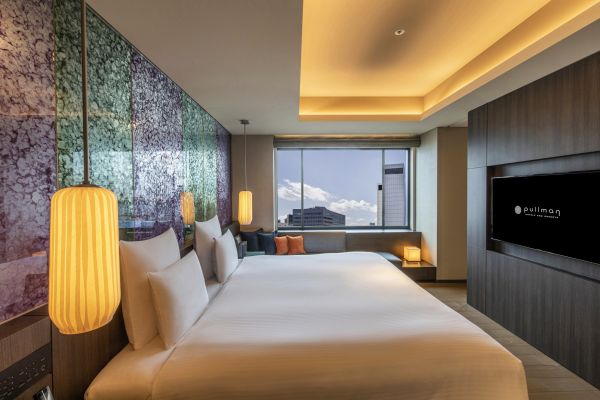
When evaluating the landscape of five star hotels in Tokyo Japan, modern creatives are looking beyond standard luxury. They prioritise properties that offer a distinct personality and a sophisticated cultural narrative. Properties like Pullman Tokyo Tamachi serve as the perfect example of this new standard, effortlessly merging French elegance with distinct Japanese cultural elements. By combining premium luxury with an artistic soul, these spaces provide the exact kind of environment that today’s travelling professionals demand.
Location also plays a vital role in the success of a corporate getaway. A strategic basecamp must offer immediate proximity to major business districts while remaining slightly removed from the overwhelming chaos of the main tourist hubs. Areas like Tamachi provide this ideal balance. Nestled alongside scenic canals and offering swift access to the broader metropolis, a well-chosen location allows professionals to dip into the high-energy business centres when necessary, and retreat to an art-furnished lounge when it is time to process their ideas. A chic rooftop bar or a thoughtfully curated lobby transforms from a simple hotel amenity into a dynamic networking venue, where casual conversations over craft cocktails often lead to the most valuable international partnerships.
Discover more from
Subscribe to get the latest posts sent to your email.

Leave a Reply