THE NEW. RETRO. MODERN.

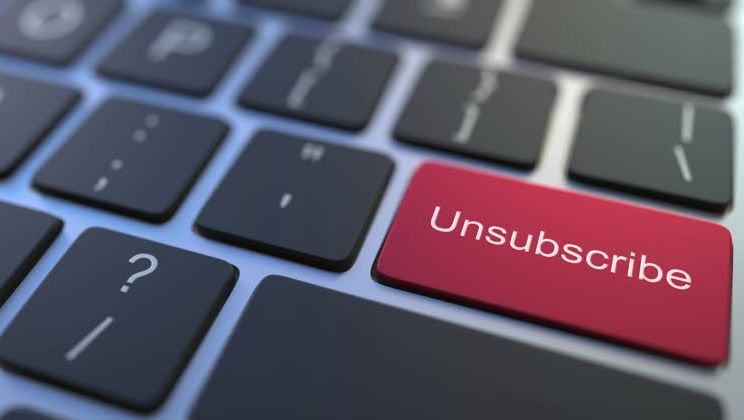
Why it might be time to press pause on some of those digital subscription services

The other day I got scammed online. It happens to the best of us. Mine was a dodgy subscription through a software company allegedly set up in the Ukraine. At first, I thought it was just an innocent error because, you know, it’s innocent Ukraine (hmmm).

I’d subscribed to a bit of computer software that I didn’t need the full package of, and figured why part with a full $99 when I could just pay a small monthly instalment for ad hoc use, the usual 7 days free trial included. I got my 7 days, cancelled prior to end of the trial, then saw a full year’s payment still went through. Then another year’s. Then another year’s. Repeating even when I’d told my bank to stop them.

Despite the drama and hoops I had to go through to stop the transactions from continuing, I’m still not overtly petrified with dealing with digital services and subscriptions. I don’t think many of us are.

Where once we’d tremble pressing that Subscribe button for fear of being ripped off by some stranger, now we’re inclined to just go with the show, Joe, and suffer the potential bureaucratic consequences afterwards.

Apple, Amazon, Netflix, Binge, Disney, PlayStation, Paramount, Prime, Fetch, Stan, Hubbl… there’s at least one of these you’re likely subscribed to. We let these companies take their monthly (sometimes daily) fees and surcharges as we get along with our busy lives, knowing that at the end of the day, there’s a cosy couch to relax to and a host of services to tune into for the full chill experience.

In some cases, the charges are economically priced and fair – at least to start; in other cases it’s an absolute rort, especially the sudden hikes in subscription prices.

Either way, we work our way through this popular streaming channel… that niche digital library… and those newer ‘all-your-media-in-the-one-place’ platforms that only add to the overload, calculating what we owe here and there or, alternatively, forgetting what we’ve subscribed to as our money goes down the digital drain.

The digital subscription phenomenon is a huge one at the moment. Where once media was delivered to us one-way – from television station to our homes, or newspaper publishing house to our front lawn – we’re now sold a perceived advantage of being able to ‘curate’ our own media-receiving portfolio.

But with so many options put forward to us every other week, it becomes less of a clean curation exercise and more of a chaotic crap-fest. Still, we’re signing on in the millions while the owners of these service providers rake in the billions.

According to digital analytics website Stocklytics.com, people worldwide spend around half a trillion dollars on digital media subscriptions and downloads annually. Subscription businesses have grown tremendously over the past couple of years, enduring beyond the pandemic surge.

Roughly half the revenue comes from video games, the market`s largest and highest-grossing segment. Statistics show consumers spent almost $250 billion on video game subscriptions and downloads, translating into an average spending of $205 per user. 

While far below video games in total subscription spending, video-on-demand saw even bigger growth. Last year, an average internet user spent $56.5 on video-on-demand subscriptions, seeing global full-year spending jump to nearly $160 billion. This represents a massive 20% increase year-on-year, the biggest among all digital media categories. Digital music subscriptions follow with an 11.7% increase and $36.3 billion in total spending.

Statistics show the US is by far the biggest spender in digital subscriptions, with the average American having spent over $850 on digital media subscriptions and downloads last year – twice as much as Brits or Germans and almost five times more than the global average.

Japanese follow Americans with $150 less in total subscription spending or roughly $700 per internet user. With an average spending of $563 per user, South Korea ranked third, outpacing Western countries like Germany, the UK, and France.

Australians ranked as the 7th highest nation in digital service spending with each of us dishing out over $400 on digital subscriptions and downloads per year.

With digital services being intangible and the buying and selling of these being virtually invisible, it’s an easier market for scam artists to tap into. The Australian Competition and Consumer Commission’s (ACCC) Scamwatch service received 301,791 scam reports in 2023 (up 26 per cent on 2022 and presumably even higher in 2024 and ’25).

Says ACCC Deputy Chair Catriona Lowe, “As scammers become increasingly sophisticated in their tactics, it is clear a coordinated response across government, law enforcement and the private sector is essential to combat scams more effectively.”

While our relatively lazy government takes its time responding to combatting scams in Australia, the rest of us will have to remain diligent, perhaps even choosing to press pause on some of the dozens of services we’re willy-nilly subscribing to.

It might mean we have to put up with more annoying ads in the interim but then weren’t they so much worse back in the day when old-school media were dishing them out to us? At least the new ad influx is algorithm-tailored.

Antonino Tati


Why it might be time to press pause on some of those digital subscription services

The other day I got scammed online. It happens to the best of us. Mine was a dodgy subscription through a software company allegedly set up in the Ukraine. At first, I thought it was just an innocent error because, you know, it’s innocent Ukraine (hmmm).

I’d subscribed to a bit of computer software that I didn’t need the full package of, and figured why part with a full $99 when I could just pay a small monthly instalment for ad hoc use, the usual 7 days free trial included. I got my 7 days, cancelled prior to end of the trial, then saw a full year’s payment still went through. Then another year’s. Then another year’s. Repeating even when I’d told my bank to stop them.

Despite the drama and hoops I had to go through to stop the transactions from continuing, I’m still not overtly petrified with dealing with digital services and subscriptions. I don’t think many of us are.

Where once we’d tremble pressing that Subscribe button for fear of being ripped off by some stranger, now we’re inclined to just go with the show, Joe, and suffer the potential bureaucratic consequences afterwards.

Apple, Amazon, Netflix, Binge, Disney, PlayStation, Paramount, Prime, Fetch, Stan, Hubbl… there’s at least one of these you’re likely subscribed to. We let these companies take their monthly (sometimes daily) fees and surcharges as we get along with our busy lives, knowing that at the end of the day, there’s a cosy couch to relax to and a host of services to tune into for the full chill experience.

In some cases, the charges are economically priced and fair – at least to start; in other cases it’s an absolute rort, especially the sudden hikes in subscription prices.

Either way, we work our way through this popular streaming channel… that niche digital library… and those newer ‘all-your-media-in-the-one-place’ platforms that only add to the overload, calculating what we owe here and there or, alternatively, forgetting what we’ve subscribed to as our money goes down the digital drain.

The digital subscription phenomenon is a huge one at the moment. Where once media was delivered to us one-way – from television station to our homes, or newspaper publishing house to our front lawn – we’re now sold a perceived advantage of being able to ‘curate’ our own media-receiving portfolio.

But with so many options put forward to us every other week, it becomes less of a clean curation exercise and more of a chaotic crap-fest. Still, we’re signing on in the millions while the owners of these service providers rake in the billions.

According to digital analytics website Stocklytics.com, people worldwide spend around half a trillion dollars on digital media subscriptions and downloads annually. Subscription businesses have grown tremendously over the past couple of years, enduring beyond the pandemic surge.

Roughly half the revenue comes from video games, the market`s largest and highest-grossing segment. Statistics show consumers spent almost $250 billion on video game subscriptions and downloads, translating into an average spending of $205 per user. 

While far below video games in total subscription spending, video-on-demand saw even bigger growth. Last year, an average internet user spent $56.5 on video-on-demand subscriptions, seeing global full-year spending jump to nearly $160 billion. This represents a massive 20% increase year-on-year, the biggest among all digital media categories. Digital music subscriptions follow with an 11.7% increase and $36.3 billion in total spending.

Statistics show the US is by far the biggest spender in digital subscriptions, with the average American having spent over $850 on digital media subscriptions and downloads last year – twice as much as Brits or Germans and almost five times more than the global average.

Japanese follow Americans with $150 less in total subscription spending or roughly $700 per internet user. With an average spending of $563 per user, South Korea ranked third, outpacing Western countries like Germany, the UK, and France.

Australians ranked as the 7th highest nation in digital service spending with each of us dishing out over $400 on digital subscriptions and downloads per year.

With digital services being intangible and the buying and selling of these being virtually invisible, it’s an easier market for scam artists to tap into. The Australian Competition and Consumer Commission’s (ACCC) Scamwatch service received 301,791 scam reports in 2023 (up 26 per cent on 2022 and presumably even higher in 2024 and ’25).

Says ACCC Deputy Chair Catriona Lowe, “As scammers become increasingly sophisticated in their tactics, it is clear a coordinated response across government, law enforcement and the private sector is essential to combat scams more effectively.”

While our relatively lazy government takes its time responding to combatting scams in Australia, the rest of us will have to remain diligent, perhaps even choosing to press pause on some of the dozens of services we’re willy-nilly subscribing to.

It might mean we have to put up with more annoying ads in the interim but then weren’t they so much worse back in the day when old-school media were dishing them out to us? At least the new ad influx is algorithm-tailored.

Antonino Tati


Why it might be time to press pause on some of those digital subscription services
Andy Warhol: a man of many faces paid homage to in 14 mini figures by Kidrobot

When I think of pop artist Andy Warhol, I automatically picture him in black jeans, black polo and a white pussy-cat wig. The wardrobe was surprisingly minimalist for a man who once splashed so much colour onto canvas.

But occasionally Andy would dress up in the most outlandish of outfits, especially if it was for a dress-up party or a photo shoot for a magazine – like the time he dressed as caped crusader Robin alongside rock singer Nico as Batman in a 1960s spread in Esquire magazine. Andy Warhol as Robin with Velvet Undergound frontwoman Nico as Batman, photographed by Frank Bez.

Warhol also donned boxing gear alongside street artist Jean-Michel Basquiat, the pair of them taking the mickey out of everyone’s assumption they often sparred for attention in the art world. And who could forget the various forms of drag Andy executed, even if it meant a just pasty white makeup, ruby red lipstick and lopsided platinum wig that made street hookers look fancy.

So, yes, Andy Warhol did dolly himself up on occasion, despite the regular head-to-toe black he wore.

To commemorate the pop artist in all is sartorial glory, pop vinyl figure creators Kidrobot have released the Many Faces of Andy Warhol series – featuring 14 variants of the greatest pop art icon himself.

Covering three decades of famous looks – from the simple, black glasses and white hair, to the sublime (that time he wore a human skull on his head), each three-inch short figure makes a big statement.

There’s Madison Avenue 1950s, Technicolor 1980s, Point and Shoot Andy, Fright Wig Andy Warhol (a couple of those, actually), and even Space Fruit Andy.

Many looks, then, from the man who knew aesthetics were everything in the superficial world of glamour.

Antonino Tati


The Many Face of Andy collection is available through Popcultcha. Full set RRP $479 but it’s currently on special for $399.99.

Alternativley, you can purchase a blind box from the range and be surprise by what you get, at just $10.99 per mini figure, at the Andy Warhol collection on kidrobot.com.


Love or loathe his readymade art, a new docufilm is out that follows the antics of pop sculptor Jeff Koons

Documentary on Andy Warhol sheds new light on his upbringing and his influence on art and culture at large

Three of our favourite things from pop culture website, the boldly named Stupid Krap

The Cream Magazine Masthead


Rate this:

August 17, 2025, 6:17 am 0 boosts 0 favorites

Embracing the Madness: an interview with Róisín Murphy

Ground Control to Major Don: 60 Years of ‘Lost in Space’, an interview with actor Mark Goddard


Survival of the Fittest: an interview with rock poet Patti Smith from the Cream archives


Rate this:

September 2, 2026, 5:11 am 0 boosts 0 favorites

Andy Warhol: a man of many faces paid homage to in 14 mini figures by Kidrobot

When I think of pop artist Andy Warhol, I automatically picture him in black jeans, black polo and a white pussy-cat wig. The wardrobe was surprisingly minimalist for a man who once splashed so much colour onto canvas.

But occasionally Andy would dress up in the most outlandish of outfits, especially if it was for a dress-up party or a photo shoot for a magazine – like the time he dressed as caped crusader Robin alongside rock singer Nico as Batman in a 1960s spread in Esquire magazine. Andy Warhol as Robin with Velvet Undergound frontwoman Nico as Batman, photographed by Frank Bez.

Warhol also donned boxing gear alongside street artist Jean-Michel Basquiat, the pair of them taking the mickey out of everyone’s assumption they often sparred for attention in the art world. And who could forget the various forms of drag Andy executed, even if it meant a just pasty white makeup, ruby red lipstick and lopsided platinum wig that made street hookers look fancy.

So, yes, Andy Warhol did dolly himself up on occasion, despite the regular head-to-toe black he wore.

To commemorate the pop artist in all is sartorial glory, pop vinyl figure creators Kidrobot have released the Many Faces of Andy Warhol series – featuring 14 variants of the greatest pop art icon himself.

Covering three decades of famous looks – from the simple, black glasses and white hair, to the sublime (that time he wore a human skull on his head), each three-inch short figure makes a big statement.

There’s Madison Avenue 1950s, Technicolor 1980s, Point and Shoot Andy, Fright Wig Andy Warhol (a couple of those, actually), and even Space Fruit Andy.

Many looks, then, from the man who knew aesthetics were everything in the superficial world of glamour.

Antonino Tati


The Many Face of Andy collection is available through Popcultcha. Full set RRP $479 but it’s currently on special for $399.99.

Alternativley, you can purchase a blind box from the range and be surprise by what you get, at just $10.99 per mini figure, at the Andy Warhol collection on kidrobot.com.


Love or loathe his readymade art, a new docufilm is out that follows the antics of pop sculptor Jeff Koons

Documentary on Andy Warhol sheds new light on his upbringing and his influence on art and culture at large

Three of our favourite things from pop culture website, the boldly named Stupid Krap

The Cream Magazine Masthead


Rate this:

August 20, 2025, 6:17 am 0 boosts 0 favorites

Embracing the Madness: an interview with Róisín Murphy

Ground Control to Major Don: 60 Years of ‘Lost in Space’, an interview with actor Mark Goddard


In the company of muses and gods: an interview with rock poet Patti Smith from the Cream archives

Patti Smith is famous for fusing rock’n’roll with awesome poetry, most notably on her seminal LP
Horses. In this interview, Smith talks about surviving the heady days of the 1960s and ’70s, her peers including Jimi Hendrix and Jim Morrison, liaisons with lover Robert Mapplethorpe, and “keeping it together” throughout the decades.

Interview by Antonino Tati


Hi Patti, you have a bit of a hoarse voice there. Is it a cold?

Yes, it’s been going around New York and it’s a bit nasty. It makes you have coughing fits. But I feel better now.


And what’s the Patti Smith remedy for a cold?

Just to take steam showers, drink a lot of hot water mixed with lemon and honey, and rest.


Thanks for the advice, Doctor. I’m glad you’re ready to talk. Now, I believe your CV prior to singer/songwriter also revealed a stint in music journalism?

Well, I wasn’t very prolific. I did review some records… some blues artists – The Allman Brothers, Jimi Hendrix. I just did reviews of records that I liked, to help make a living. Really, I was a poet and a writer but I do love rock’n’roll, and writing about rock’n’roll in 1970 was rather new. Anyway, I wrote for Creem [the US-based title] and Rolling Stone.


A few years ago you released ‘Twelve’, an album of covers by artists who were your peers in the ’70s. Did it seem surreal to be, decades down the track, covering songs by artists with whom you’ve shared the stage? And some artists whom you reviewed?

Well, I wrote about Jimi [Hendrix again], and I wrote about Bob Dylan, and I wrote about the Stones, and the Doors. In a way it’s not surprising that the people I was covering were the people I ended up having long relationships with, in that I’d been listening to them for years and had been inspired and influenced by them.


“There’s a very small percentage of people that do want to rule the world, about 1% – the rich, the corporate, and the powerful – but I did that song really as a political statement.” – Patti Smith on covering ‘Everybody Wants to Rule the World’


Do you record in the studio as though you are performing live?
When we recorded Horses [Smith’s album that constantly makes it into “top 100 albums of all-time” lists] it wasn’t much different to playing live. I didn’t know anything about recording, we just performed in the studio the same way we would perform in a show – with only a little technology. And I still do the same.


On ‘Twelve’, you even managed to cover Tears For Fears’ ‘Everybody Wants to Rule the World’, sounding decidedly girly.

Well… I am a girl [laughs], and I was raised on girl groups: the Ronettes, the Crystals, Martha & the Vandellas, and maybe some of that shone through. I think that’s a good thing, and I actually think the ‘girlishness’ is inherent in that song. They were brilliant pop lyrics; very simple, yet they reflect the state and woes of our planet. There’s a very small percentage of people that do want to rule the world, about 1% – the rich, the corporate, and the powerful – but I did that song really as a political statement. It’s as much about corporate greed and my own country’s imperialist acts. But it’s also got a really nice groove.


And on The Beatles’ ‘Within You Without You’, you seem to come across even more down-tempo than George Harrison did. There appears to be a military bent to your take.

I wanted people to hear the lyrics, and I suppose it sounds militant because of the lyrics – which are very stoic. Sure, they have a Hindu philosophy that ‘love can change the world’, but it’s a strong point of view. It does ask us to examine our consciousness – are our goals in life materialistic or spiritual?


Or indeed, both? In today’s global state of affairs, the first thing that came to my mind hearing you recite the lyric ‘Are you one of them?’ was that the war does go on within you and without you, but there is something that you can do about it now if you want to…

Well a lot of good songs are like that. Even Rolling Stones’ Gimme Shelter. It’s a brilliant anti-war song and it’s almost like Mick Jagger asks us to examine our conscience: ‘War, children, it’s a shot away, and love is a kiss away’.

There is this myth about the musicians of your original era, that the new generation assume you were all taking drugs, being decadent, having orgies and so on. Can you clarify that conception?

Well the main aspect of my experimentation was in art. I wrote about things within art, but in terms of myself I’ve always had a very different view of drugs that my generation did. I did not believe that drugs were for recreational use. I believed drugs were sacred. And I didn’t relate to the drug culture. I knew so many people that took them, and they looked like babbling idiots. To me, you took a drug to expand your mind and learn something. Most people did so many drugs but weren’t learning anything. And a lot of people died from them, or they destroyed their brain or their teeth. Me, I smoked pot, I hung around with a lot of Rastafarians, and I took acid a couple of times, but I took it seriously. Every time I’ve taken a drug, I’ve done something with it. Like with pot, I’d write poetry. I’d use it for something creative.


It sounds as though it brought you together with some very creative people. You went out with photographer and artist Robert Mapplethorpe for a few years, of course.

I met Robert when I was 20, and he was my boyfriend until we were about 24. Then Robert was evolving, and he found he was more homosexually bent. But we stayed close friends for the rest of his life. We spent hours and hours making art together, but drugs were not the source of our friendship. I had a good time, and I went through some different things in life, but I’ve never been self-destructive. While being self-destructive has its romantic aspects, I’ll tell you it’s also a pain in ass. I think one of the reasons I’m [70-plus] years old and still healthy is that I’ve always been grateful for my gifts – my voice is strong, I’m a mum, I like to work, I travel, I write poetry, I’m still making records.


“I’ve always had a very different view of drugs that my generation did. I didn’t believe drugs were for recreational use. I believed drugs were sacred. And I didn’t relate to the drug culture. I knew so many people that took them, and they looked like babbling idiots.”


It’s a pity so many artists of your time were cut in their prime because of that self-destruction.

I try to talk to young people, of any generation, and if I can tell them anything, it’s to romanticise people’s work but not their lifestyle. Because I met Jim Morrison, Janice Joplin, Jimi Hendrix, and they all died at 27-years-old. And it’s really a tragedy.


Ah, all the Js…

Yes, and I don’t romanticise them being dead at 27. I wish Jimi Hendrix was still alive so I could talk to him, and collaborate with him or just be inspired by him. I mean, in the end, Jimi didn’t want to die. He had a million ideas. But he fucked up, you know. He took a bunch of pills and he drank that night, and he took another pill and he bought tracks. He didn’t commit suicide but he made a mistake. You know, you look at somebody like Jim Morrison; he just drank bottles and bottles and bottles of alcohol and it just totally messed up his body at such a young age. It’s not cool, and it’s not pretty.


It might leave a legacy, but an unfinished one?

Yeah, but it only left any legacy because he did good work. If he were to have just been some good-looking guy that drank himself to death he wouldn’t be much remembered. He’s remembered because he wrote great songs, was a great performer, a poet. And if he would have lived longer, he would have written even greater things. I don’t want anyone to feel I’m judgemental, or like, ‘So she’s old now and she’s going to turn against everything’. It’s not like that. I thought about this stuff when I was 20 years old and it’s why I’m still here, alive and healthy.


“Me, I smoked pot, I hung around with a lot of Rastafarians, and I took acid a couple of times, but I took it seriously. Every time I’ve taken a drug, I’ve done something with it. Like with pot, I’d write poetry. I’d use it for something creative.”


I must say, kudos to you for continuing to record to this day. Some people think Patti Smith is ‘one of those heavy singers from the 70s’, but at the end of the day you’re quite a shining example of persistence and survival. And the quality of your new musical and published work are testament to that.

Well thank you. I have seen a lot of stuff, you know. I know all about loss and death. A lot of my people died. Like Robert, my husband, and my brother, my piano player, and my parents. And still – no matter what – I love life. Bad things are going to happen, but there’s always going to be something great to think about and to write about. Your imagination will bring you things. The planets, or the full moon, or a really great book, or somebody has a cool movie out. You fall in love, or meet a really neat person. There’s a million reasons to live.


The above interview appears in the anthology Conversations with Culture Icons by Antonino Tati, available in select outlets including AGWA Design Store (online and physical outlet), Urban Depot (physical outlet), Boundless Books (physical outlet) and select Australia Post outlets.


From the Vault: Boy George on bisexuality, butch versus tenderness, and the difficult side of drag

Beast of burden: An interview with The Animals’ drummer John Steel, touring Oz this October & November

Rate this:

December 27, 2025, 4:00 pm 0 boosts 0 favorites


Discover more from

Subscribe to get the latest posts sent to your email.