
A Practical Car Care Routine: Clean, Check, and Protect Your Vehicle
A dependable car care routine does not require a garage full of tools or a full day every weekend. It means noticing small changes, cleaning surfaces before grime builds up, and following the maintenance intervals designed for your specific vehicle. Whether you drive daily, take occasional road trips, or manage a busy family vehicle, consistent attention can make ownership less stressful.
Good results also start with using products made for automotive materials. A private label automotive chemical manufacturer can help brands supply purpose-built cleaners, protectants, lubricants, and appearance products that are intended for vehicle surfaces rather than household use. Always read the product label and your owner’s manual before applying any chemical or topping off a fluid.
Why A Routine Matters
Small tasks are easier to complete and easier to remember than a major cleanup or a surprise repair. Promptly removing salt, leaves, spills, and trash can prevent them from becoming more difficult problems later. Regular checks also help you spot changes in tire wear, fluid levels, wiper performance, lights, and warning indicators before they are easy to overlook.
Your vehicle’s maintenance schedule is the starting point. Service needs vary by powertrain, mileage, climate, towing use, and driving conditions, so do not assume another vehicle needs the same oil, fluid, filter, or service interval as yours. Keep digital or paper records of maintenance, repairs, and tire work for a clearer view of what has been done.
Build A Simple Care Schedule
A realistic schedule works better than an ambitious plan that never happens. Connect a few checks to routines you already have, such as fueling up, washing the car, or preparing for a trip.
- After each drive: Remove trash, wipe up fresh spills, and note any new warning lights, smells, noises, or changes in handling.
- Weekly: Clear out floor mats, clean glass, inspect lights, and look beneath the vehicle for fresh spots or leaks.
- Monthly: Check tire pressure and condition, washer fluid, wipers, exterior lights, and visible fluid reservoirs as directed by the manual.
- Seasonally: Prepare for heat, cold, rain, pollen, road salt, and planned long-distance travel.
- As recommended, schedule oil changes, filters, brakes, belts, tire rotation, and other services according to manufacturer guidance.
Weekly Cleaning And Inspection Tasks
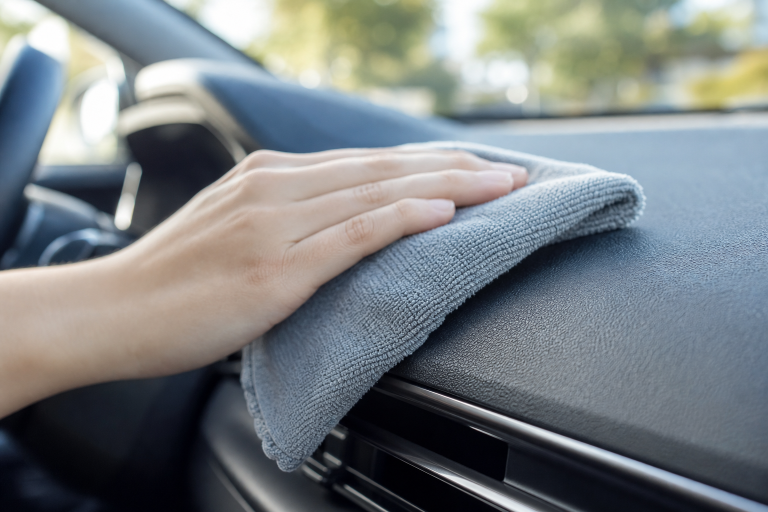
Start inside the cabin. Remove clutter before vacuuming the seats, carpet, and mats, then use a clean microfiber cloth on the trim, dashboards, and touchscreens. Apply the liquid sparingly to the cloth rather than spraying it directly onto controls, vents, screens, or switches. Use an automotive glass cleaner on windows, mirrors, cameras, and the inside of the windshield, where haze can reduce visibility.
For the exterior, rinse away loose grit before touching painted panels. Dry wiping dusty paint can leave marks, while a gentle wash with suitable materials is safer. Use separate brushes and towels for wheels because brake dust and road grime should not be transferred to paint or interior surfaces. Finish by checking the ground under the vehicle for fresh liquid spots.
Monthly Checks That Should Not Be Missed
- Measure tire pressure when the tires are cold and adjust it to the pressure on the vehicle’s tire information label, not the maximum printed on the tire sidewall.
- Inspect tread, sidewalls, and valve areas for cuts, bulges, embedded objects, cracking, or uneven wear.
- Test headlights, taillights, brake lights, turn signals, hazard lights, and license-plate lights.
- Check windshield wipers for torn rubber, skipping, or heavy streaking, and refill washer fluid when needed.
- Look for dashboard warnings that remain on after startup, then consult the owner’s manual for their meaning.
Check Fluids, Filters, And Warning Signs
Check fluids only as your manual directs and use the exact type or specification it calls for. Depending on the vehicle, this may include engine oil, coolant, brake fluid, transmission fluid, power steering fluid, and washer fluid. A low level can indicate normal service needs, but it can also point to a leak. Do not open a hot cooling system, and do not ignore steam, overheating, or repeated coolant loss.
Engine air filters and cabin air filters have different jobs. The engine filter ensures proper airflow to the engine, while the cabin filter filters air entering the passenger compartment. Replace either at the recommended interval or sooner when inspection and manufacturer guidance call for it.
Give Tires Extra Attention
Tires affect braking, steering, ride quality, and traction, which makes them one of the most important items in any routine. The recommended tire pressure and tread checks include measuring all tires, including the spare when applicable, at least monthly. A tire-pressure monitoring system is valuable, but it is not a substitute for a gauge and visual inspection.
Have a qualified technician inspect persistent vibration, a vehicle that pulls to one side, repeated pressure loss, unusual tire noise, or irregular tread wear. Follow the manual for rotation intervals and patterns. Tire damage, severe wear, or visible bulges require prompt professional attention.
Adjust Care For Each Season
Spring And Summer
Wash winter salt and grime from the body, wheels, and underbody when conditions allow. In rainy months, inspect wipers, clean drainage areas near the windshield, and watch for water entering the cabin. Before hot-weather trips, check tire condition, coolant as directed, and the condition of your emergency supplies. Parking in shade when practical can reduce heat exposure inside the vehicle.
Fall And Winter
Test battery performance before cold weather becomes routine, confirm the defroster works, and replace weak wipers. Remove leaves near the hood and windshield drains. In snow or ice, clear the roof, windows, lights, cameras, mirrors, and exhaust area before driving. Carry weather-appropriate supplies, and inspect tires carefully before long winter trips.
Avoid Common Cleaning Mistakes
- Avoid household cleaners unless the vehicle manufacturer specifically approves them for the surface.
- Do not scrub hot paint, wheels, or glass, and avoid applying strong chemicals in direct sunlight.
- Do not use the same dirty towel everywhere, especially after cleaning the wheels.
- Do not soak leather, fabric, headliners, electronics, or ventilation openings.
- Address damp carpet, recurring odors, and stains early, as trapped moisture may require professional diagnosis.
Know When To Call A Professional
Basic maintenance has limits. Arrange service promptly for grinding brakes, a soft brake pedal, overheating, visible fuel or fluid leaks, persistent warning lights, starting problems, severe tire damage, or major steering and suspension changes. Professional help is also appropriate for deep paint damage, corrosion, mold, or odors that return after cleaning.
A Quick 2026 Car Care Checklist
- Follow the owner’s manual and keep service records.
- Check tire pressure, tread, and visible damage every month.
- Keep lights, glass, mirrors, and cameras clean.
- Remove spills, debris, pollen, and road salt before buildup becomes severe.
- Use automotive products that suit the surface being cleaned.
- Prepare for changing weather and investigate warnings or unusual behavior early.
Conclusion
Car care is most effective when it becomes routine rather than reactive. A few minutes of cleaning and inspection each week, combined with scheduled service, can help keep the vehicle comfortable, presentable, and ready for changing conditions. Maintaining correct tire pressure, using the recommended motor oil, and following service guidance can also support efficient driving behavior described by the U.S. Department of Energy.
Discover more from
Subscribe to get the latest posts sent to your email.
