
Tribute to the Designer Legacy of Emilio Pucci
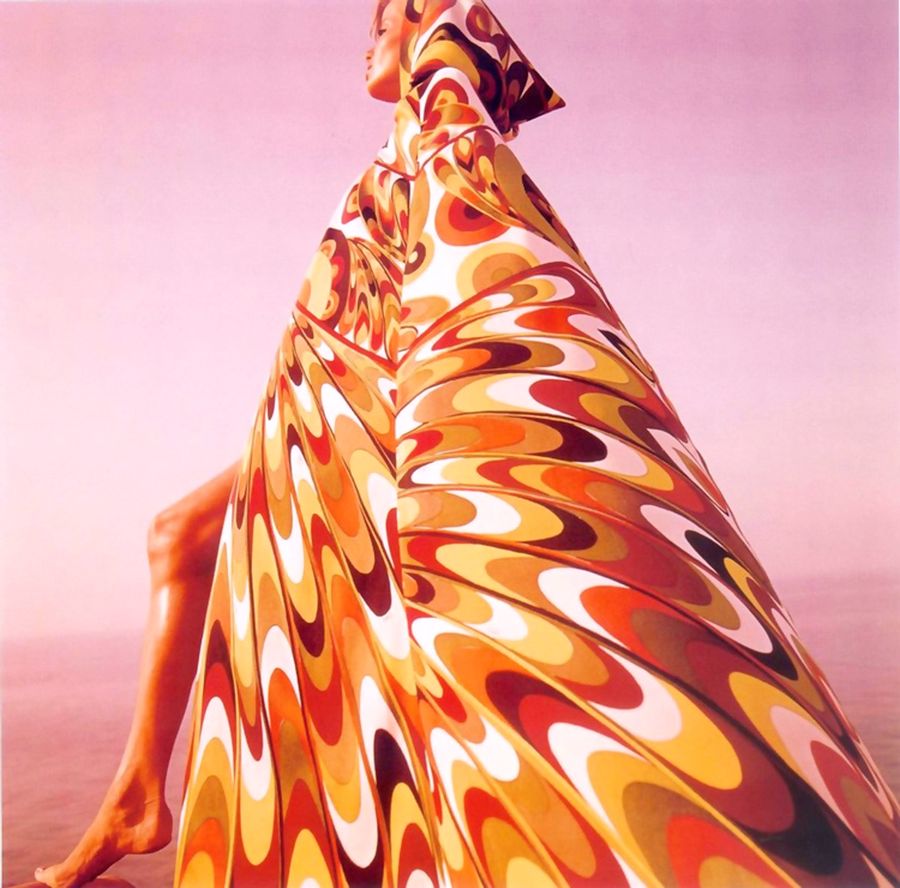
Though it was the year 1967 when Italian fashion designer Emilio Pucci was at his peak popularity, it was nine years later that he was most successful across several disciplines. Fifty years ago, in October 1976, Pucci reached two major milestones that highlighted his expansion beyond traditional high fashion into home crafts and automotive design. But before that fanfare, 1976 also saw Pucci rounding off his role as key designer for Braniff International Airways whose flight attendants looked futuristically dapper in bright, colourful, psychedelically inspired uniforms. Halston took over the role; Pucci was otherwise very busy.
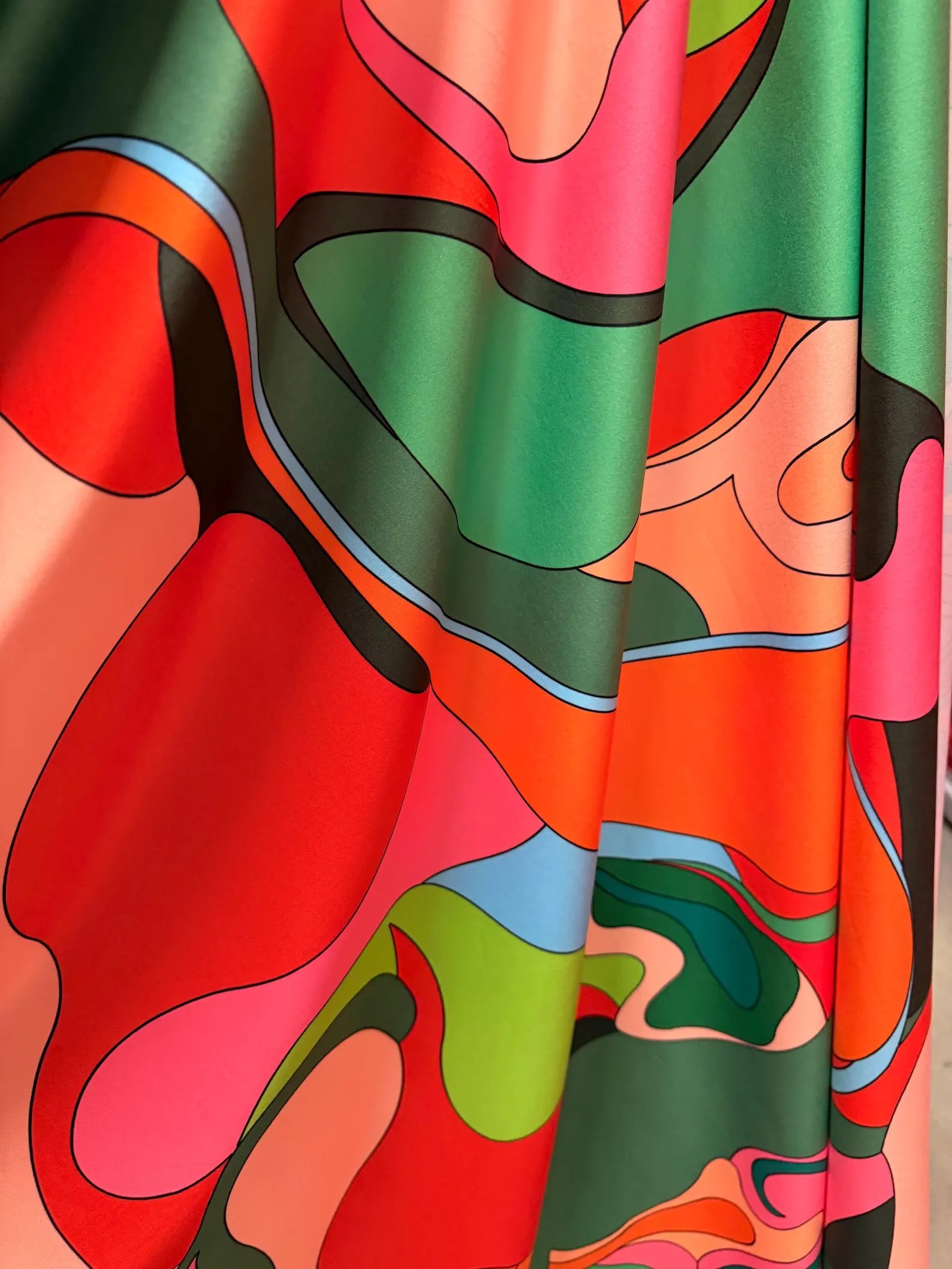
On October 8, that year the designer launched a Needlepoint Collection, of all things, working with Amcraft (famous for curtain walls) to introduce a line of crewelwork and needlepoint and kits – things that sold plenty in the ’70s. Pucci personally adapted eight of his famous geometric scarf patterns into 16-inch prepainted canvases for pillows, wall hangings, and handbags, sold exclusively at luxury retailers such as Saks Fifth Avenue.
Around this time, Ford launched its highly publicised 1977 Lincoln Continental Mark V Series, and Pucci was chosen as one of four legendary designers (alongside Cartier, Bill Blass, and Givenchy) to style a custom luxury edition of the vehicle, marking the start of a collaboration with Lincoln that lasted until 1983.
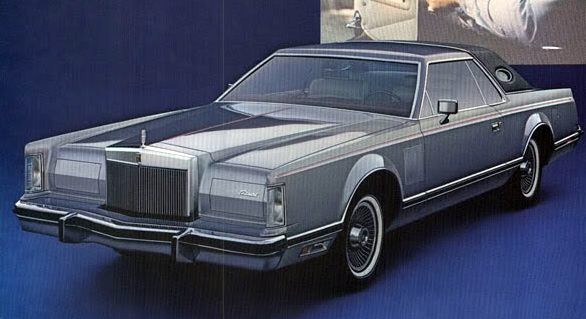
The 1977 Lincoln Mark V Emilio Pucci Edition. To be fair there’s not a lot of pattern swirling going on here, but I’m sure it drove like a dream.
Emilio Pucci is one of those designers where “psychedelic” is not just a convenient description — it was fundamental to why his work still looks so startling today. His clothes seem to move even when they are hanging on a rack.
That his clothes lent a kind of swirly, hippy vibe, it’s telling that Pucci was born in a humble village in Naples in the early twentieth century but was from an old Florentine aristocratic family, spending much of his life at the family’s Palazzo Pucci in Florence. He died in that same city on 29 November 1992, aged 78, and his House continues to create dazzling and awe-inspiring couture and ready-to-wear.
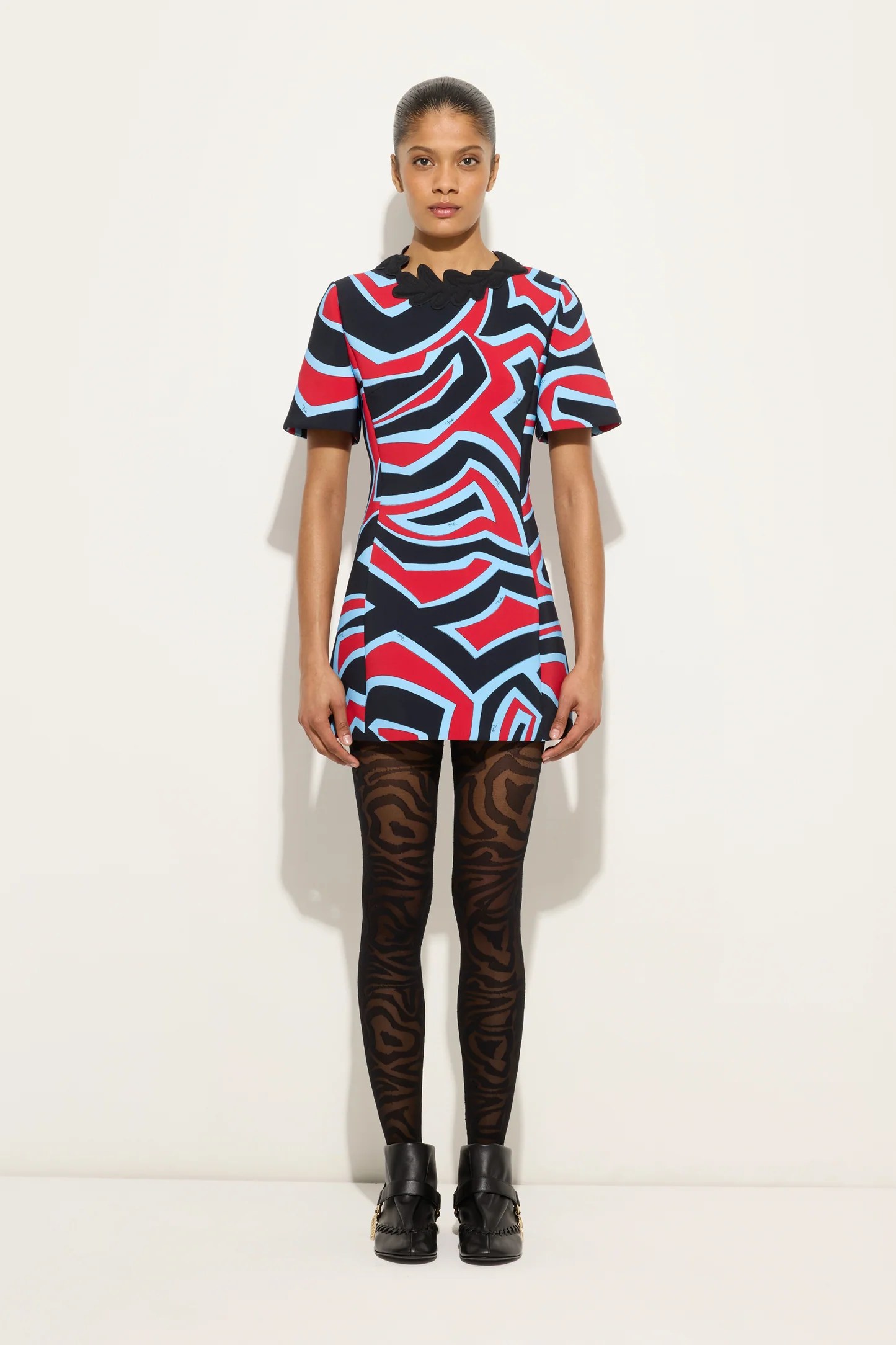
The Labirinto (or Labrynth) print ‘Cady’ dress that features in Pucci’s current collection, through L’Alba. Available at pucci.com.
The Psychedelic Prince
If fashion had a hallucinogenic wing, Emilio Pucci would be one of its dealers.
Born into privilege but seemingly incapable of sitting still, Pucci was a skier, sportsman, pilot, politician, traveller, and eventually one of the most recognisable fashion designers of the 20th century. His education was almost comically eclectic: University of Milan, agriculture at the Uni of Georgia, an MA from Reed College in Oregon, and a political-science degree from the University of Florence. That’s a lot of certificates to fit in one’s back pocket then. He had also been part of the Italian Olympic skiing team at Lake Placid in 1932, although he did not compete.
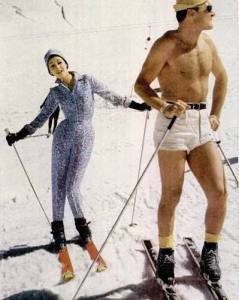 Pucci’s fashion career effectively began with ski clothes. In 1947, a photograph of a woman wearing a streamlined ski outfit he had designed attracted the attention of Harper’s Bazaar. The designer’s approach was revolutionary because he wanted clothing that moved with the body rather than imprisoning it. Stretch fabrics, lightness, simplicity and an almost aerodynamic silhouette became important signatures. Then came the prints.
Pucci’s patterns are often described as kaleidoscopic, and that is probably the most accurate word. They swirl, spiral, fracture and ripple across the body, often combining colours that conventional fashion might have considered completely incompatible.
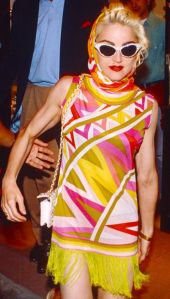
Madonna in vintage Pucci circa 1990.
Think acid yellow, hot pink, fluoro orange, turquoise, lime, and purple – sometimes all appearing on a single garment! The effect can resemble a cross between an op-art painting, a ’60s music festival poster, Mediterranean mosaic, or even something you might see after staring at a lava lamp for too long.
The remarkable thing is that Pucci’s psychedelic aesthetic predates the full explosion of psychedelic culture in the late 1960s. His prints were already developing in the 1950s, while the 1960s provided the perfect cultural environment for them to go completely bananas. Museums have specifically connected his all-over patterns with the visual language of Op Art and Psychedelic Art, and deservedly so.
Pucci’s inspiration was also very international. He drew from Mediterranean landscapes, Florentine history, Ancient Greek mosaics, flowers, architecture and his travels through places including Bali, India, Hong Kong, Africa, and the Americas. Aviation and the sensation of looking down upon the earth also influenced his visual vocabulary, particularly the part where patterns appear to change with perspective and alterations of light (and perhaps flight).
The man essentially turned the surface of the garment into a moving artwork. The prints follow the body, bend around the waist, stretch across the hips and move with the wearer. A Pucci dress therefore changes as the person wearing it moves, and this is why his designs can appear almost animated.
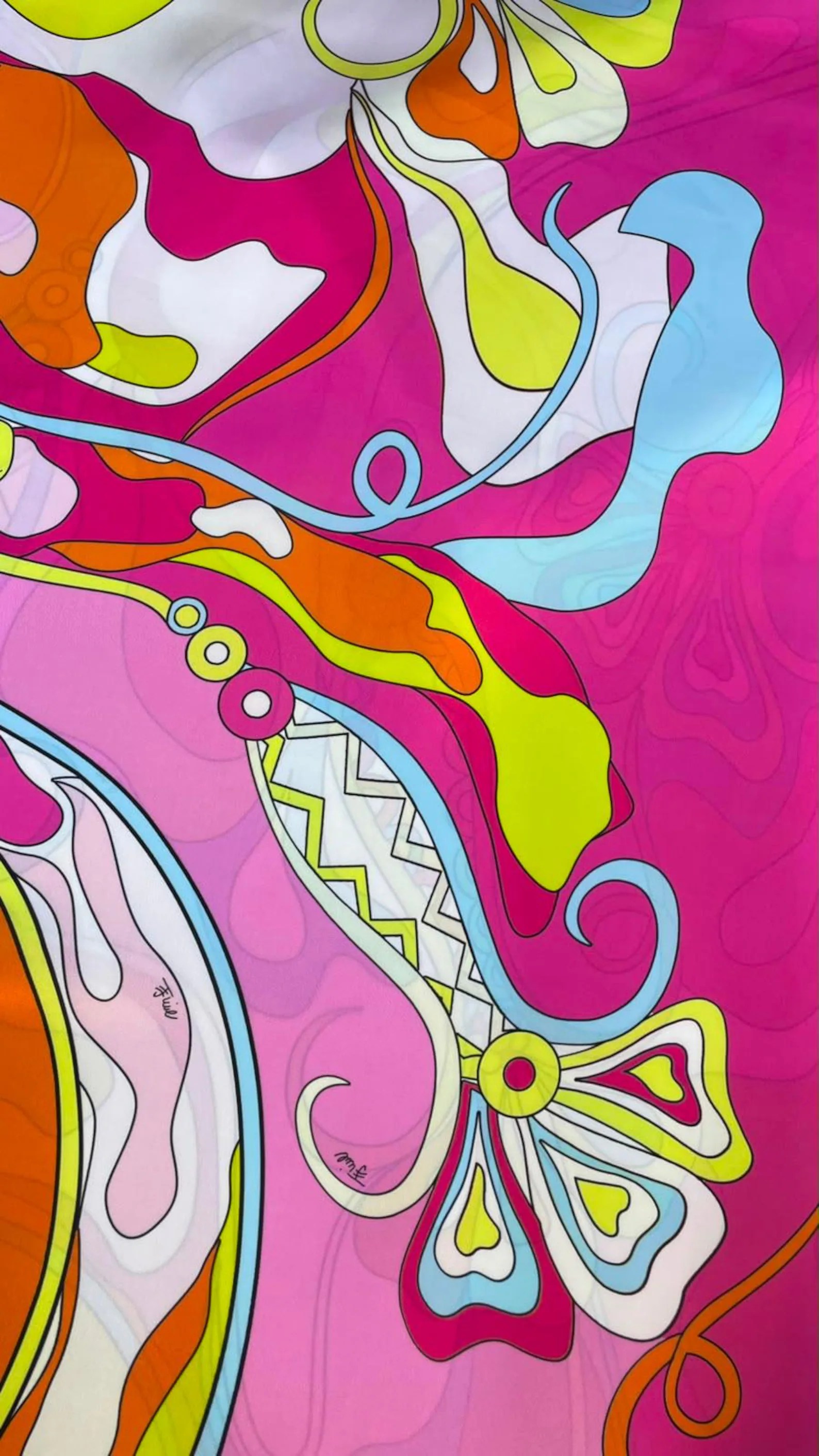
Emilio Pucci had the clever habit of featuring his signature on most of his garments.
From aristocracy to designer FOR the people
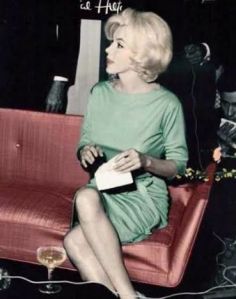
Marilyn Monroe in the green Pucci dress that would literally go with her to the grave, and below, forever the fan.
By the 1960s, Pucci had become known as the ‘Prince of Prints’ (two decades on and he would heavily inspire another ‘Prince’), and his clientele included Marilyn Monroe, Jackie Kennedy, Grace Kelly, Sophia Loren and Elizabeth Taylor. His lightweight silk jersey dresses were particularly revolutionary because they could be rolled up, packed into a suitcase and worn with very little fuss and sometimes no ironing — a travel wardrobe of truly luxurious proportions when you don’t have to get the hotel ironing board out. Incidentally, Marilyn Monroe was famously buried in a Pucci dress. Even in funereal circumstances, his clothes spoke style, but I doubt Kim Kardashian would be able to get her hands on this one.
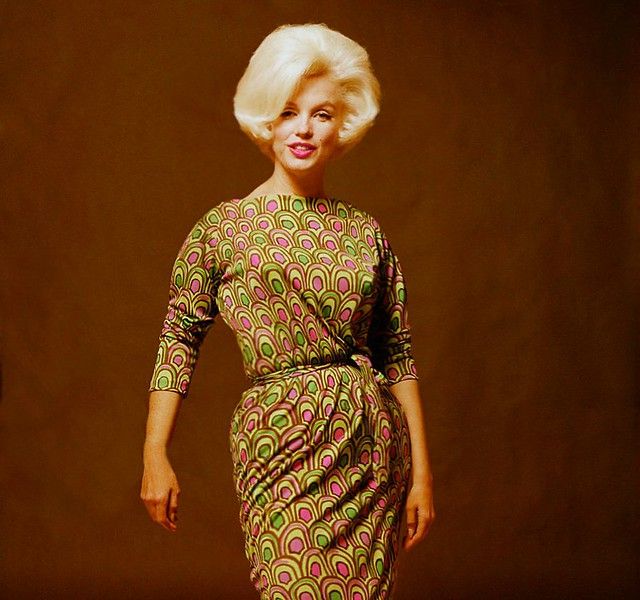
Pucci also understood branding concepts and execution unusually early. He put his name – not tacked on the inside back of a garment, which was and still is the norm – but on the actual clothing as well as on household items. Dresses, scarves, jackets, gloves, perfume, luggage, eyewear, homewares and furniture, Pucci had a hand in brightening up all of these products, and if there was room on the thing to add his name, you could bet he would.
Indeed, in the history of marketing, Pucci is an important early example of the designer-as-lifestyle-brand phenomenon that has now become quite common.
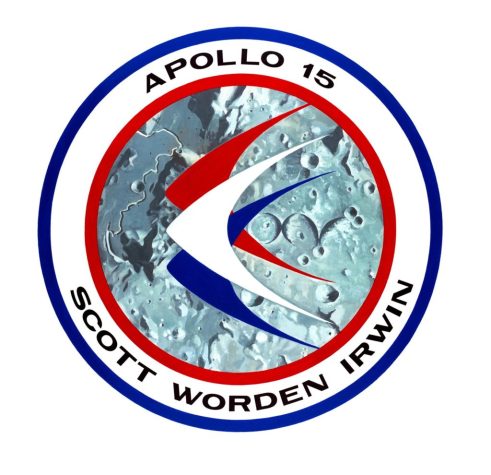
There is one wonderfully surreal chapter in Emilio’s career: NASA asked the all-round talent to design the emblem for Apollo 15. His abstract logo represented three stylised birds or forms flying towards the Moon — a rather perfect marriage of his fascination with movement, space and graphic abstraction. The birds symbolised the three crew members (David Scott, Alfred Worden, and James Irwin) and their unified mission into space.
Pucci’s Death and Legacy
Pucci died in Florence on 29 November 1992, after falling ill and being taken to a private clinic. Contemporary reports described the cause as heart attack/respiratory failure. His legacy, however, has proved remarkably durable. Even his name is often dropped in fashion conversation when something “looks Pucci-esque” or indeed is “very Pucci”. No need to mention that other design house that rhymes with his name – Pucci’s designs run circles around the others when it comes to timelessness, even in all their vividness.
There was a period when Pucci’s exuberance seemed out of step with the more severe fashion of the 1970s and 1980s. But by the early 1990s, his swirling colours and unmistakable prints were experiencing another revival, and could be set for another one soon. His influence can be seen in generations of Italian designers, from Missoni to Etro to Roberto Cavalli, and in the continuing appetite for archival Pucci.
And perhaps the most important part of his legacy is that Pucci made joy into a serious design philosophy. He didn’t want clothes that merely looked expensive. He wanted clothes that suggested travel, sunshine, movement, maybe the Fibonacci sequence; bodies, holidays, confidence and possibility. That’s a pretty good reason to still adore his work.
THE PUCCI LABEL TODAY
Camille Miceli is Pucci’s artistic director and has been since 2021 — and she is doing something very clever with the legacy brand. Rather than simply reproducing the old Pucci psychedelic prints, she is feeding contemporary subjects through the original Pucci visual machine.
Contemporary collections blend house emblems with horses, stars, geometric forms, and abstract landscapes with iconic textile prints such as the classic Fiamme, Leocorno, Fune, and Baiadera lines. As for the archive itself, Miceli has been treating these less like a museum and more like a giant psychedelic toolbox.
There are both fitted and fluid silhouettes on display in exhibitions around the globe, and these appear in the most recent collections, too, including that garment that you could say summed up the late ’60s / early ’70s: the trumpet trouser. Think generous flares, like, real generous, and you’re kind of there.
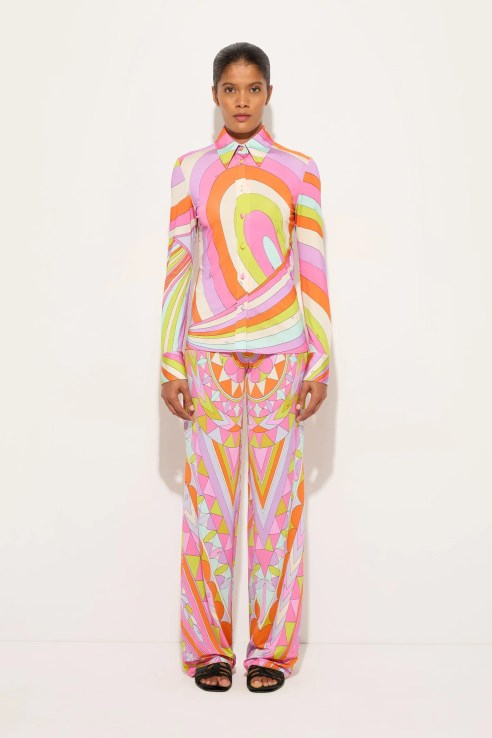
Pucci’s 2026 Manuba print pants bring lighter connotations to the designer’s famous ‘trumpet trouser’.
If there ever was an edict to sum up the multi-disciplinary design ethos of Emilio Pucci, it was this: take a landscape, turn it into a print, put that print on a body, then send that body somewhere fabulous.
On a final psychedelic note, the Pucci house recently revealed there are more than 500 colours in the Emilio Pucci archive. Pantone better watch their colour charts, then. Eons before Instagram, the man understood that a garment could be an entire visual universe, and that the wearer could become its literal moving canvas. He didn’t really design clothes to be looked at; he designed them to be experienced. And that’s why three-decades-plus after his death, a Pucci garment still looks wonderfully, almost chemically, alive.
Hunt it down… Stream it! ‘House of Cardin’ recalls the ab fab days of fashion, design and marketing
London Fashion Week September 2026 puts jewellery in the spotlight
Why fast fashion practices need to seriously be looked at by our governments
Form Meets Function: The Evolution of Utility Style in Modern Australian Wardrobes
That Magical Ingredient: haircare that delivers excellent results thanks to key natural ingredients

Discover more from
Subscribe to get the latest posts sent to your email.
