
Lyrics in Motion: The New Visual Language of Pop Music
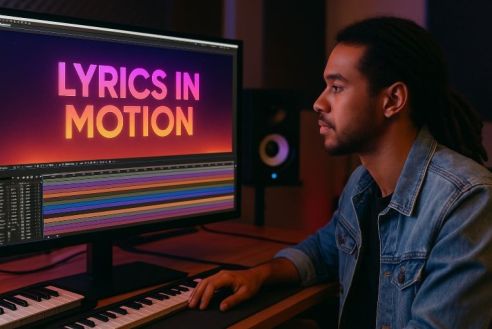
Pop music has always been about connection through melody, rhythm, and words. But in the digital age, that connection has taken on a new form: visual lyrics. Today’s artists aren’t just writing songs, they’re crafting visual experiences that merge music and motion into one seamless art form.
Welcome to the era of the lyric video, where text moves with the music, amplifying emotion, meaning, and style. What started as a cost-effective alternative to full music videos has evolved into one of the most creative tools in the pop industry’s arsenal.
The Rise of Lyric Videos in Pop Culture
In the early 2010s, lyric videos were simple. Words appeared line by line, often in front of a static background. They were quick fillers before the official music video dropped. But now? They’ve become art.
Major artists like Taylor Swift, Billie Eilish, and The Weeknd have elevated lyric videos into storytelling tools that reflect each track’s tone and identity. Fans no longer see them as “previews”, they’re the definitive visual expression of a song.
According to YouTube’s 2023 Music Insights, lyric videos make up over 35% of official music uploads by major labels. This surge shows how artists and producers are redefining what it means to “release” a song, transforming static sound into visual rhythm.
Why Lyric Videos Work So Well
Pop music thrives on emotion, and visuals are emotion’s amplifier. Lyric videos connect on a deeper level because they blend what we hear with what we see.
Here’s why fans and artists love them:
- Clarity of message – Lyrics appear dynamically, allowing listeners to internalize meaning in real time.
- Enhanced storytelling – Fonts, colors, and motion convey tone whether it’s heartbreak, triumph, or nostalgia.
- Platform versatility – Lyric videos perform well across YouTube, Instagram Reels, TikTok, and Spotify Canvas.
- Budget efficiency – You can produce cinematic results at a fraction of a traditional music video cost.
- Engagement boost – The combination of typography and sound increases retention and emotional connection.
The best lyric videos create a synesthetic experience. The seamless union of sound, text, and motion.

Technical Breakdown: The Main Lyric Video Styles
While the creativity behind lyric videos is boundless, most can be grouped into a few major technical styles each suited for different genres, tones, and brand aesthetics. Let’s break them down from a production and design perspective.
01. Cinematic Storytelling Style
Purpose: To evoke emotion and narrative depth.
Design Traits:
- Uses dynamic camera movement, soft light flares, and natural textures.
- Blends lyrics with subtle background imagery, often including symbolic visuals.
- Fonts are often serif or script-based, chosen for elegance and emotional weight.
- Animation timing emphasizes dramatic pauses or lyrical emphasis (e.g., slow fade-ins, dissolves).
Technical Approach:
- Built in After Effects or advanced tools like the lyric video creator YouTube platform’s Cinematic Pulse template.
- Keyframe animation and bezier easing ensure smooth text flow.
- Motion blur and 24fps rendering maintain a filmic feel.
Best for: Emotional pop, ballads, or storytelling tracks (think Adele or Sam Smith).
02. Futuristic or Neon Style
Purpose: To energize and immerse the viewer in a digital world.
Design Traits:
- Heavy use of glowing outlines, RGB splits, and neon light streaks.
- Fonts are geometric or sans-serif, paired with metallic or holographic effects.
- Visual layering and depth of field simulate 3D motion.
- Particle simulations pulse to the song’s BPM (beats per minute).
Technical Approach:
- Uses rhythm-driven expressions in Adobe After Effects or automated syncing in tools like Videobolt’s Neon Pulse or Cyberlight templates.
- Real-time waveform or spectrum analyzers map motion to audio frequency.
- Gradient overlays and chromatic aberration create futuristic energy.
Best for: Synth-pop, EDM, or electro-infused pop tracks (e.g., Dua Lipa, The Chainsmokers).
03. Minimalist Typography Style
Purpose: To highlight lyrics as the primary storytelling element.
Design Traits:
- Clean backgrounds, monochrome color schemes, and simple transitions.
- Typography dominates — often large, bold, and static against rhythmic motion.
- Limited animation; focus is on textual pacing and alignment with beat.
Technical Approach:
- Often uses “kinetic type” animations tied to tempo markers.
- Templates like Minimal Motion on Videobolt automate sync and transitions.
- Designers use tracking and line spacing creatively to emphasize phrasing.
Best for: Acoustic, indie, or introspective pop (think Ed Sheeran or Lorde).
04. Animated/Illustrative Style
Purpose: To bring lyrics to life with playful, creative visuals.
Design Traits:
- Lyrics are integrated into animated environments — floating in clouds, flowing with waves, or appearing as graffiti.
- Bright palettes and cartoonish transitions match youthful energy.
- Motion paths are irregular and organic, mimicking hand-drawn or stop-motion aesthetics.
Technical Approach:
- Built using frame-by-frame keyframing or motion tweening.
- Uses physics-based plugins for bounce and elasticity.
- Videobolt’s Playful Motion or Pop Art Flow templates help simulate this style without deep animation knowledge.
Best for: Youth-oriented pop, dance-pop, and vibrant collaborations (e.g., Katy Perry, Charli XCX).
05. Handwritten & Organic Style
Purpose: To create intimacy and authenticity.
Design Traits:
- Text mimics cursive handwriting, chalk, or brush strokes.
- Natural color palettes, textured backgrounds, and imperfections add warmth.
- Animations are slower, with fade transitions and subtle camera drift.
Technical Approach:
- Uses mask reveals or “write-on” effects to animate handwritten lyrics.
- Layer blending (multiply/overlay) creates realistic ink and paper effects.
- Videobolt’s Sketch Lyric Flow template replicates hand-drawn style via motion-tracked brushes.
Best for: Folk, acoustic pop, or nostalgic indie (think Hozier, Florence + The Machine).
06. Mixed-Media or Hybrid Style
Purpose: To fuse multiple aesthetics for a unique, branded identity.
Design Traits:
- Combines motion typography with live footage, digital overlays, or collage visuals.
- Uses glitch, noise, or scanline effects for texture.
- Transitions between typography modes (2D to 3D, flat to dynamic).
Technical Approach:
- Combines multiple render layers and color LUTs (look-up tables) to maintain consistency.
- Tools like Videobolt’s Urban Flow template blend video and motion text automatically.
- Sync markers are mapped manually to ensure visual rhythm across multiple layers.
Best for: Experimental or crossover pop, startup marketing campaigns, and artist-brand collaborations.
Step-by-Step: How to Create a Lyric Video
Creating a lyric video is part art, part engineering. Here’s how professionals and now indie artists do it with modern tools:
Step 1: Choose a Platform
Select an editing platform or template-based tool. The lyric video creator YouTube system is ideal for artists who want fast, professional-quality visuals synced to their song.
Step 2: Upload Your Track
Use a high-quality version (WAV or FLAC). The software analyzes rhythm, tempo, and beat intensity automatically.
Step 3: Add and Sync Lyrics
Paste your lyrics and time-stamp each line with the song’s flow. Many tools let you tap along with playback to mark exact moments for appearance.
Step 4: Select Your Visual Style
Choose one of the templates above: cinematic for storytelling, neon for club vibes, or minimal for lyrical focus.
Step 5: Customize
Adjust font types, colors, lighting effects, and background visuals. Add logos, artist names, or album titles to maintain branding.
Step 6: Render and Share
Preview in HD, fine-tune sync, then export in 1080p or 4K for distribution across YouTube, TikTok, and Spotify Canvas.
Technical Tips for Professional Results
- Frame rate consistency: Render at 30fps for crisp motion, 24fps for a cinematic feel.
- Audio mastering: Balance levels; visual syncing is only as strong as your mix.
- Color psychology: Warm hues (reds, golds) amplify emotion; cool tones (blue, violet) evoke calmness.
- Dynamic pacing: Vary text speed according to rhythm intensity.
- Export optimization: Use H.264 for web streaming to balance quality and load time.
Small details separate amateur lyric videos from visually cohesive masterpieces.
Final Thoughts
The lyric video is no longer a placeholder, it’s pop music’s new language. It merges design, storytelling, and rhythm into a single medium where text isn’t just seen but felt.
As technology evolves, so does creative freedom. Tools like the lyric video creator YouTube give artists and producers access to cinematic visual power without massive budgets.
In today’s music industry, where visuals drive emotion and emotion drives engagement, lyric videos have become more than marketing tools. They’re the pulse of modern pop storytelling.
Discover more from
Subscribe to get the latest posts sent to your email.
