
An interview with Australia’s foremost modern Witch, Fiona Horne
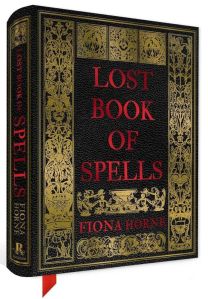 There is a side box in the Lost Book of Spells by Australian-born, world-renowned modern witch Fiona Horne that concerns getting rid of a headache. I’m fascinated by the simplicity and effectiveness of the spell. Originally an Indigenous Australian healing method, it involves asking a trusted loved one (who is healthy and who rarely gets headaches) to sit cross-legged beside you. You place one end of a long piece of red string in your mouth, and the other person places the other end of the string in their mouth. The other person then draws the string through their mouth away from you so as to cast the headache out. Once the string has finished moving from your mouth to theirs, they need to spit it out quickly and bury it. I love the effiency of this easy spell, and that it worked for me first time ’round.
There’s a confident, pragmatic and optimistic streak that runs through Fiona Horne’s writing style in both Lost Book of Spells and her newly updated book, Coven, that you don’t often see from authors that saturate the self-help section of bookshops. Where others’ instructions are usually rounded out with a ‘but don’t blame me if it doesn’t work’ caveat, Fiona Horne’s vibe is more along the lines of ‘trust me, it’ll work’.
Colourful when in descriptive mode, and forthright / no-fuss when it comes to laying out magick spells and the ingredients required for each, there’s less hocus pocus here and more actual fabulousness.
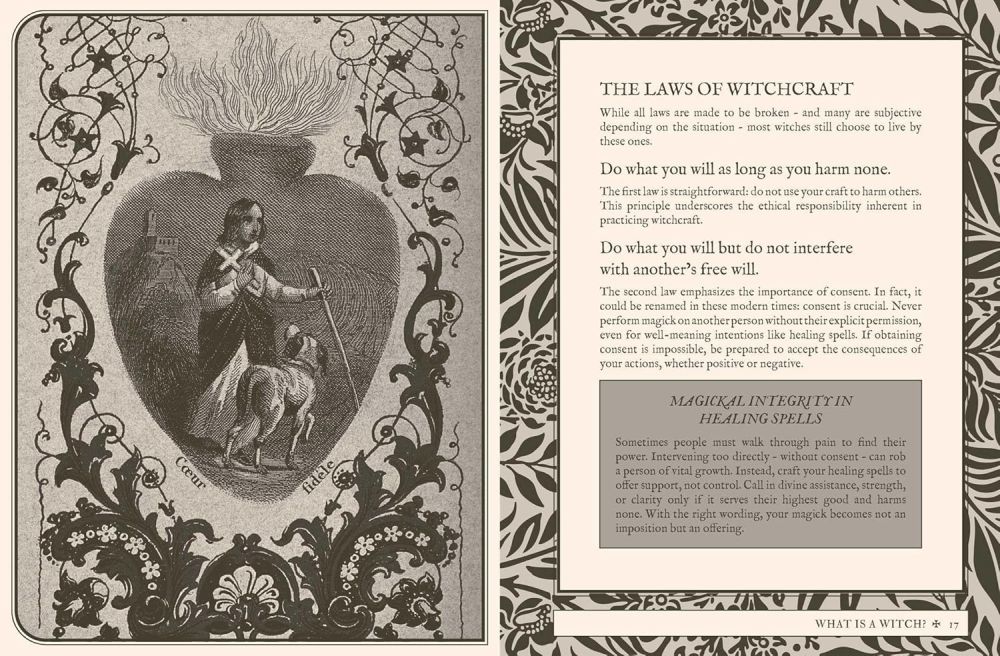
In both Lost Book of Spells and Coven, there are wonderful little rituals to help ease anxiety, spells to disperse negative influences, even one titled ‘You Want Your Boss To Fall In Love With You’ (which, FYI, comes with the rule that all good witches know, “Do what you want but don’t interfere with another’s free will”).
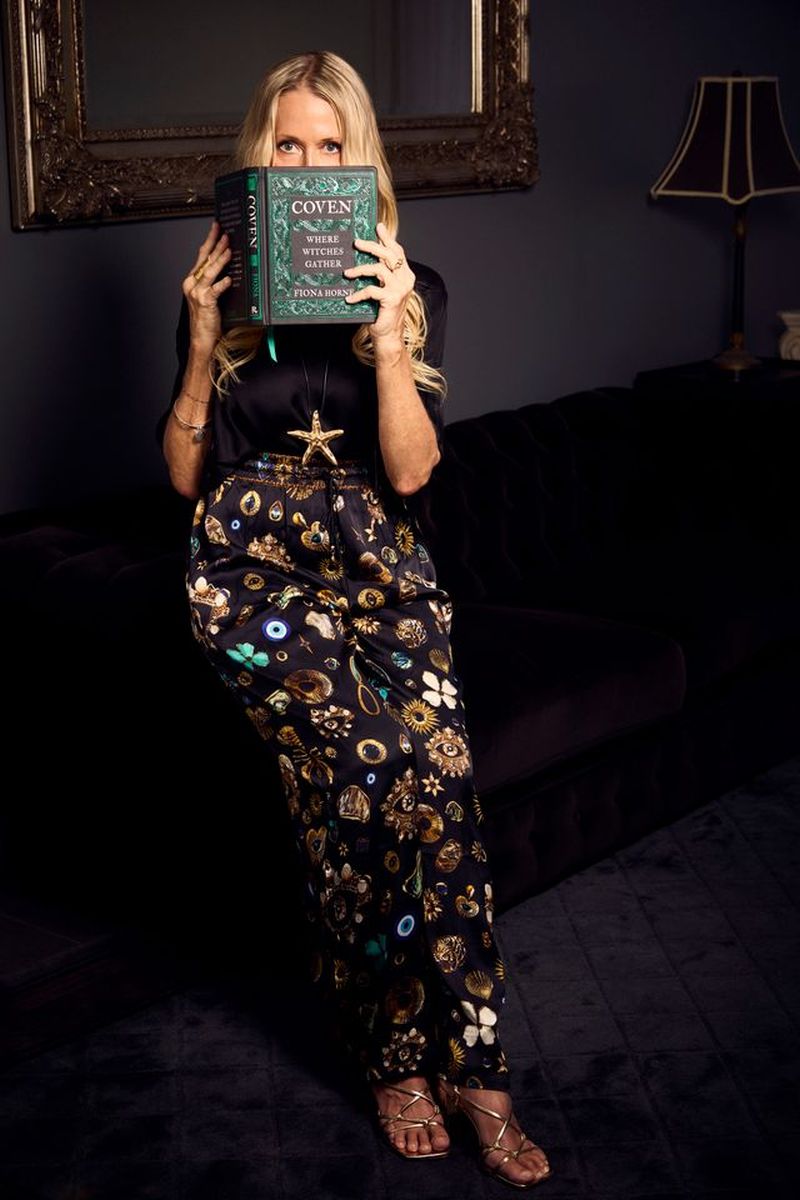
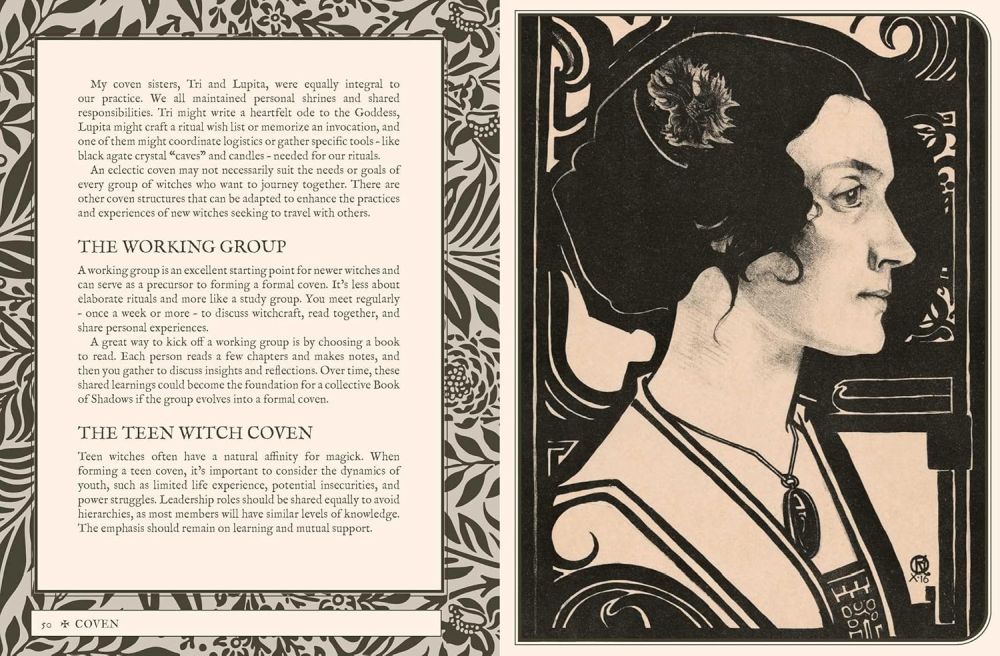
The spells can be done on your own, or in a group with other witches, this group often referred to as a coven. Which bring us to Fiona’s newest publication, her latest edition of Coven: Where Witches Gather, which reads as an inviting guide toward building spiritual community with others and practicing collective Witchcraft.
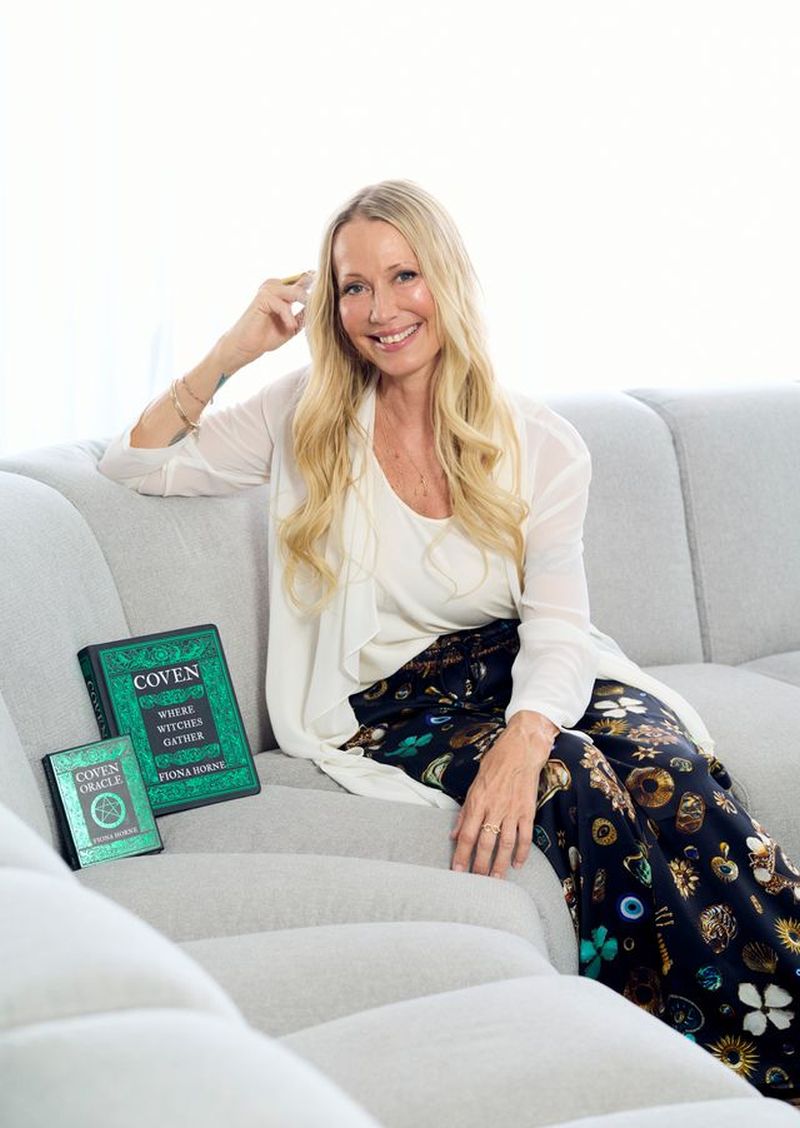
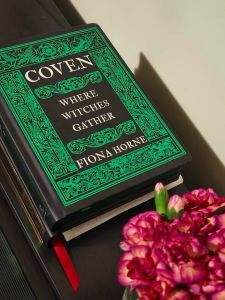 Reading Coven is like stepping into a hidden circle. It is equal parts guidebook, manifesto, and invitation, penned by its author with with warmth and unapologetic individuality. In the book, Fiona explores modern Witchcraft not as a rigid doctrine but as a living, evolving community. Bound in beautiful pleather (or vegan leather, if you like) the book shines in its demystification of covens, presenting them not as secretive enclaves but as supportive and empowering spaces where thoughts, needs and, most importantly, intent, are shared. Like Spells, Coven balances practical advice with spiritual insight, and is sure to be an enjoyable read both for seasoned practitioners of the Craft and curious newcomers alike.
In short, Coven is less about rules and more about resonance, and it is an engaging and empowering read that celebrates the magic of community and the beauty of self-discovery.
Here, Antonino Tati chats with Fiona Horne about all things Witchcraft, Wicca, and magick.
“What I’ve tried to do in ‘Coven’ is to describe a way of living where you could feel more integrated and more grounded in the present moment. To actually enjoy your life more instead of feeling like you’ve always got to be on the go, or that you’re having to justify something in some way.”
Hi Fiona. For those who may not know of your music history, could you first tell us a little about your time with Def FX and beyond?
With Def FX, before sampling was outlawed, we were layering rock and pop sounds, sometimes even taking them into dark metal. And then I was singing witchy transcendental rock stuff over the top of the music. I was definitely a trainspotter back then and I loved to pick up the nuances of other bands. But I think later in life you get to a appreciate the bands that kind of went by the by, and you pick up all of their nuances as well.
As you can see, magick is sometimes spelt majick. And why shouldn’t it be?
Do you love making music, being on stage with a band?
I’ve done some reunion shows with Def FX that were really fun. The last one was, I think, in 2023. We did a reunion show with Caligula – who we used to tour a lot with back in the day. I love those shows. Actually, during Covid, I had two music projects going including a rock band based in Western Australia. Most of our gigs were in WA because you couldn’t cross states. It was great to play guitar again, and to sing again; that was amazing.
Why were you in Western Australia?
After six years of flying planes in the Caribbean, I had just secured a job flying captain for a company in California [Note: for the record, Fiona is a commercial, single/multi-engine, instrument rated pilot] but then Covid happened and I never got to start that job. Then someone I knew 30 years ago reached out to me and said you should come out to WA, and so I booked a repatriation flight, actually back to Melbourne, and then my friend drove across country to pick me up, and we drove back across the Nullarbor and landed in the Southwest.
Wow, what a road trip that would have been.
Yeah, and the shows were great. I think we had our last show at Badlands in Perth.
On that same rock’n’roll vibe, do you find some people might connote Witchcraft and magick with a kind of Satanism? Or is everyone kind of okay with it after seeing ‘Charmed’ on the TV?
Today, it’s a lot safer to talk about Witchcraft. I’ve been doing a lot of interviews recently because, as you know, I’ve got a new book out and I’ve been saying to everyone that I never get asked if I worship Satan or whether I’m a good witch or a bad witch, or a white witch or a black witch. And that is after 30 years of interviews about it all! Like music, the Craft is so vast and so varied and I particularly love what’s happening in modern Witchcraft – that it has become synonymous with the women’s wellness movement. That is a way of celebrating the divine feminine, and the spells and rituals we do to help and heal ourselves and others are seen as tools for living a fulfilled and useful life outside of our own immediate concerns. There are also many enriching and nourishing aspects to modern Witchcraft that don’t even go down that path. So there’s that variety.
I must admit, while Witchcraft is not something I’m involved with or have written much about, I do believe in its force, power and abilities to change things for the better. What I do like to do myself is to try and zone in on my own five senses at once and with those phenomena, realise the magic that is life itself, really. It kind of gets me to this sixth sense, if you will.
Yes, yes. I love that you can have a relationship and interactions with those aspects of life. I certainly know that as a young person I was very drawn to the idea of nature being sacred and having a co-creative role with the universe in a magical way pertained very much to my life. The people I interacted with, or when things felt quite intrinsic and intuitive. And then I find out in my later years that I’m adopted and that my biological heritage was actually German and Hungarian. But I didn’t realise it was actually Transylvanian Hungarian until recently and so that’s got a beautiful lineage of, you know, people that live close to the earth and who consider certain aspects of life to be mystical.
Have you been to Transylvania?
I did a pilgrimage to Transylvania last year to specifically understand my biological background on my father’s side, and I learnt that my great grandfather and my great uncle were well-known photographers. This was before Hungary became a part of Romania. There’s actually a museum dedicated to my biological family. And now, one of the things I do is organise spiritual adventures for women. I’m taking a group of women for the first time to Transylvania this September to experience the folklore and mysticism there. With its fascinating history, just by being in that part of the world, you feel you’re plugged into what it’s like to have a magical experience with life. And that is very much related to modern Witchcraft.
Note to the reader: The Transylvanian population comprises a mix of Romanian, Hungarian and Saxon cultures so it’s fascinating that Fiona was able to pin her heritage right down. On a trip to Transylvania, she had such an awe-inspiring experience getting to know her histories (ie: familial and craft connections of yesteryear) that it influenced her to curate a similar journey that can be experienced by other women, including those wishing to find fascination in tracing their roots, and who may have an interest in the history of the Craft itself. With trips already taken to Egypt and Indonesia, these ‘Meet Yourself’ journeys act as modern-day pilgrimages to ancient lands and cultures, providing a sense of sacred travel, reflection, ritual and connection to the earth and spirits. Says Fiona, who herself now lives primarily in Egypt, “I love bringing women together from different religious, spiritual and cultural environments, and through these trtips we can understand that we have more in common – things that unite us as women – than any religion, skin colour or anything could ever divide.”
Wicca versus Witchcraft, is there a difference?
How I describe it is, Wicca is the religion of Witchcraft, so it’s like a specific way of thinking, being, practising, teaching. You can be a witch and not be Wiccan and you can draw on various practises or areas of interest. In my book Coven, I talk about the various types of working groups that you can bring together to explore magick and Witchcraft.
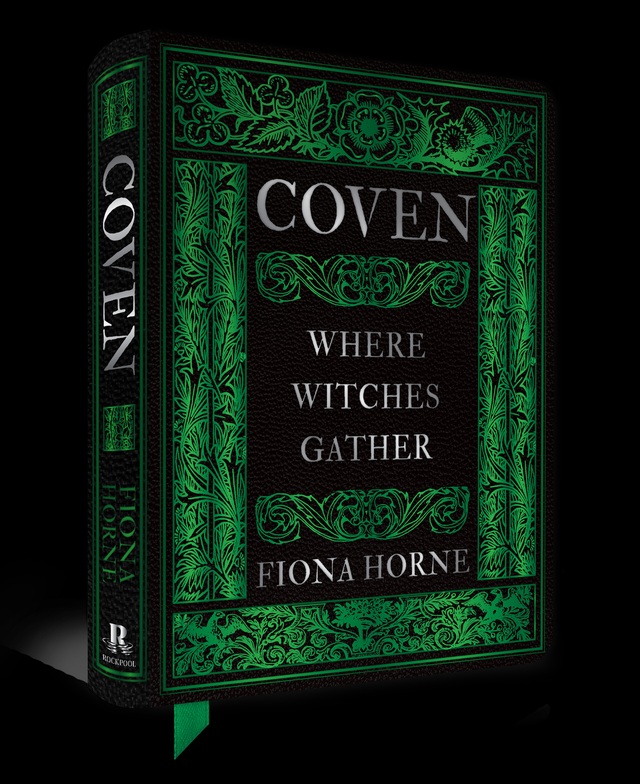
The book is so beautiful aesthetically, with its pleather cover, foil type, and even gild-edged pages in glorious green. You’ve actually been publishing books on the Craft (16 books to date) for decades now. Would we have had to have read any of your previous books to fully understand ‘Coven’?
Not at all. It’s for the witch-curious or the fully magickally minded.
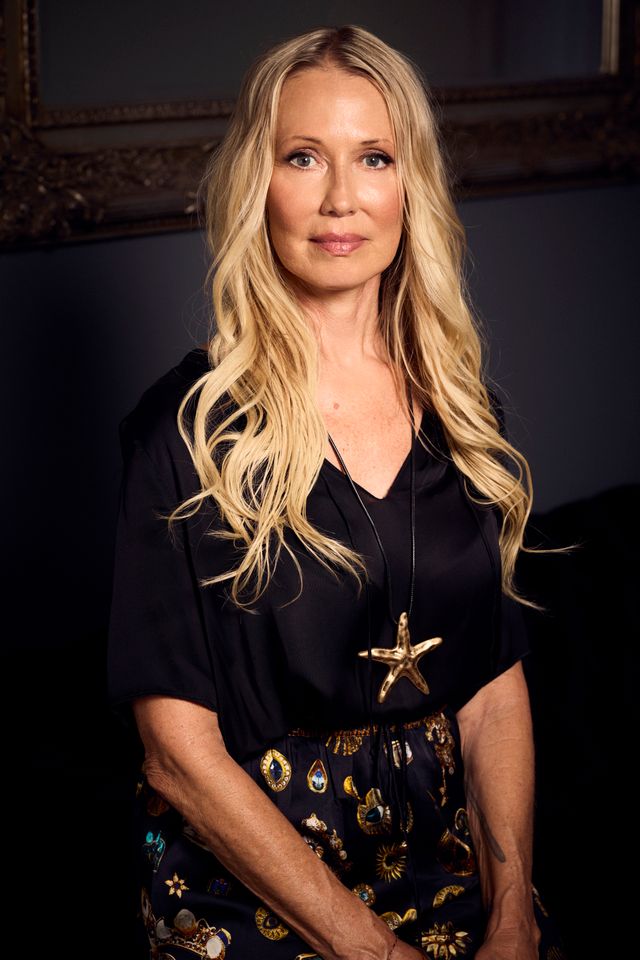
You have been an authority on Witchcraft since the early 1990s, and back then it was a rather outsider concept more than a common practise. How do you feel about the changes in attitudes towards Witchcraft since then; and the great visibility Witchcraft has increasingly received – in the media and in real life?
I think it’s a positive thing. I enjoy that it’s [more visible] now. When I came out of the broom closet in the ’90s, it was a topic that still inspired fear and it was subject to Hollywood stereotypes. But these days people are a lot more educated. Even on platforms like TikTok, you know, the billion-plus hashtags of WitchTok, and the witch aesthetic that exists now in so many aspects of mainstream society, I don’t see it as watering it down or trivialising Witchcraft; I see it all as growth – particularly how the Craft has become part of the wellness movement for women, as I was saying earlier.
It’s phenomenal how ubiquitous Witchcraft actually is now around the world.
Yes. And I think that this is a really important gift of the Zeitgeist. The Witch is bigger than ever.
[At this point, as I’m transcribing my interview with Fiona, I’m wondering whether it’s a good thing to hyperlink the word Zeitgeist, then, seeing a glint of white light from the side of my eye, the beats to rock band Yeah Yeah Yeahs’ ‘Gold Lion’ start to march through my head. I don’t know how or why but this Leo has decided that I want to take a break and to go hear that song through my Skullcandy earbuds …
I’m back, and in the last 15 minutes I have tuned into the YYY’s track; mucked about with my pet Chihuahua/Terrier cross, Ringo; went and had a stretch of my arms out under the midnight moon (hoping to have soaked in some of the moon’s glorious rays). I then hopped into the shower and found myself thanking the deities of water and physics and fragrance, all while holding statue-like poses under the running water and simply sensing that I really love life. I dried off, put on a new pair of trackies; had two puffs of a vape; made a matcha latte; then settled back into my desk chair to continue transcribing the interview… Now I’m not sure if I’m a witch at heart but I think I’m getting a bit of the gist of magick].
We live in a world today where there are so many overwhelming distractions. Do you find solace away from those disruptions via the use of Witchcraft?
Well, the impetus to do a book tour for Coven and to bring people together [through various book launch events] was to get past the tidal wave of information and all the screen time that dominates so much of our lives now. To actually come together into physical groups and look each other in the eyes and embrace the alchemy that occurs when that happens. To be absorbed in the present moment and not be disrupted. And to allow some of that energy and good will to magnify between us. In the book, too, there are tools and suggestions to get out in nature, to do things that are meaningful, and even ceremonial in a natural environment. What I’ve tried to do in Coven is to describe a way of living where you could feel more integrated and more grounded in the present moment. To actually enjoy your life more instead of feeling like you’ve always got to be on the go, or always having to justify something in some way. Sometimes just simple ritual work with other people with a similar mind-set, heart-set and soul-set, is very enriching.
So a coven is important in that sense, most definitely.
It provides an amazing opportunity to come together and to put the reigns of our lives back in our own hands. To have a more co-creative role with the Universe and our destiny; how we’re feeling about things. We do live these very visually-dictated lives through screens and it’s very different to the little girl I was growing up. My mother would say, “Go out and play in the bush, kids, and come home in time for dinner.” And that’s where some of my most magickal experiences were – out in the natural world. Then, as a young woman through the ’80s, I went through the New Age explosion where thinking positively was a [key ethos]. Inevitably, I realised the path of the Craft was where my feet were guided to walk, and that’s been going on now for over four decades.
Could an individual practise Witchcraft like you would, maybe, Tai Chi or meditation? You know, once a week on Sundays or every night for 10 minutes?
That’s a lovely idea. And nothing is every wasted: no moment, no thought, no effort. Even if it’s just for a few minutes – or a few seconds, nothing is a waste of time. Gradually, it all adds up.
Some people might see the Craft as too cumbersome, with too many ingredients needed, and too much time needed to be put aside. Does it get easier for novices? Do incantations and positive results of spells come easier as you grow and mature yourself?
Absolutely. But if you’re thinking Witchcraft takes up too much time, I would offer that you are worth it. You’re worth more than a quick fix. So give yourself permission to carve some time outside of your normal reality, and see what happens. But, you know, a spell can be as simple as lighting a candle with intention. If you want to do something simple, get a dinner candle and carve your initials at the bottom of the candle. Lick your thumb with a little of your spit to trace over the initials so as to personalise the candle. Then push seven pins down the side of the candle, dipping them in a flame first, and you can set an intention as you light the candle and burn it down to each of the pins, one each day.
That simple.
Honestly, there are even simpler things you can do. Like what I did this morning, which is just walk out into the sun and let the sun coach me. To let the sun release anything that is blocking me, or let go of any residual energy that wasn’t going to assist me or be of any use today. That’s a ritual of magick right there.
“The impetus to do a book tour for Coven and to bring people together [through various book launch events] was to get past the tidal wave of information and all the screen time that dominates so much of our lives now. To actually come together into physical groups and look each other in the eyes and embrace the alchemy that occurs when that happens. To be absorbed in the present moment and not be disrupted.”
Tell me a little about tarot reading.
One of the other things I practise with my craft is divination using tarot cards. When I’m reading tarot, some of the information comes not from me, but through me. There’s a level of medianship that goes on now, so if something’s coming through I’ve learnt to just get out of the way. I was gifted a tarot deck that I’ve used for decades. I don’t collect decks, and I’ve been using the same deck for nearly 40 years, so a lot of the images of the cards have rubbed off. I ended up finding a deck from the ’80s for sale on eBay still wrapped in plastic, so I started using that. But now that deck has been shuffled and read about a thousand times, so it’s looking a bit rough, but it’s hanging in there.
Being a student of semiotics myself, I’m fascinated by the symbolism in tarot. But I also turn to pop culture for guidance or healing on occasion. If I’ sense a migraine is coming on, for example, a simple line from Kylie Minogue’s song ‘Breathe’ will go through my mind. I’ll take a deep breathe and the migraine will subside.
I love that you’ve offered a Kylie song as an example. Kylie is a lovely girl, and her sister Dannii and I are very close. And I like that example you’ve given. When I’m hosting workshops and using crystals, the mantra we use is, “Breathe, Believe, Receive.” I find it’s a nice meditative mantra. I even recorded a song with that title, which is on my solo album Witch Web. [Note: Fiona’s record company have made the 2007 album now available through Spotify so check it out].
Some people use recreational drugs to enhance their opening up to practises like Witchcraft. Is it wrong that I sometimes have a puff of marijuana to get me to an alternative state of mantra or meditation?
What I want to say about substances is that I’ve come from a period of working in ritual and sacred space under the influence of things. And now, having been sober from everything – other than being high on life – for the past 14 years, I’ve found for me personally that my ritual work, my visualisations, my sense of the magick transforming the mundane – has come from being sober in a way that is more sustainable and less conditional than using substances. But having said that, if that’s where your journey is taking you right now, that’s your prerogative. I have friends that work in the plant medicine field quite passionately, and whilst I wouldn’t take plant medicine in the way they do, I work with essential oils and herbs all the time. Rather than detracting from my magickal life, I find being sober has only enhanced it.
Magick really is all around us all the time, isn’t it?
Absolutely. And it’s about giving yourself permission to notice it, and not think that it’s just a coincidence that you’ve seen it. I was having a conversation with a dear girlfriend this morning and a dragonfly started flitting around us, and that was a magical blessing. And just the other week, I was sitting on a balcony and there was this kookaburra that was looking at me for about an hour. I thought we were having some kind of communication, and then he just plucked one of his feathers, laid it at my feet, and flew away. I’ve kept that feather; it’s on my altar. I could ask myself, was that a coincidence or is it magickal? And you know what? It is magickal because I declare it, and so it is.
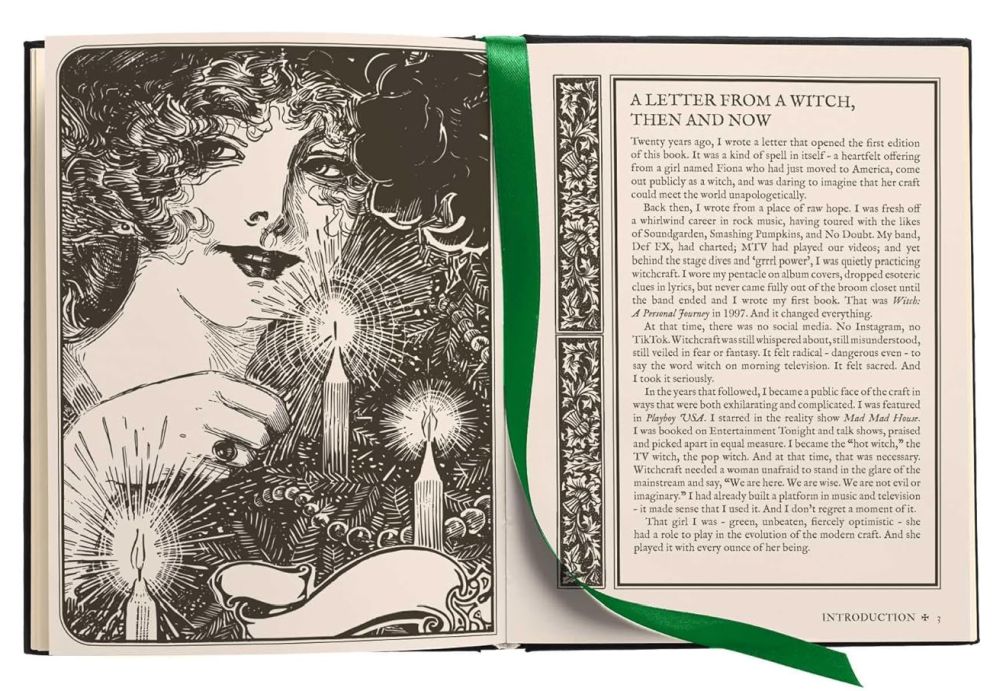
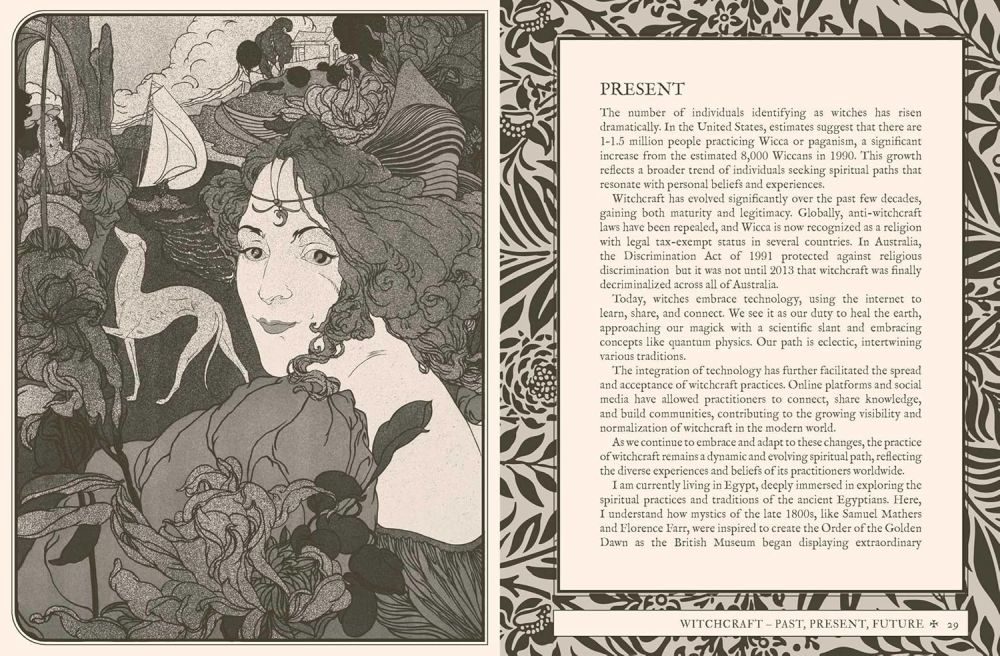
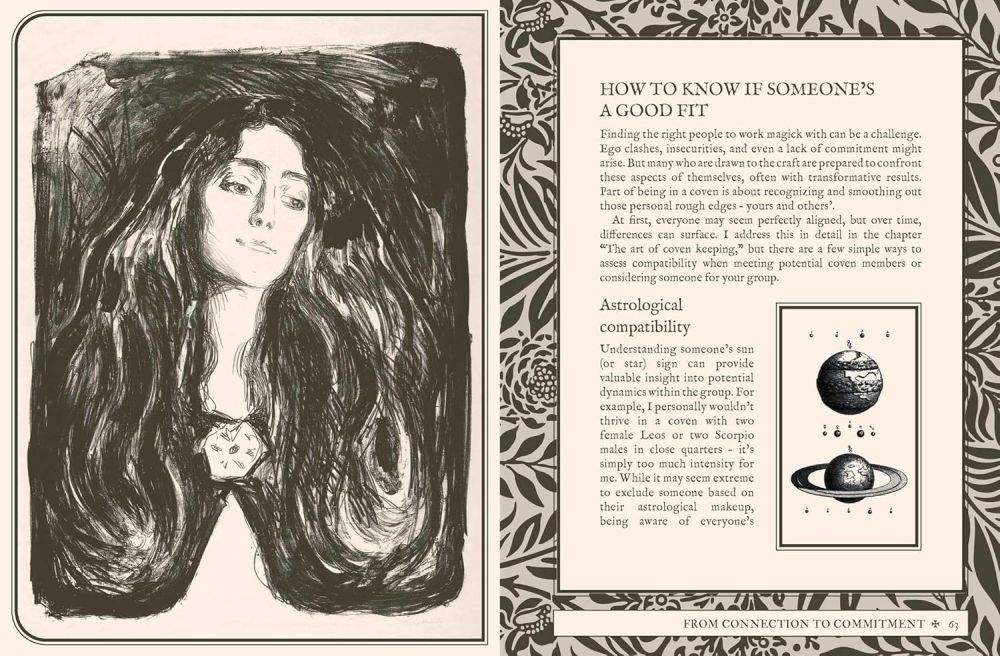
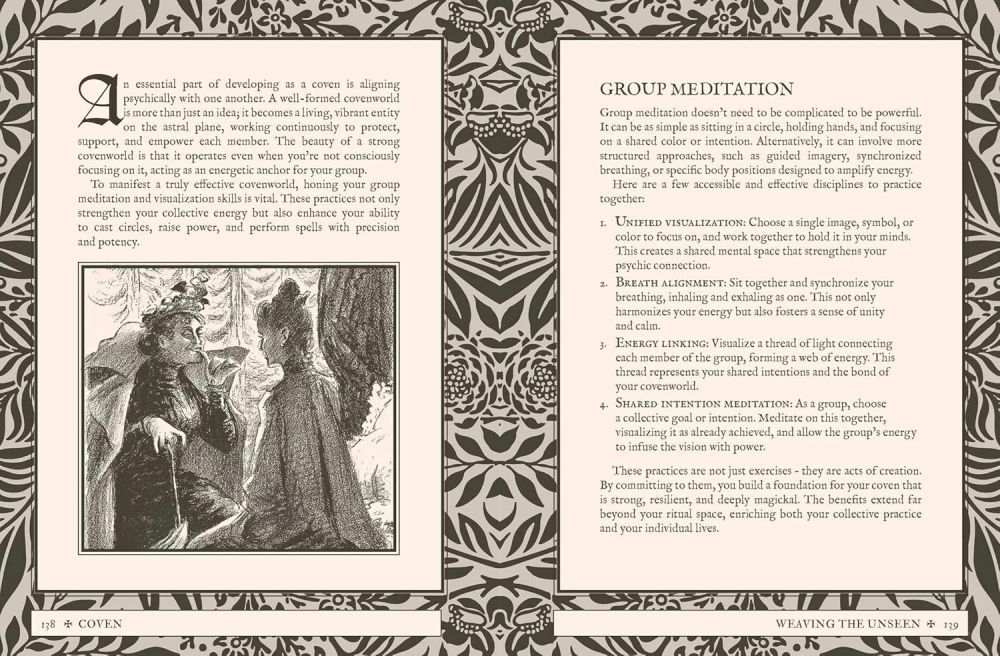
‘Coven: Where Witches Gather’ is available in quality bookstores, published through Rockpool, RRP $34.99. Enjoy some excerpts from the book, below.
In the company of muses and gods: an interview with rock poet Patti Smith from the Cream archives

Netflix announces a new docuseries that focuses on the rise and rise of pop superstar Kylie Minogue
Discover more from
Subscribe to get the latest posts sent to your email.

One Response to “An interview with Australia’s foremost modern Witch, Fiona Horne”
[…] An interview with Australia’s foremost modern Witch, Fiona Horne […]
LikeLike
Comments are closed.