THE NEW. RETRO. MODERN.

Often feel you’re the one making dad jokes around the watercooler? Tips on landing a great job as the clock ticks on, in a book well worth re-viewing
When I was 24 I began going out with my first long-term partner. He was a confident 18 years older than me; indeed the digits of his age were the exact reverse of mine. I don’t know why I’m doing the number-crunching here, since it was Denis who was the Actuary in the relationship, me the artistic entrepreneur, having funded and founded this here magazine. Actually, age was never an issue between us so I’ll move on…

Denis had a career title then of ‘Product and Marketing Manager’ with Dell Computers. In a nutshell, he managed the shift of Dell from a stuffy corporate brand to a cosier household name, seeing the company sell more volume of Dell PCs into Australian homes than ever before.

I’ll be delving a little more into Denis’ career here only to demonstrate that, as the years went by, the job titles got more impressive (they certainly left their mark on me) – quirkier even – but nonetheless imperative in an ever-changing technological environment that demanded nous and know-how.

Denis soon enough moved to Optus, employed as Business Marketing and Strategy Manager where he singlehandedly delivered a roadmap for the launch of smartphones in Australia. He was very much responsible for seeing customers were comfortable with the concept of smartphone/hardware packaged plans (yep, thank him for getting a phone with your combined billing).

He was then hired by AMP, where he earned the title of E-Leader, that is a manager of the company’s eBusiness. The fact that quirky title hadn’t existed before him says a lot about the guy’s innovation qualities. At AMP, Denis helped set up portal and wireless strategies for customers, while getting them to feel secure with online banking for the first time. His time at the bank was from 48 to 52, and by 53, he was running eMarketing at Macquarie Bank.

The reason I’ve gone into detail about Denis’s career (it did start sounding like a reference letter for a bit, lol) is to prove that long-term experience and accumulated skills can only shape a person for the better – making them better equipped for moving into upper positions mid-life, not less. Denis was at Dell at age 42, Optus at 44, AMP at 46, Macquarie Bank at 53. His broad experience across banking and financial service industries, and in IT, and telecommunications has seen him help companies transit from old to new technologies, providing strategic counsel at all levels. So long as he kept his finger on the pulse of ever-changing technologies, he was indispensable in all of the abovementioned fields. Here’s a guy who has been working with computers since 1990 – likely before you or I knew what a CD-ROM was – and he’s still teaching new and established businesses what to best do in marketing and communications.

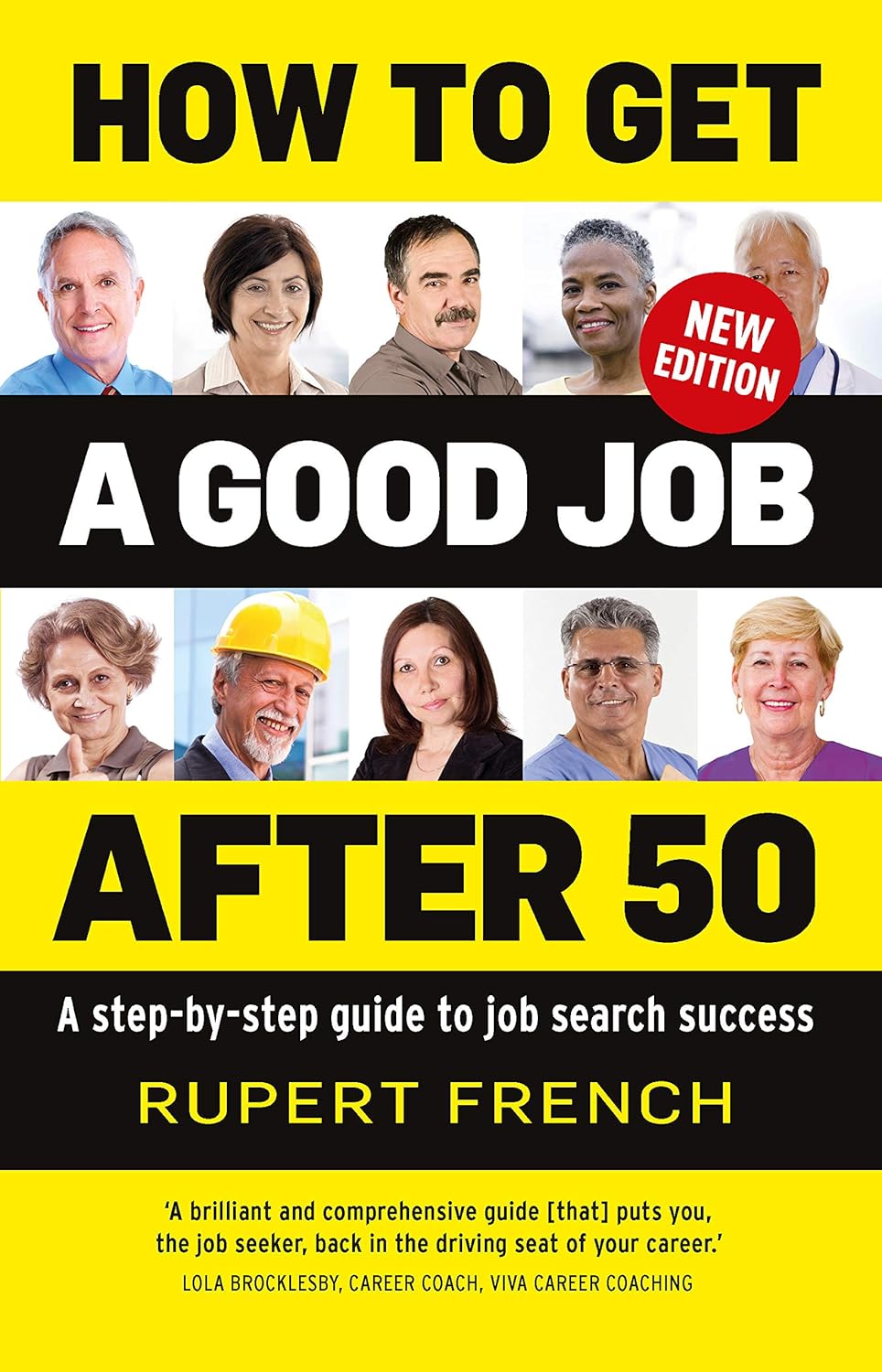
Now, not all people will see such constant growth and evolution in their career; indeed some might choose to change paths completely, which is where a book such as How To Get A Good Job After 50 comes in very handy.

Author Rupert French provides a step-by-step on how to land a great job in competitive fields when the majority of people who are doing the hiring are weighing up the pros and cons of seasoned employment.

He gets practical with things such as preparing a CV and for interviews, and building an effective network, as well as providing qualitative tips such as practical strategies to maintain positive self-esteem and self-confidence.

For a subject otherwise very official, this book makes for a fascinating read. I’m not close to 50 and yet even I was motivated to finish it.

It’s an important book, this, not merely because so many people are losing their jobs – in sectors right across the board, from mining to media to, yes, HR, but also for the fact that people are staying in the workforce longer. This is in due in no small part to the government forcing up the age of retirement and cutting back on pensions. Put simply, there’s more competition now in job application than, say, a decade ago.

And for this reason, this book is a must-read – and that’s for anyone on either side of 50.

Antonino Tati


‘How To Get A Good Job After 50’ is published through Exisle Publishing, RRP $29.99, available from wherever good books are sold. 

This review has been republished in its original form from 2015. I’m now 54, funnily enough and I think this book is still pertinent, especially in its updated edition, available through Amazon.


A Cream Original Recipe: Truffle Candied Pine Nuts

How to Use Relaxation Techniques for Better Health

The current rapid work environment has made stress and anxiety widespread health issues that affect mind and body conditions. The natural practice of relaxation techniques gives people an effective tool to manage stress and achieve optimal wellness. Several relaxation methods including deep breathing, meditation, progressive muscle relaxation together with mindfulness practice help decrease tension in the body, normalize blood pressure levels, and enhance sleep quality.

Physical activity combined with gratitude practice and spending time outdoors leads to better emotional stability and baseline peace.

Daily application of stress resilience techniques helps people achieve both mental strength and heightened concentration and maintains a peaceful state of mind.

By making relaxation a priority people enhance their mood and build long-term health which produces a more satisfying and balanced way of living.


Why Relaxation is Essential for Your Health

Human well-being depends greatly on relaxation because persistent stress damages physical as well as mental wellness. Long-term stress elevates cortisol levels decreases immunity strength and elevates blood pressure while simultaneously leading to depression and anxiety conditions.

Deep breathing combined with meditation practice and yoga provides beneficial effects for stress management by establishing a state of mental stability.

The combination of these relaxation methods works to reduce stress hormones therefore strengthening emotional stability and improving focus while supporting quality sleep. Daily practice of relaxation builds stress resistance and results in a better life quality. The practice of prioritizing rest and mindfulness along with the body’s recharge results in improved health and fulfillment in life.


Progressive Muscle Relaxation for Tension Relief

The method of progressive muscle relaxation helps people manage stress through a systematic sequence that intensifies muscles before allowing each group to relax fully. This method trains people to recognize tension areas in their bodies so they can deliberately let go of stress. PMR directs focus on different muscle groups starting from the toes to reaching your head which results in deep relaxation while also benefiting blood flow along with total wellness. Studies indicate that performing PMR regularly leads to diminished cortisol production together with a decrease in heart rate and improved rest quality.

The technique provides strong benefits to people who experience chronic pain alongside anxiety or tension headaches because it stops the chain of muscle tension resulting from stress. Regular participation in PMR practice creates a peaceful mindset alongside comfort relief for the body while improving mental peace and emotional control. The relaxation technique of PMR functions as a proven method for obtaining deep restful states while maintaining psychological and physical equilibrium.


Creating a Relaxing Nighttime Routine for Better Sleep

The establishment of peaceful evening rituals serves as a vital factor for achieving quality rest. Before bedtime, you should participate in relaxing activities which include reading books or taking warm baths, or practicing deep breathing to signal your body that it needs to rest. The blue light that smartphones and tablets release before bedtime necessitates avoidance since these lights can disrupt your body’s sleeping pattern.

Gentle stretching and relaxing music provide better alternatives to calm your mind before sleep. A relaxing evening routine alongside relaxation practices will boost your sleep quality thus enabling both rapid sleep onset and bright mornings without fatigue. An adequately rested body combined with a rested mind enables you to maintain concentration throughout the day with abundant energy.


How to Create a Relaxing Space at Home

Environmental conditions significantly affect your stress levels. A serene environment combined with proper organization will create a state of relaxation. Small decorative elements such as warm lighting and decorative plants or calm color choices together create substantial benefits in producing relaxing environments. Reduction of stress accompanies the simple act of decluttering your physical surroundings. A designated relaxation area included in your environment provides you with space for calming practice and meditation which results in improved overall mental wellness.

Your home becomes more comforting when you include master accents including scented candles along with soft blankets and gentle music. A peaceful environment lightens your mental state which allows you to concentrate better while resting and recharging. Minor home alterations lead to meaningful benefits for both your mental wellness and emotional state.


How Stress Affects Your Body and Mind

Stress creates numerous negative effects on the physical structures and mental processes of your body. When experiencing stress individuals might develop headaches alongside digestive issues, heightened muscle tension, and difficulties sleeping. Prolonged exposure to stress usually results in the development of anxiety and depression alongside problems with concentration and memory. Taking control of stress helps achieve better health outcomes. Deep breathing in combination with meditation as well as spending time in natural settings act as simple ways to reduce mental strain and achieve body relaxation.

The combination of regular physical exercise together with nutritious food consumption serves as an effective method to reduce stress. A virtual recovery method stands as a helpful technique that presents guided stress management and relaxation techniques through digital platforms. These strategies help you safeguard your well-being and create an improved mental state while preserving your life balance.


Things to Do Daily for a Healthier Mind and Body


Mindful Eating for a Stress-Free Life

A basic technique of mindful eating allows people to experience improved relaxation and enhanced mealtime enjoyment. Mindful eating requires you to direct your attention toward your food as you eat it slowly and appreciate each bite. Keeping track of your hunger and fullness cues enables you to make smart eating choices while preventing excessive consumption. By practicing mindful eating you will gain better digestion and control your food-related emotions which results in improved food relationships.

Slowing down at meals allows you to savor the various flavors and textures in your food. Mindful eating habits help you manage stress levels which results in greater inner peacefulness. Adding mindful eating to your everyday practice will produce better outcomes for both your mental and physical wellness.

The practice of relaxation benefits both physical body and mental condition. Progressive muscle relaxation together with mindful eating and peaceful environment creation serve as easy methods that reduce stress and promote better wellness. Regular relaxation practice throughout your day helps you maintain mental balance while improving your focus and refreshment levels. A lifestyle transition through daily small steps enables better well-being and happiness in life. Practice these techniques right now to improve your stress-free healthier life today. Make relaxation your top priority to experience immediate benefits.

Heather James


Click this kooky looking vintage ad for ‘Milk of Magnesia’ to an article about the true benefits of magnesium.

June 23, 2025, 12:08 am 0 boosts 0 favorites


Discover more from

Subscribe to get the latest posts sent to your email.

Leave a comment

Basic HTML is allowed. Your email address will not be published.

Subscribe to this comment feed via RSS