
A Practical Guide to Dental Surgery and Protecting Oral Function
A missing tooth can make everyday moments feel unexpectedly complicated. You may begin to avoid crunchy foods, chew only on one side, or cover your mouth while speaking or smiling. Understanding the potential dental implant benefits and other replacement options can help you have a more productive conversation with a dental professional. Tooth replacement is not solely about appearance. Restoring a gap may help support comfortable chewing, clearer speech, a balanced bite, and the stability of surrounding teeth. Because every mouth and health history is different, the best solution is one that fits both your clinical needs and your day-to-day life.
Why Tooth Loss Deserves Prompt Attention
When a tooth is lost, nearby teeth can gradually tilt or move toward the open space. That movement may change how the upper and lower teeth meet, which can make chewing less efficient or place extra pressure on certain teeth. A missing front tooth may also affect pronunciation, while a missing back tooth can make it harder to break down food comfortably. The jawbone in the area of a lost tooth may change over time because it no longer receives the same chewing stimulation. Tooth loss also remains an important measure of oral health and access to dental care, as shown in national tooth loss data. Seeking an evaluation sooner rather than later can give you more options for preserving function and planning treatment.
Main Tooth Replacement Options
There is no universal answer for replacing missing teeth. A dentist can assess the gap, surrounding teeth, gums, bite, and jawbone before explaining which options may be appropriate.
Dental Implants
A dental implant generally includes a post placed in the jawbone, a connector called an abutment, and a custom crown, bridge, or denture. It can replace a single tooth or support several teeth. Implant care involves daily cleaning and regular professional monitoring, and treatment is commonly performed in stages.
Fixed Bridges
A fixed bridge fills a gap with an artificial tooth supported by neighboring teeth. It may be a practical option when adjacent teeth already need crowns or when a patient prefers a non-surgical route. The health and structure of the supporting teeth are important considerations.
Removable Partial Dentures
A removable partial denture can replace several missing teeth and is taken out for cleaning. Modern designs can be made to blend with natural teeth, but fit and comfort may require adjustments as the gums and jaw change over time.
Implant-Supported Dentures
Implant-supported dentures use strategically placed implants to help secure a removable or fixed denture. This approach may offer more stability than a conventional denture for some people, especially when concerns include slipping, rubbing, or reduced chewing confidence.
How Dental Implants Work
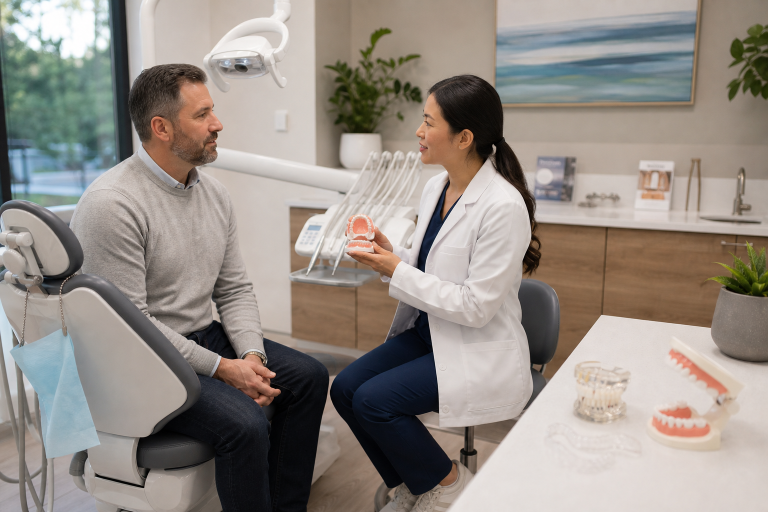
Implant treatment is carefully planned to match the anatomy and health needs of the individual. Although the timing varies, the process often includes the following stages:
- Evaluation: Review medical history, medications, gum health, existing teeth, and treatment goals.
- Planning: Use examinations and dental images to assess bone, bite, nerves, sinuses, and available space.
- Placement: Position the implant in the jaw under controlled surgical conditions.
- Healing: Allow the surrounding bone and tissues time to heal and stabilize.
- Restoration: Attach the final crown, bridge, or denture once the site is ready.
- Maintenance: Continue home care and professional visits to monitor the gums, bite, and restoration.
Healing time can differ substantially. Bone volume, gum health, smoking, diabetes control, the need for grafting, and the type of final restoration can all influence the schedule. Some patients may receive a temporary tooth or a same-day restoration, but that approach is not suitable in every situation.
Who May Be a Good Candidate?
Age alone does not determine candidacy. A strong candidate often has healthy or managed gums, adequate bone or a plan to address bone loss, reliable oral hygiene habits, and realistic expectations about treatment and follow-up. Medical conditions should be reviewed carefully, particularly when they affect healing or infection risk. Some people need treatment for gum disease, decay, infection, damaged teeth, or bone loss before moving forward with a replacement plan. Be open about tobacco use, medications, past surgeries, and health conditions so the dental team can plan safely and set appropriate expectations.
What the Treatment Process May Look Like
A typical path starts with a consultation and diagnostic visit, followed by any needed preparation. The next steps may include placement of the implant or another replacement procedure, healing visits, delivery of the final restoration, and instructions for cleaning and eating. The exact order can change when urgent dental needs, temporary restorations, or staged care are involved.
Recovery and Everyday Comfort
After treatment, it is common to have some tenderness, swelling, or temporary diet changes. Your dental team should provide personalized instructions for medication, brushing, activity, and food choices. Follow those instructions closely, attend follow-up visits, and allow chewing to return gradually as advised. Contact the dental office promptly for worsening pain, heavy bleeding, fever, drainage, a loose restoration, or swelling that worsens rather than improves. Early attention can help prevent a small concern from becoming a larger complication.
Long-Term Care and Warning Signs
Daily Habits to Include
- Brush twice daily with a soft-bristle toothbrush.
- Clean between teeth using floss, interdental brushes, or another recommended tool.
- Follow specific cleaning instructions for bridges, dentures, and implants.
- Avoid opening packages or biting hard objects with teeth.
- Keep regular checkups and professional cleanings.
Replacement teeth still require consistent care. The FDA notes that implants can improve chewing and support artificial teeth, but complications such as infection, loosening, bite concerns, and cleaning difficulties can occur. Bleeding gums, persistent bad taste, pain while chewing, recession, drainage, or movement in an implant or denture should be evaluated.
Questions to Ask Before Treatment
- Which options fit the current condition of my mouth?
- Will gum disease, decay, infection, or bone loss need treatment first?
- How many visits and how much healing time may be involved?
- What should I expect during recovery and while eating?
- How will I clean the replacement tooth or denture?
- What follow-up schedule is recommended?
- Which costs are included, and what alternatives should I consider?
A Clear Next Step
Replacing missing teeth is a personal health decision that warrants a thorough examination and an honest discussion of the benefits, limitations, costs, recovery, and maintenance. The right choice should support more than a natural-looking smile. It should also help you protect comfort, function, oral health, and confidence in daily life.
Conclusion
Replacing a missing tooth involves more than restoring the appearance of a smile. The right option should consider chewing, speech, bite alignment, gum health, jawbone condition, budget, and long-term maintenance. Dental implants, bridges, and dentures can each provide useful solutions, but their suitability varies from patient to patient. A thorough dental examination can help determine whether a tooth can be saved and which replacement approach best fits your needs. By understanding the treatment process, expected healing time, costs, and daily care requirements, patients can make more informed decisions and work toward a comfortable, functional, and healthy smile for years to come.
Discover more from
Subscribe to get the latest posts sent to your email.

Leave a Reply