
When School Stress Shows Up at Home: A New York City Parent Guide to Anxiety, Avoidance, and Support
Key Takeaways
- School avoidance can reflect anxiety, bullying, learning challenges, health concerns, or major life changes.
- Repeated physical complaints, morning panic, frequent nurse visits, and attendance changes deserve attention.
- Parents can combine empathy with a clear plan for returning to school.
- Early collaboration among caregivers, school staff, pediatricians, and mental health professionals can be helpful.
- The American Academy of Child and Adolescent Psychiatry estimates that school refusal affects roughly 1% to 5% of school-age children at some point.
Table of Contents
- When Normal School Stress Becomes a Concern
- Common Signs of Anxiety and School Avoidance
- What May Be Driving the Distress?
- How Parents Can Respond in the Moment
- Building a Calm Return-to-School Plan
- Working With Teachers and School Staff
- When to Seek Professional Support
- Common Parent Questions
- A Steady Path Forward
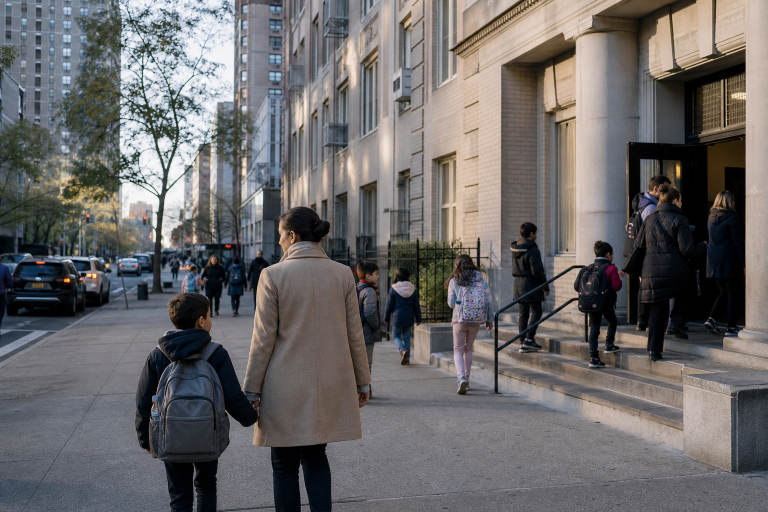
In New York City, school mornings can move quickly, from crowded subway platforms and long commutes to busy drop-off lines and packed hallways. When a child repeatedly becomes distressed about attending school, parents need support that is both compassionate and practical. For families seeking a child psychologist in NYC, Pacific Psychology NYC offers evidence-based therapy and psychological services for children, teens, and families, including support for anxiety, school avoidance, learning concerns, and family challenges. Located on the Upper West Side of Manhattan, the practice works with caregivers to understand what is driving distress and develop an individualized path forward.
School anxiety is not a character flaw, and avoidance is not always simple defiance. A child may be trying to communicate fear, overwhelm, social difficulty, academic frustration, or a problem they do not yet have words to describe. A calm, consistent response can help families identify the concern before missed days and stressful mornings become an entrenched pattern.
When Normal School Stress Becomes a Concern
Some nerves are expected before a new school year, a difficult exam, a class presentation, or a move from elementary to middle school. Concern grows when distress lasts, worsens, or interferes with sleep, attendance, learning, friendships, or family routines. The American Academy of Child and Adolescent Psychiatry’s guidance on school refusal explains that this pattern can have several causes and is different from simply skipping school without caregiver knowledge.
- Typical stress: A child feels nervous but can attend school and recover with reassurance.
- Possible anxiety: A child has repeated fear, physical symptoms, or trouble entering, staying in, or participating in school.
- Urgent concern: A child reports bullying, abuse, self-harm thoughts, feeling unsafe, or an inability to function at home or school.
Common Signs of Anxiety and School Avoidance
Children do not always say, “I feel anxious.” Their body and behavior may communicate it first. Watch for patterns rather than judging one difficult morning in isolation.
- Stomachaches, headaches, nausea, dizziness, or fatigue before school
- Crying, freezing, anger, panic, or shutdown during the morning routine
- Repeated requests to stay home, arrive late, or leave early
- Frequent nurse visits or calls home
- Sleep difficulty before school days
- Perfectionism, fear of mistakes, or intense worry about grades
- Withdrawal from friends, activities, or particular classes
Physical symptoms should still be discussed with a pediatrician. Anxiety and medical conditions can occur at the same time, and families should not assume one explanation rules out the other.
What May Be Driving the Distress?
School avoidance can have more than one cause. In a large city, transitions between classrooms, noisy cafeterias, transportation, competitive academic demands, and changing peer groups can each feel significant to a child who is already overwhelmed.
- Separation anxiety or fear of being away from caregivers
- Social anxiety, bullying, conflict, or fear of embarrassment
- Academic frustration, learning differences, or executive functioning difficulties
- Panic symptoms, OCD symptoms, specific fears, or sensory overload
- Grief, family changes, trauma, sleep problems, or health concerns
Look for the exact point where distress rises. Is it waking up, leaving home, entering the building, lunch, gym, a presentation, a particular subject, or the trip home? Specific observations often lead to more useful next steps.
How Parents Can Respond in the Moment
A child in a panic response is unlikely to benefit from a long lecture or demand for a complete explanation. Start by lowering shame while keeping the focus on the next manageable action.
Helpful language
- “Something about school feels very hard today. Let’s figure out which part feels biggest.”
- “You do not have to solve the whole day right now. Let’s focus on the next step.”
- “Your feelings are real, and we can help you handle them.”
- “We will make a plan with the school instead of facing this alone.”
Avoid calling a child lazy, dramatic, or manipulative. Also, avoid making promises to remove every uncomfortable situation. Compassion and structure can exist together.
Building a Calm Return-to-School Plan
- Check health and safety first. Address illness, bullying, threats, or another immediate concern.
- Identify the barrier. Name the specific moment, setting, or demand that feels hardest.
- Set one small target. It may be getting dressed, reaching the building, meeting a trusted adult, or attending a class.
- Create predictability. Prepare clothes, materials, breakfast, and transportation plans the night before.
- Practice coping skills. Use slow breathing, grounding, a brief script, or a written plan for the morning.
- Review without blame. Notice what helped, what did not, and what needs adjusting.
Gradual exposure to feared situations may be part of treatment for anxiety, particularly when it is planned with a qualified clinician and coordinated with the child’s needs.
Working With Teachers and School Staff
Contact the school early, before everyone responds to the problem differently. A shared plan may include a quiet arrival, a check-in with a counselor, a trusted staff member at the door, a planned break, or academic support. Ask when distress is most visible and whether staff have noticed changes in participation, grades, friendships, or behavior.
Some students may qualify for formal supports, such as a 504 Plan or an Individualized Education Program, depending on evaluation results and individual needs. These supports are not automatic, but a school conversation can clarify available options.
When to Seek Professional Support
Consider consulting a pediatrician or licensed mental health professional when anxiety continues for weeks, attendance declines, physical symptoms interfere with daily life, or family efforts are not improving the pattern. Professional assessment can also be important when panic, compulsions, trauma symptoms, severe mood changes, learning concerns, or major behavior changes are present.
If a child talks about self-harm, hopelessness, abuse, harming others, or not wanting to live, seek immediate help. In the United States, the 988 Suicide & Crisis Lifeline provides call, text, and chat crisis support, and 911 may be appropriate when there is immediate danger.
Common Parent Questions
Is school avoidance the same as truancy?
Usually, no. School avoidance commonly involves visible distress and caregiver awareness. Truancy generally refers to skipping school without a caregiver’s knowledge and may require a different response.
Should a child be allowed to stay home?
That depends on illness, safety, and the reason for the distress. Staying home may be necessary during illness or immediate danger, but repeated avoidance can make returning feel harder. Seek guidance if the pattern continues.
What if my child says, “I don’t know”?
Ask about concrete moments rather than demanding a broad answer. Try, “Is it hardest before leaving, at the entrance, in class, at lunch, or around other kids?”
A Steady Path Forward
School anxiety is a signal, not a personal failing. When adults stay calm, identify the source of distress, reduce shame, and follow a consistent plan, children have a better opportunity to reconnect with learning and build confidence that extends beyond the school day.
Discover more from
Subscribe to get the latest posts sent to your email.

Leave a Reply