
Why Bezel Engagement Rings Are Having a Major Moment
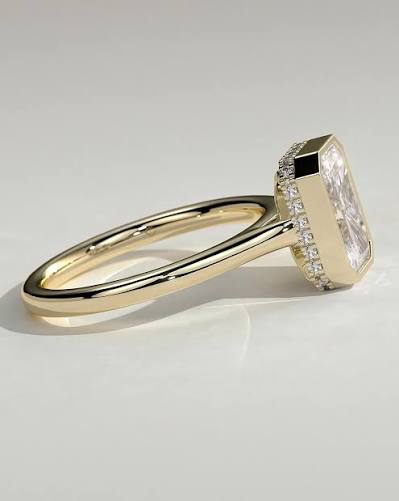
A modern take on the Bezel design.
Walk past any jewellery counter in Melbourne or Sydney right now and you’ll notice something. Fewer prongs, more polish. The bezel setting, once considered the quiet achiever of ring styles, has become the one everyone’s asking for.
A Setting That Actually Suits Real Life
Prong settings have dominated engagement ring design for decades, and for good reason, they let light hit a diamond from every angle. But prongs snag on jumpers, catch on gym equipment, and need regular checking to make sure they haven’t loosened. A bezel setting wraps a thin rim of metal around the stone’s edge instead, holding it snugly in place without any claws sticking out.
For anyone who works with their hands, plays sport, or just doesn’t want to think about their ring every time they pull on gloves, that difference matters more than it sounds. Dentists, nurses, teachers, tradies, people who live active lives are choosing bezels because they can actually forget they’re wearing one.
Durability Without the Trade-Off
Jewellers will tell you a bezel setting protects a stone better than almost any other style. Because the metal surrounds the diamond’s girdle completely, there’s no exposed edge for a knock to chip. That’s a genuine advantage for softer or included stones, and it’s part of why bezels are popular for people choosing sapphires, morganite, or other gems that need a bit more protection than a diamond.
It also means less maintenance. A prong can bend, and needs the plate checked periodically to ensure it hasn’t come loose. A well-made bezel simply doesn’t move, which is exactly the kind of everyday reliability shoppers are hunting for when they browse the Bezel Set Rings by Cullen Jewellery, alongside a style that still photographs beautifully on the finger. If you want a ring you’re not fussing over every six months, this is a legitimate reason to consider one.
The Look Has Caught Up With the Practicality
There’s a reason this isn’t just a trend for the practical-minded. Bezel rings have shed their reputation as the safe, slightly boring option. Designers are now pairing them with unusual stone shapes, oval, pear, emerald cut, that look particularly striking when the setting hugs the outline of the diamond rather than lifting it up on claws.
The result is a ring that sits low and sleek against the finger. It reads as modern and architectural rather than traditional, which is exactly why it’s found favour with a generation that wants their ring to look considered, not conventional. Vintage-inspired bezels with milgrain detailing are having their own moment too, proving the style can flex in either direction.
What to Check Before You Buy
Not every bezel is created equal. A setting that’s too thick can swallow smaller stones and make them look flatter than they are, while one that’s too thin defeats the purpose of extra protection. It’s worth asking a jeweller how much of the stone will be visible from the side and above, since that’s where the light performance lives.
Metal choice matters here too. White gold and platinum tend to give a crisper, more contemporary line, while yellow gold in a bezel leans warmer and slightly more vintage. Either way, it pays to see the style on an actual hand rather than in a catalogue photo before deciding.
A Style With Staying Power
Trends in engagement rings tend to swing back and forth, halos in, halos out, thin bands, thick bands. Bezels feel different because the appeal isn’t really about fashion. It’s about a setting that solves a genuine, everyday problem while still looking sharp on the finger. That combination doesn’t tend to fade the way pure aesthetic trends do.
If you’ve been putting off ring shopping because you couldn’t picture wearing something delicate every day, this might be the style that changes your mind.
Discover more from
Subscribe to get the latest posts sent to your email.

Leave a Reply