
How To Protect Indoor Air Quality After Water Damage in Miami, Florida
In Miami, water damage can quickly escalate from a minor inconvenience to an indoor air quality concern. Heavy rain, hurricane-season flooding, plumbing failures, roof leaks, and air-conditioning condensation can leave moisture inside walls, flooring, furnishings, and HVAC equipment. When a problem is widespread, hidden, or connected to contaminated water, homeowners and property managers may need mold remediation services in Miami after the source of moisture has been corrected.
The priority is not simply removing visible water. A safe recovery involves stopping the leak, thoroughly drying affected materials, controlling humidity, and checking whether moisture has reached areas that are difficult to see. Addressing those conditions early can help reduce musty odors, mold growth, and airborne debris during cleanup.
Why Water Damage Changes Indoor Air Quality
Drywall, wood framing, carpet, insulation, furniture, and paper-backed materials can retain moisture long after a floor looks dry. Damp porous materials may support mold growth and create musty odors. In Miami homes, high outdoor humidity can slow evaporation, so visible water removal alone does not confirm that the building is dry.
Common Problems After a Leak or Flood
Warning signs include earthy or musty smells, elevated indoor humidity, staining, peeling paint, visible mold, warped flooring, and dust from damaged materials. Exposure to dirty water or sewage can raise contamination concerns. Damp filters, vents, or ducts can also affect airflow and distribute odors when the system starts again.
What To Do During the First 24 Hours
- Stop the water source if it is safe to do so.
- Keep out of wet areas until electrical hazards have been addressed.
- Move dry belongings to a clean location and photograph damage for insurance records.
- Open windows and doors only when outdoor weather is safe and not excessively humid.
- Use fans and dehumidifiers only when electrical equipment can operate safely.
Never operate a fuel-powered generator indoors, in a garage, or near openings to the building. Carbon monoxide can accumulate rapidly in enclosed or partially enclosed spaces.
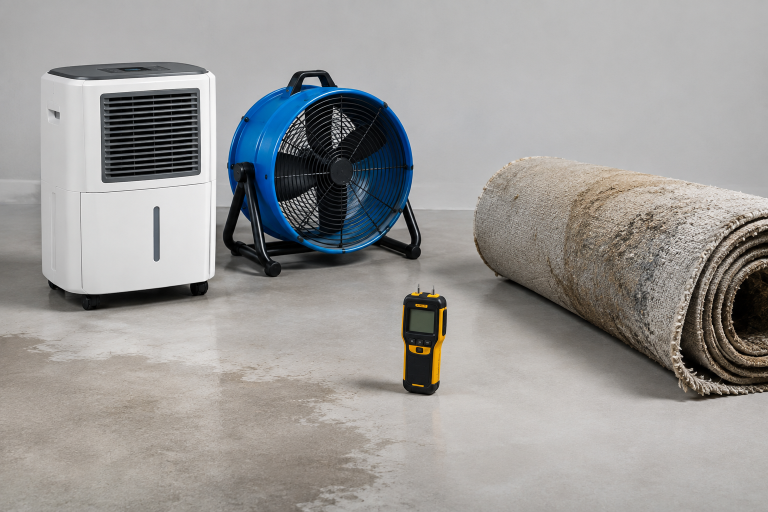
How To Dry a Water-Damaged Space Safely
Fans improve air movement, while dehumidifiers remove moisture from the air. Air conditioning may help reduce humidity, but it cannot confirm that moisture trapped behind baseboards, beneath flooring, or inside wall cavities has been removed. Check the affected surfaces and keep the drying equipment running until the materials are dry and conditions remain stable.
- Track room temperature and relative humidity.
- Check moisture readings in drywall, trim, flooring, and framing when possible.
- Watch for changing odors, staining, or new surface damage.
- Do not rely on a dry surface feel as the only indicator of progress.
When To Remove Wet Building Materials
Some materials can be dried successfully, but others hold moisture too long. Saturated carpet padding, wet insulation, swollen particleboard, and damaged drywall often need closer evaluation. Porous materials exposed to sewage or floodwater warrant extra caution, as cleaning may not fully remove contamination. Avoid aggressively disturbing suspected mold growth without appropriate protective equipment and containment.
Checking HVAC Systems, Filters, and Ducts
Before running central air normally, inspect the filter, return grilles, supply vents, drain pan, nearby insulation, and accessible components of the air handler. Replace a wet or visibly dirty filter. If water entered ducts, the air handler, or insulation around HVAC equipment, a broader inspection may be appropriate before the system circulates air through occupied rooms.
How To Manage Humidity After Cleanup
Humidity management is an ongoing task in South Florida. Use bathroom and kitchen exhaust fans, repair plumbing and roof leaks promptly, maintain condensate drains, and consider a humidity monitor in bathrooms, laundry rooms, closets, and other moisture-prone areas. Keep furniture slightly away from exterior walls if condensation is recurring, and use dehumidification when ventilation alone does not keep the space dry.
Signs That Hidden Moisture or Mold May Remain
- A musty smell that returns after cleaning
- Bubbling paint, soft drywall, or growing stains
- Warped flooring, swollen trim, or loose baseboards
- Condensation around windows, ducts, or vents
- Repeated indoor humidity spikes without a clear explanation
Respiratory irritation can have many causes. Anyone with ongoing symptoms should speak with a qualified medical professional rather than attempting to diagnose a health condition from building conditions alone.
What Recent Research Says About Post-Flood Conditions
A study by Florida State University and the FAMU-FSU College of Engineering of hurricane-damaged homes identified roof age, indoor mold spore levels, and maximum flood depth as important predictors of new respiratory symptoms. The researchers also identified bathroom exhaust airflow and building airtightness as relevant conditions, making recent flood and respiratory health research a useful context for Miami residents planning a careful recovery.
When To Use Testing or Professional Assessment
A small, visible leak with a clear source may only require drying and repair. Professional assessment becomes more important when damage is widespread, recurring, hidden inside walls, connected to sewage or floodwater, affecting HVAC equipment, or producing odors that do not improve. Air testing should not replace finding the moisture source and correcting it.
Safe Cleanup Practices for Households
Wear gloves, eye protection, protective clothing, and suitable respiratory protection when conditions call for it. Keep children, pets, pregnant people, people with breathing problems, and people with weakened immune systems away from moldy cleanup areas. Do not mix cleaning products, and bag damaged materials before carrying them through unaffected rooms.
How To Prevent Future Indoor Air Problems
Inspect roofs, windows, plumbing connections, gutters, drains, and HVAC condensate lines regularly. Respond to small leaks before moisture reaches wall cavities or insulation. Maintain exhaust ventilation, replace filters according to the manufacturer’s guidance and household conditions, and keep records of repairs, moisture readings, and prior water events.
Conclusion
Protecting indoor air quality after water damage in Miami starts with fast, thorough moisture control. Stop the water source, dry materials completely, inspect HVAC components, manage indoor humidity, and investigate any recurring odors or damage. A careful response is more effective than trying to cover up a problem with fragrance or surface cleaning alone.
Discover more from
Subscribe to get the latest posts sent to your email.

Leave a Reply