
Crash Games: Rules, Odds and Multipliers
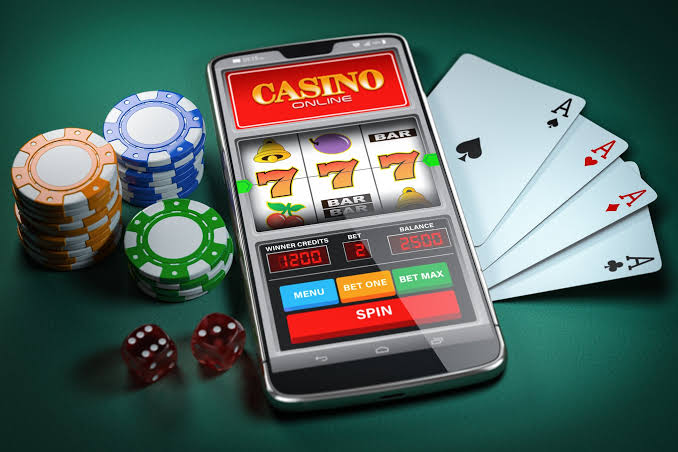
In the field of online gaming, crash games have emerged as a popular and accessible form of digital entertainment. These games, which are described by the UK Gambling Commission as games where the customer loses their stake unless they take action to end the game before the crash, offer a blend of immediate decisions and potentially variable returns. Aviator by SPRIBE and Space XY by BGaming exemplify the genre, each with their distinct approaches to the core mechanics.
How Crash Games Work
- To initiate a typical crash game, the player usually places a bet while the game round is not already in progress. This pre-round betting phase is common in crash games.
- Following the player’s bet placement, the round commences with the introduction of a real-time multiplier. In Aviator, this multiplier increases continuously over time, represented on a visual gauge. In contrast, Space XY displays a potential multiplier against elapsed time, revealing how long the multiplier has been active.
- Players must decide when to end their bet, which is commonly referred to as ‘cashing out.’ The payout is calculated as the stake multiplied by the multiplier reached at the cash-out moment. So, a $10 bet cashed out at a 5× multiplier returns $50.
- If the multiplier crashes before the player initiates a cash-out, the active stake is lost. The crash point is unpredictable, adding an element of risk to each round.
How Crash Multipliers Work
What Does a 2×, 5× or 10× Multiplier Mean?
In crash games, multipliers are integral to calculating the return on a successful cash-out. Using the formula return = stake × cash-out multiplier, a $10 bet cashed out at a 2× multiplier returns $20, at a 5× multiplier returns $50, and so on. Aviator, for example, multiplies the active stake by the value on its gauge when the cash-out is triggered. This example is limited to Aviator since the specific cash-out formulas are often not universally identical due to provider and title-specific rules.
Is There a Maximum Multiplier?
The maximum multiplier varies between games. As of their game overviews, the maximum multiplier in Space XY is ×10,000, while in Lucky Birds, it reaches up to ×12,000. These figures are not indicative of a universal maximum in crash games but rather the specifications of individual titles.
Crash Game Odds
Are the Odds the Same in Every Crash Game?
Crash games do not share a singular, standardized probability system. Game providers, using different implementations, have developed varying RTP values, mathematical models, and game structures within their own unique titles. Therefore, an exhaustive, universally applicable set of probabilities cannot be established.
That is where game-by-game guides at InfoCasinos.mx become useful, since RTP and game mechanics need to be checked title by title rather than assumed across the genre.
RTP vs Chance of Reaching a Multiplier
A crash game’s RTP represents the theoretical long-term return to a player, not the likelihood that a multiplier will be attained in the next round or within a single round’s conclusion. Expecting a multiplier return based on that singular play is not congruent with the long-term mathematical model upon which RTP is based, meaning the term RTP signifies the anticipated return over a very large number of games.
Why Exact Multiplier Probabilities Need the Game’s Math
Exact probability percentages, like a 2× multiplier having a 20% chance of being reached, require the provider’s specific mathematical model underlying the title. The UK Gambling Commission has established regulations mandating the disclosure of RTP, house margins, or winning probabilities for online gambling games. Players, for instance, could not accurately calculate or substantiate the probability inherent to a particular crash game unless such mathematical models are openly shared or known. When the underlying math is not public, a gambling portal can still give players the documented RTP, game rules and operator conditions without turning estimates into supposed probabilities.
RTP and House Edge in Crash Games
What RTP Means
The UK Gambling Commission describes theoretical RTP as the designed return-to-player percentage of the game. In other words, a 95% RTP means that over a vast number of rounds, the player is expected to receive 95% of their wagers back, while the remaining 5% constitutes the theoretical house edge.
Examples of Published Crash-Game RTP
Here is a brief comparison of RTP and maximum multipliers for some popular crash games:
| Game | Provider | Published RTP | Published Maximum Multiplier |
|---|---|---|---|
| Aviator | SPRIBE | 97% | — |
| Space XY | BGaming | 97% | ×10,000 |
| Lucky Birds | BGaming | 96% | ×12,000 |
Why RTP Does Not Predict One Session
While useful for evaluating a crash game’s long-term return profile, RTP does not guarantee a particular return for a single session. The theoretical RTP is applied over an extensive volume of play, not a single round or brief period. The theoretical house edge is expressed over time, with significant but temporary returns being possible in the short term.
Manual Cash-Out vs Auto Cash-Out
Manual Cash-Out
In crash games, players manually cash out their bets by pressing the cash-out button before the multiplier reaches its crash point. This involves monitoring the multiplier closely and making a timely decision to secure their return and any potential winnings.
Auto Cash-Out
Certain crash games, such as SPRIBE’s Aviator and BGaming’s Space XY, offer an auto-cash-out feature. Players can set a predetermined multiplier at which their bet will automatically be settled, allowing the bet to be settled without a manual click while the game progresses. It’s important to note that the game’s auto-cash-out feature operates only when the set multiplier is achieved. The player must not automatically assume that the “cash-out” interval is a fixed duration, as auto cash-out is based on a selected multiplier rather than elapsed time.
Does Auto Cash-Out Change the Underlying Game Result?
Whether auto cash-out changes the game’s underlying result depends on the specific title’s documented mechanics. Properly implemented RNG or provably fair systems generate the game result independently of the player’s settlement method. The documentation provided by SPRIBE and BGaming indicates that Aviator generates its round coefficient before play and Space XY uses a certified RNG, respectively.
Therefore, one cannot make a definitive statement on the impact of an auto-cash-out across all crash games. In some cases, such as Space XY, the RNG mechanism indicates that the multiplier’s movement and crash point are generated independently of the presence of an auto-cash-out. However, it is important to refer to the specific documentation of a provider to fully comprehend whether or not there is any impact.
Multiple Bets in One Round
Aviator, one of the most well-known crash games, allows players to place two simultaneous bets in a single round. This feature, outlined in its official rules, is also available in some other crash games, such as Space XY, which permits one or two active bets per round. Therefore, it is crucial that the number of simultaneous bets any crash game permits depends on its specific rules.
RNG and Provably Fair Crash Games
RNG-Based Games
Space XY, a BGaming crash title, is a prime example explicitly stating the use of a certified Random Number Generator (RNG) in its operational rules. This randomness generator is designed to produce unpredictable results to ensure that the game’s outcomes are random and independently testable. Although theoretically feasible, it may be challenging to verify the RNG’s precise operation without access to the proprietary code or an audit.
What “Provably Fair” Means in a Crash Game
In crash games, “provably fair” refers to the use of cryptographic techniques to verify how the outcome of a game was generated and that a committed result was not altered after the fact. In a provably fair system, the game generates a random value, which is used to determine the crash point or multiplier. The player can then verify this random value using the hash data provided by the game and the relevant seed or public randomness source.
Aviator and OPDuel Crash, for example, employ these cryptographic techniques to provide transparency and verifiability. Provably fair systems are particularly common in cryptocurrency-based online games as the player has the ability to independently verify completed results.
RNG vs Provably Fair
Regardless of the implementation, RNG and provably fair mechanisms are two different approaches that each provider and operator adopts and each has its own set of benefits. RNG-based games, such as BGaming’s Space XY, use certified random-number-generation components, while provably fair games like OPDuel Crash and SPRIBE’s Aviator provide cryptographic verification data.
When the operator itself is new, https://portalapuesta.com/nuevas-casas-de-apuestas/ is a useful place to see how its licence, payments and bonus rules compare with other recent launches.
The transparency mechanism cannot be assessed without the implementation details, and each system can vary. Therefore, it is crucial to examine the specifics associated with the implementation to comprehend the fairness model associated with the provider and operator.
Can Previous Multipliers Predict the Next Crash?
Crash games, like traditional casino games, depend on Random Number Generator (RNG) or cryptographic techniques for generating random outcomes. While it is tempting to believe that previous multipliers or crash points could predict the next crash, this is not the case. The outcome of each round is independent of previous rounds, and the multipliers are designed in a way that the next crash point cannot be anticipated or determined based on previous games.
To make definitive statements on the probability, reliability, or production process of crash games, one would need access to the specific mathematical models or algorithms used by the game provider to generate the crash points and multipliers.
Single rounds or brief periods do not change the theoretical RTP, as it is a theoretical metric that applies to vast amounts of play, not individual sessions. Therefore, while previous multipliers can provide a record of recent outcomes, they are not indicative of future outcomes and should not be used to make predictions or inform betting strategies.
Why Crash Games Have Different Rules
Although crash games have a simple core mechanic, they do have several other rules that differentiate each implementation, mainly depending on their RTP, maximum multiplier, number of simultaneous bets, auto-cash-out, RNG, or provably fair implementation, and risk modes.
Discover more from
Subscribe to get the latest posts sent to your email.

Leave a Reply