
How To Choose A Jon Boat For Fishing: Hulls, Capacity, And Safety
Key Takeaways
- Choose a hull based on the water conditions you fish most often.
- Flat-bottom jon boats are best suited to calm, shallow water, while modified-V hulls can offer a softer ride in light chop.
- Capacity, horsepower limits, weight distribution, and safety equipment should guide every buying decision.
- A simple, balanced rig is usually more useful than a boat overloaded with accessories.
- Inspect the boat, review local rules, and prepare for changing weather before every launch.
Why the Right Jon Boat Depends on the Water
Jon boats remain a practical choice for anglers who fish ponds, marshes, protected lakes, slow-moving rivers, and narrow creeks. Many aluminum jon boats are built around simple layouts, shallow drafts, and easy trailering, which make them appealing to fishermen who want direct access to hard-to-reach waters. A jon boat is generally a small, open vessel with a broad, relatively flat hull shape, although designs vary by manufacturer and intended use. The basic johnboat design is especially useful where a larger deep-V boat would be difficult to launch, maneuver, or float. The best choice is not automatically the longest boat or the one with the largest motor rating. Start with the water you actually fish, the people who will ride aboard, and the equipment that must come along. A boat that works well on a quiet farm pond may be uncomfortable or unsuitable when wind and boat wakes build on an exposed lake.
Start With the Water You Fish
Flat-bottom hulls work well in shallow, protected water. Their broad footprint can provide a stable footing while casting or moving around carefully at rest, and their shallow draft can help anglers reach backwaters, creek mouths, and weedy shorelines. The trade-off is that a flat hull can ride more harshly in chop. If you are comparing local inventory, speaking with boat dealers near me can help you evaluate boat dimensions, weight ratings, transom layouts, and trailer options in person. Bring a realistic list of passengers, fishing gear, batteries, fuel, and other equipment to keep the conversation focused on how the boat will be used. Modified-V jon boats are often a better fit for anglers who fish small lakes, wider rivers, or areas where afternoon wind and passing boats create regular waves. The bow has a greater angle than a traditional flat-bottom hull, which can help it ride light chop more smoothly. It may draw slightly more water, so shallow-water access should still be considered before choosing one.
Quick Hull Comparison
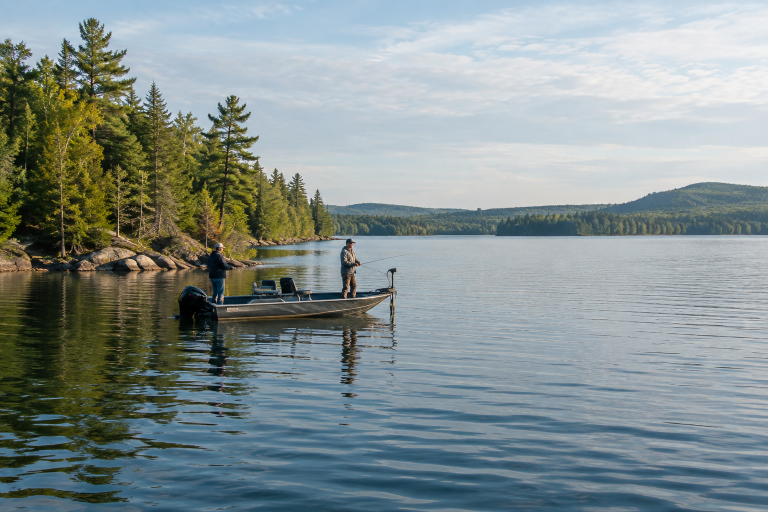
- Farm ponds and calm creeks: A flat-bottom hull emphasizes shallow draft and useful stability at rest.
- Sheltered rivers and smaller lakes: Either hull may work, depending on usual wind, wakes, and water depth.
- Open water with regular light chop: A modified-V hull can provide a more comfortable ride than a fully flat hull.
Choose Length, Width, and Capacity Together
Shorter jon boats are often easier to store, carry, and maneuver at rough shore launches. Longer boats can provide more usable floor space for another angler, a cooler, tackle, fuel, and safety gear. Length alone does not determine how stable or capable a boat will feel, because width, hull shape, load placement, and passenger movement also matter. Before buying, picture a normal fishing day instead of an empty showroom floor. Consider how many people usually fish together, whether the boat will be launched by hand or trailer, how much storage space is available at home, and whether you need room for a battery, fuel tank, livewell, anchor, or hunting equipment. Read the capacity plate before installing accessories or selecting an outboard. The plate identifies limits for people, weight, and horsepower. Passengers, motor, fuel, battery, cooler, tackle, and required safety equipment all contribute to the load. Treat those figures as limits, not targets, because a boat that feels spacious while empty can become crowded and less predictable when loaded for a full day.
Match the Motor to the Hull
Never exceed the maximum horsepower shown on the boat’s capacity plate. A tiller-steer outboard can be a straightforward option for small fishing boats, while an electric trolling motor may be enough for short trips on calm water or waters with engine restrictions. The motor’s weight also matters, since too much weight at the stern can affect trim and make the bow ride high. More horsepower is not always more useful. Anglers who spend most of the day working shorelines, timber, or shallow coves may value quiet control and efficient maneuvering over top speed. Review the boat manual, motor specifications, and intended load before making a final pairing.
Build a Balanced Fishing Setup
Keep heavy items low and close to the center of the boat whenever possible. Batteries, fuel tanks, coolers, and tackle boxes should be secured so they cannot slide when the boat turns, encounters a wake, or shifts on the trailer. Avoid concentrating too much weight on one side or directly at the stern. A practical starter setup may include secure seats, rod holders, an anchor or shallow-water stake, a protected battery box, a landing net, a manual bailer or portable pump, a spare paddle, a first-aid kit, and a charged communication device. Raised casting decks and extra storage can be helpful, but they should not make the boat top-heavy or interfere with safe movement aboard.
Consider Construction and Used-Boat Condition
Riveted aluminum boats can be a sensible choice for light-duty fishing. In contrast, welded aluminum hulls are often chosen by owners who expect frequent use on rough shorelines or in shallow rivers. Composite or plastic boats can also be practical in certain settings. Material alone should not decide the purchase. Capacity, condition, weight, handling, and local service options deserve equal attention. When inspecting a used jon boat, look closely for dents, cracks, corrosion, loose rivets, damaged seams, and evidence of repairs. Check the transom for flex, confirm that the drain plug fits securely, and inspect the trailer’s tires, lights, winch, frame, and safety chains. If a motor is included, ask about maintenance history and observe a cold start when possible.
Use a Pre-Launch Safety Routine
- Inspect the hull, drain plug, transom, motor mount, and trailer connection.
- Secure fuel, batteries, coolers, tackle, and other loose equipment.
- Confirm that every passenger has a properly sized life jacket.
- Check the weather, water conditions, and the route back to the launch.
- Carry a paddle or oars and a reliable way to communicate.
- Tell a trusted person where you are going and when you expect to return.
Registration, lighting, safety equipment, and operating requirements can vary by boat type and location. The Coast Guard boating FAQ explains several federal safety requirements, but anglers should also confirm the rules that apply in the state and waters where they launch.
Final Buying Framework
Choose the water first, then select the hull that suits those conditions. Next, choose a length and width that accommodate real passengers and gear, stay within the capacity plate limits, and select a motor that fits the boat rather than overpowering it. Add accessories last, prioritizing equipment that improves safety, control, and the kind of fishing you actually do.
The right jon boat matches ordinary trips, not just occasional ambitions.
A compact flat-bottom model may be ideal for quiet creeks and ponds, while a larger modified-V setup may be better for anglers who regularly encounter wind and light chop. Careful attention to capacity, balance, motor limits, and pre-launch preparation can make every outing safer and more enjoyable.
Discover more from
Subscribe to get the latest posts sent to your email.

Leave a Reply