
The Horror Movies Behind Memorable Halloween Looks
When a Costume Becomes Iconic
Ask a room of people to name a horror character and half of them will describe a mask or a dress before they get to the name. Funny, that. The film might be forty years old and they’ve maybe only seen clips, but the look has stuck.
Halloween is when it all comes back round, and every year the shops fill up with the same handful of faces and silhouettes. So it seemed worth asking what makes a few of these outfits so durable, and what anyone can take from them when they’re putting together their own.
The Psychology of a Simple Horror Costume
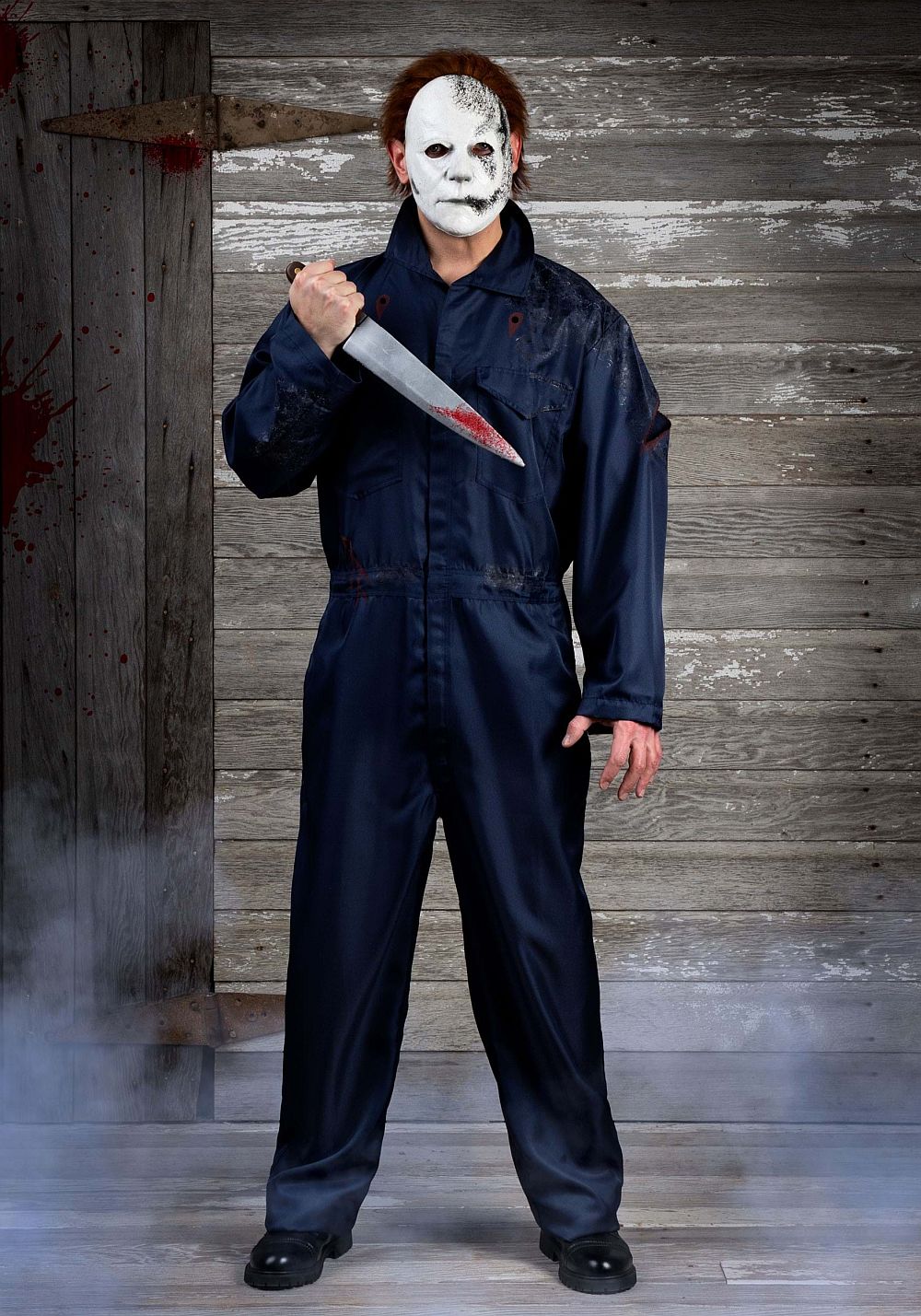
Halloween (1978) first. Michael Myers’ mask started life as a Captain Kirk mask, picked up by Tommy Lee Wallace (production designer and editor on the film) from a magic shop on Hollywood Boulevard. Wallace opened up the eyeholes, removed the eyebrows and sideburns, painted the face white and darkened the hair. Dress him in plain coveralls and you get something with no expression and no obvious personality, which is more than a little unnerving.
Ghostface has a better story, if anything. The mask was already on sale: Fun World released it in 1991, designed by Brigitte Sleiertin. Kevin Williamson, who wrote Scream, has said the filmmakers found it in a box in a garage during a location scout, and Wes Craven thought of Munch’s painting. They did try something new. About twenty alternative designs were produced, the studio turned down every one, and the original stayed.
So two of the most recognisable horror looks ever were shop-bought, one from a magic shop and one from a costume company’s catalogue, and Fun World still owns the design and the name. I can’t prove the simplicity is why they work, but it seems hard to argue it hurt.
Colour, Texture and the Story Behind the Outfit
Rosanna Norton designed the costumes for Carrie (1976). In Stephen King’s novel the prom dress is red. In the film it’s pink. Norton made that call, and it means the blood has something to land on.
She chose a simple bias-cut dress with a 1930s feel, which she explained in a 2016 interview was meant to look unlike the frilly prom dresses of the period, something Carrie might realistically have sewn herself. The Boston Globe calls the fabric pale blush satin.
Nothing about it is showy. It looks like a dress a quiet girl might wear to her first dance, and that’s what makes the ruined version so hard to forget.
Gothic Glamour: When Horror Meets Fashion
Then there’s Bram Stoker’s Dracula (1992), where nobody held anything back. Eiko Ishioka won the Oscar for the costumes. Dracula gets a crimson robe in place of the usual black cape, and later a red suit of armour built to look like a flayed human body.
Lucy’s party dress is peppermint green with embroidered snakes, and her wedding dress has a lace collar based on the frilled lizard, so her head seems to float free of her body. Mina’s wedding dress is a soft grey-green with a high neck. After Dracula seduces her she turns up in blood red.
Ishioka’s route into the film is a good story in itself. She had designed the Japanese poster series for Apocalypse Now in 1979, and later the Japanese edition of Eleanor Coppola’s book about the making of that film. Her costume ideas drew on organic forms, the frilled lizard above all, and even Renfield’s quilted straitjacket, in rough grey fabric, was made to make him look a bit like an insect.
You’d struggle to wear the armour to a party, but the rest travels well. Lace, a heavy coat, a few layers of jewellery, all in dark colours. Plenty of people do the gothic look for Halloween without ever going near a cape.
From Screen Characters to Wearable Halloween Style
Eddie Munson isn’t a horror villain, to be clear. He’s a Stranger Things character, the kid who runs the Hellfire Club, and he’s included here because his clothes are among the most copied of any recent show.
Netflix put out a tour of the costume department with designer Amy Parris. She says everything in Eddie’s look was designed specifically for him, from the handcuff belt to the pins and patches on the original Levi’s piece he wears. She also wanted the Hellfire Club shirt lettering to look hand-done by a teenager. And the Dio patch on the back of his denim? It came from Dio’s estate, which also offered vintage T-shirts for the show.
If you’re dressing up, you don’t need all of that. An Eddie Munson denim jacket is a fair example of how fans interpret the character: indigo denim, full-length black leather sleeves and a Hellfire Club demon crest printed on the back. It borrows the attitude without copying every pin and patch, so it sits happily with jeans and boots long after the party.
How to Translate Film Costumes into Real Outfits
Pick the shape first. Long dark coat, pale dress, boxy denim jacket, whichever character you’re after. If someone across the room can guess who you are, you’re fine.
After that, two or three details. Not ten. One decent accessory beats a pile of little ones, and the same goes for makeup: a pale face or a smudged eye is often enough.
It also helps to wear the dramatic piece with ordinary things. The gothic coat over plain black. The patched jacket over your normal T-shirt. Otherwise you can end up looking like you’re wearing a costume, which, fair enough, you are.
If you want a starting point: gothic means velvet, lace and sharp tailoring. Minimalist can be as little as a pale, mask-like face. Character-inspired just means taking the attitude of someone like Eddie without trying to match every patch.
Why These Looks Stay With Us
They carry a piece of the film around with them. See a mask or a pink dress and you’re back in the cinema.
Halloween lets people play with that, and most of them don’t copy it exactly, which seems about right.
Discover more from
Subscribe to get the latest posts sent to your email.

Leave a Reply