
Critical Scenarios Requiring Personal Injury Legal Representation
An unexpected collision can instantly upend your daily routine, leaving you to deal with physical pain, mounting medical bills, and confusing insurance paperwork. While many people hope that the recovery process will be straightforward, the reality of navigating legal and insurance systems is often overwhelming. Determining who is at fault, understanding what your claim is actually worth, and ensuring your rights are protected requires a clear strategy.
When you are facing the aftermath of a serious incident, knowing when to handle matters on your own and when to seek professional support is essential. Many victims find that the complexities of insurance negotiations and civil litigation are best managed by an experienced personal injury law firm. In this guide, we will explore the critical scenarios where legal representation is most beneficial, how to evaluate the strength of your case, and the steps involved in protecting your financial and physical recovery. Whether you are dealing with contested liability or a dispute over the true cost of your injuries, having the right information is the first step toward reclaiming your stability.
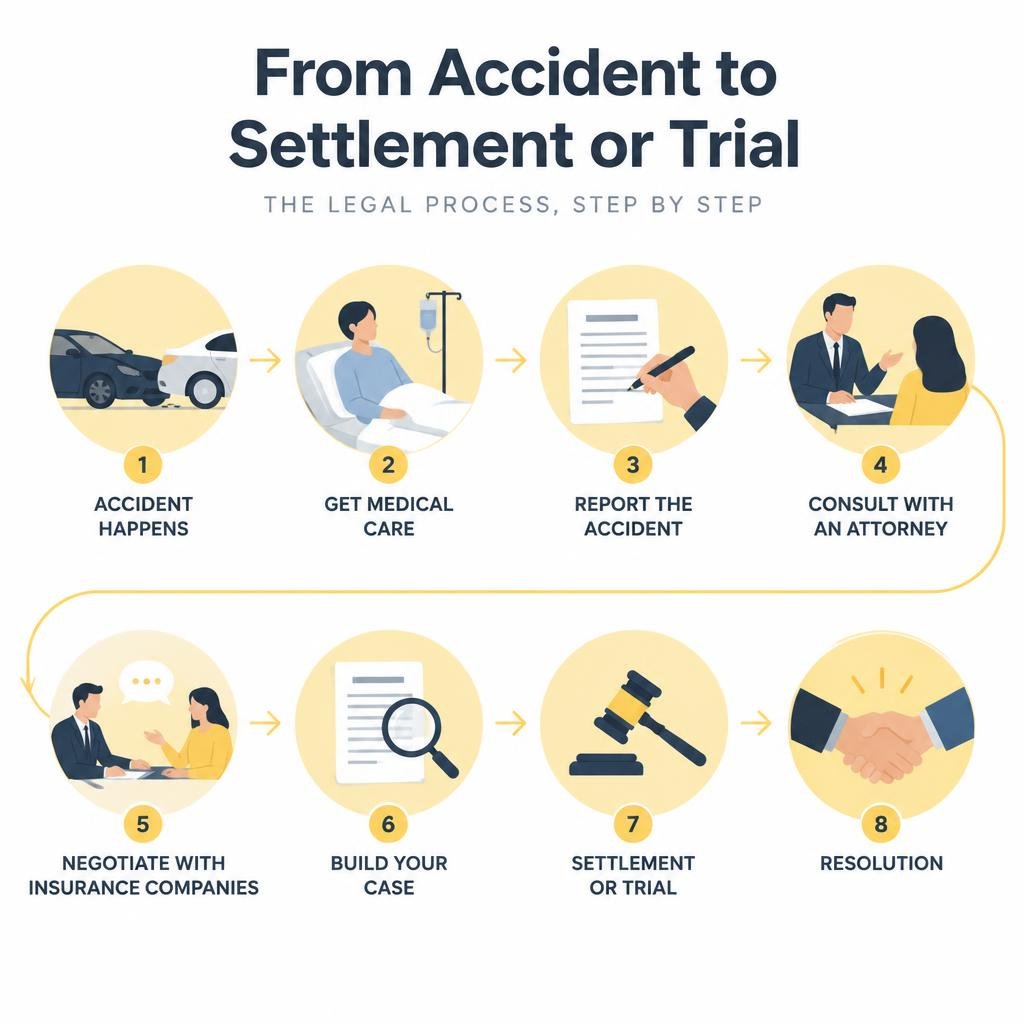
Not every accident requires a lawsuit, but certain situations create an immediate need for professional advocacy. When the stakes involve your long-term health or financial security, the risks of self-representation increase significantly. We often see cases where insurance companies use “bad faith” tactics—such as delaying communication, misinterpreting policy language, or prematurely denying valid claims—to minimize their payouts.
Claims Involving Severe or Catastrophic Injuries
If you or a loved one has suffered a traumatic brain injury (TBI), spinal cord damage, or permanent disability, the financial implications extend far beyond immediate hospital bills. These cases require a comprehensive assessment of “future damages,” which include the cost of long-term rehabilitation, home modifications, and the loss of future earning capacity. Calculating these figures is not a simple addition of invoices; it requires expert testimony and an understanding of how to quantify non-pecuniary losses, such as pain and suffering, which are inherently subjective yet legally significant.
Contested Liability and Shared Negligence Disputes
When fault is not clear, insurance companies will often attempt to shift the burden of responsibility onto you to reduce their liability. If you are accused of shared negligence, your potential compensation could be significantly reduced. A lawyer’s role here is to perform a thorough causation analysis. This involves gathering police reports, interviewing eyewitnesses, and potentially hiring accident reconstruction experts to prove that the other party’s breach of duty was the primary cause of the incident.
Complex Claims Involving Commercial, Rideshare, and Multi-Party Accidents
Accidents involving commercial trucks, public transit, or rideshare vehicles introduce layers of complexity that standard insurance claims do not. You are often dealing with corporate policies, municipal statutes, and multiple layers of insurance coverage. When you need to understand the nuances of these complex claims, consulting with an established personal injury law firm is often the most effective way to identify all potentially liable parties, including employers or manufacturers, rather than just the individual driver.
Evaluating Legal Counsel vs. Self-Representation
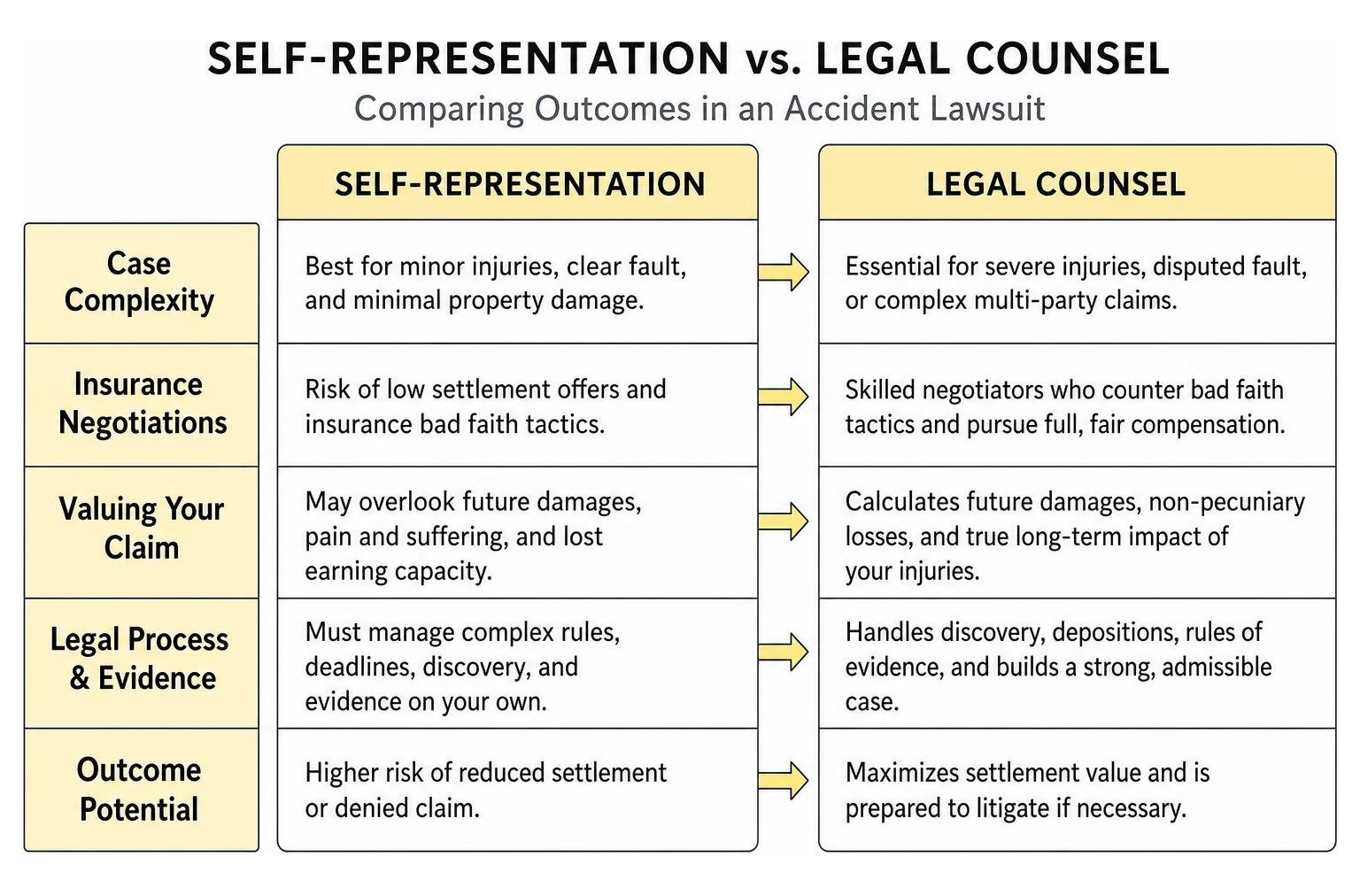
Deciding whether to hire an attorney involves weighing the complexity of your case against the potential recovery amount. While minor incidents might be manageable, the litigation process—comprising the discovery phase, depositions, and adherence to strict rules of evidence—is designed to be navigated by professionals.
When Self-Representation May Suffice
Self-representation may be an option if your incident resulted in only minor soft-tissue injuries, there is no dispute regarding who caused the accident, and the property damage is minimal. If an insurance company provides a full, fair settlement offer that covers all your documented expenses, you may not require legal intervention. However, be cautious; insurance adjusters often make “low-ball” initial offers that seem fair but fail to account for future medical complications.
How Personal Injury Legal Representation Maximizes Settlement Value
Professional representation changes the dynamic of negotiations. Attorneys use “injury multipliers” and detailed economic projections to ensure that your settlement reflects the true impact of the accident. Furthermore, they are skilled in medical lien resolution—ensuring that your settlement isn’t entirely consumed by hospital reimbursement demands. By preparing a case for trial from day one, lawyers signal to insurance companies that they are ready to litigate, which often encourages higher settlement offers without the need for a courtroom battle.

Understanding Legal Fees, Costs, and Financial Risk
A common barrier for many accident victims is the fear of legal costs. Fortunately, the personal injury field typically operates on a contingency fee basis. This means that your legal representation is paid only if you receive a settlement or a favorable court verdict.
How Case Expenses and Contingency Agreements Work
Under a contingency arrangement, the attorney’s fee is calculated as a percentage of the final recovery. This structure aligns the lawyer’s interests with your own: the better the result, the better the outcome for both parties. It is important to distinguish between “legal fees” and “case expenses.” Expenses—such as court filing fees, expert witness retainers, and the cost of obtaining medical transcripts—are usually advanced by the law firm. These are typically reimbursed from the final settlement amount, ensuring that you do not have to pay out-of-pocket to pursue justice.
Navigating Deadlines and the Accident Litigation Process
The legal system is governed by strict timelines. If you miss a filing deadline, you may lose your right to sue entirely. This is known as the statute of limitations.

Key Deadlines for Securing Personal Injury Legal Representation
Beyond the general statute of limitations, there are often shorter notice periods for claims involving government entities or municipal transit. Furthermore, evidence can be lost or destroyed if not preserved immediately. Early legal intervention ensures that witnesses are interviewed while memories are fresh and that vital evidence, such as surveillance footage or vehicle maintenance logs, is secured before it is erased or discarded.
Frequently Asked Questions About Personal Injury Claims
What is the statute of limitations for filing an accident claim?
The statute of limitations is the legal deadline for filing a lawsuit. While these periods vary by jurisdiction, they are strictly enforced. In some cases, the “discovery rule” may apply, meaning the clock starts when you discover your injury, but relying on this is risky. It is always safer to consult with a professional to determine the exact deadline for your specific situation.
How are attorney fees calculated under a contingency arrangement?
Fees are typically a pre-agreed percentage of the total settlement or verdict. This percentage is clearly outlined in your retainer agreement. Because this is a standard practice, it provides transparency and ensures that you do not face financial hardship while your case is being investigated and negotiated.
How do pre-existing conditions affect a personal injury lawsuit?
A pre-existing condition does not disqualify you from a claim. The “eggshell skull” rule in law suggests that a defendant must take the victim as they find them. If an accident aggravates a previous injury, you are entitled to compensation for that aggravation. A lawyer will help establish a “baseline” of your health prior to the accident to ensure the insurance company does not unfairly attribute your current pain to a past condition.
Conclusion
The aftermath of an accident is a time of vulnerability, but it is also a time when critical decisions regarding your future are made. Preserving evidence, documenting your medical journey, and understanding your legal standing are the pillars of a successful recovery. By recognizing when to seek help from a qualified personal injury law firm, you protect your right to fair compensation and ensure that your financial stability is not compromised by an event that was not your fault. If you are uncertain about your next steps, a consultation with an experienced advocate can provide the clarity you need to move forward with confidence.
Post HTML
Discover more from
Subscribe to get the latest posts sent to your email.

Leave a Reply