
Indoor plants for a small flat with little light and less time
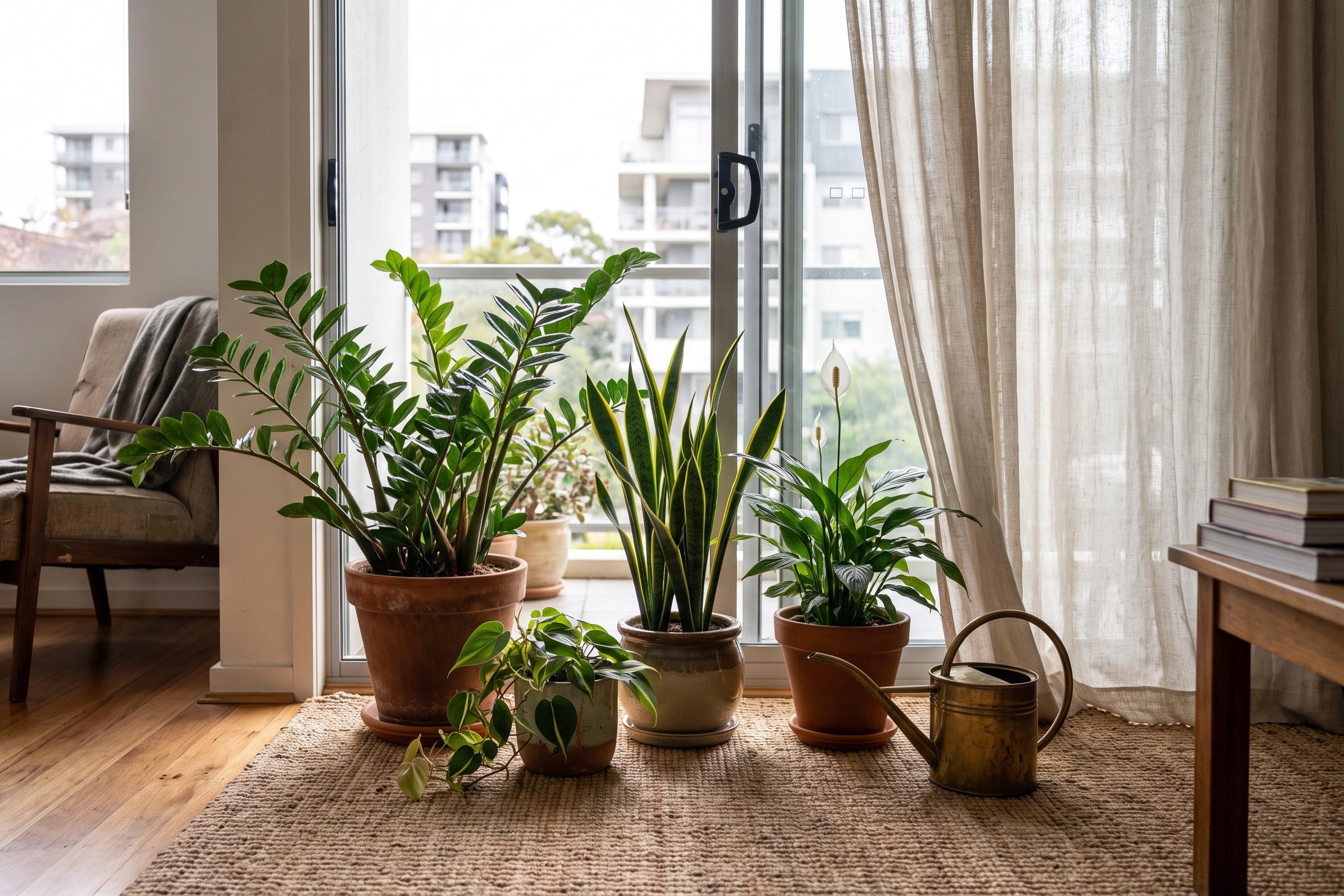
Most indoor plant advice assumes a bright north facing window, a balcony and a free Sunday. Most apartments have one window, a landlord who frowns on drilling, and an owner who is out all day. The plants that suit that life happen to be the easiest ones to buy, and once you know the three mistakes that kill them, they are very hard to lose.
Article by Isaac Olson, Nursery Near Me
The plants that forgive you
Start with the zanzibar gem. It stores water in thick underground stems, copes with a dim corner and is happiest when you forget it for a fortnight. The snake plant is its upright cousin in temperament: stiff, sculptural leaves, slow growth and the same indifference to neglect. Devil’s ivy is the trailing one, and it will run along a shelf or down the side of a bookcase in light that would starve most plants. The peace lily is the only one of the group that asks for anything, and even then it tells you plainly: the leaves droop when it is thirsty and stand up again an hour after a drink.
For the darkest spot of all, a hallway or a bathroom with a frosted window, the cast iron plant earned its name in Victorian parlours lit by gas, and a heartleaf philodendron does the same job with a softer look.
Those five cover most apartments, and all of them sit among the indoor plants we send out every week.
Where to put them
Light falls away faster than it looks. A plant on the windowsill gets many times the light of one three metres back on a bookshelf. Give the window to the plant you most want to see grow, usually the devil’s ivy or the peace lily, and give the dim places to the zanzibar gem, the snake plant and the cast iron plant, which barely notice. Keep leaves off hot glass in summer and away from the draught of an air conditioner or a heater, which dries them faster than any sun.
Water by weight, not by the calendar
The biggest killer of indoor plants is kindness. Nearly every watering schedule is too often. Instead, lift the pot. A pot that needs water is noticeably light. A pot watered last week is heavy and should be left alone. When you do water, do it properly, until it runs out of the bottom, then tip the saucer out. In winter a zanzibar gem might want a drink once a month, and in a hot February the peace lily by the window may want one every few days. The pot will tell you. The calendar will not.
Pots and drainage
Whatever the plant comes home in, make sure the pot it ends up in has a hole. A pretty cover pot without one is fine so long as the plant stays in its plastic nursery pot inside it, lifted out to drain after each watering. Use a bagged indoor potting mix rather than garden soil, which packs down and holds water in a way that drowns roots. Most of these plants are content to be slightly cramped, so a move up one pot size every two or three years is plenty.
The three mistakes
Overwatering is the first, and the lifted pot cures it. The second is moving a plant around the flat looking for the perfect spot, which unsettles it more than a slightly wrong spot ever would. Pick a place, give it a month, and judge it then. The third is buying a plant for a room it cannot live in. Nothing grows in a windowless bathroom on its own. The trick is two cast iron plants, swapped between the bathroom and a brighter room every couple of weeks.
Cost free wins
Wipe the leaves with a damp cloth once a season, because dust blocks the little light a flat has. Snip off a yellow leaf at its base rather than waiting for it to fall. When the devil’s ivy gets long, cut a stem and stand it in a glass of water, where it roots in a few weeks and fills the next shelf for nothing. For the longer version of all of this, with the common problems and what each one looks like, our indoor plant care guide walks through it room by room.
Isaac Olson is the director of Nursery Near Me, an Australian online nursery.
Discover more from
Subscribe to get the latest posts sent to your email.

Leave a Reply