
7 Practical Ways to Find Medical Assistant Jobs Today

Understanding Core Responsibilities and Workplace Settings
To thrive in this field, it is essential to understand that the role of a medical assistant is rarely one-dimensional. You are the “glue” of the office, balancing the high-stakes environment of clinical care with the precise requirements of administrative management. Depending on where you work—whether it is a sprawling urban hospital or a boutique specialty clinic—your daily rhythm will look quite different.
Clinical vs. Administrative Duties in Outpatient Care
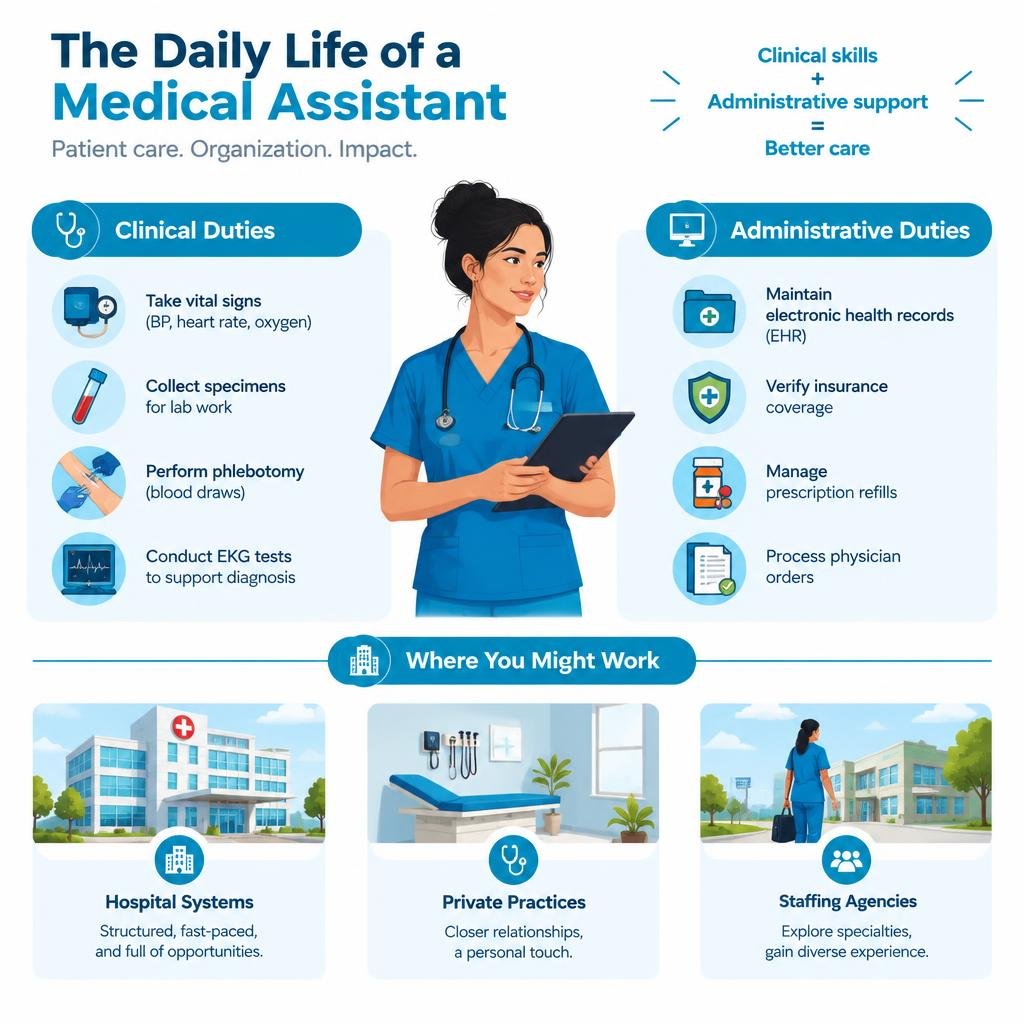
In most outpatient settings, your day will be a blend of “front office” and “back office” tasks. Clinical duties often include performing patient intake, where you record vital signs like blood pressure, heart rate, and oxygen saturation. You may also be tasked with collecting specimens for lab work, performing phlebotomy, or conducting EKG tests to support diagnostic efforts.
Simultaneously, the administrative side is critical for patient flow. You are often responsible for maintaining electronic health records (EHR), verifying insurance coverage, managing prescription refills, and ensuring that physician orders are processed correctly. Mastery of these dual responsibilities is what makes a medical assistant an indispensable asset to any healthcare team.
Comparing Hospital Systems, Private Practices, and Staffing Agencies
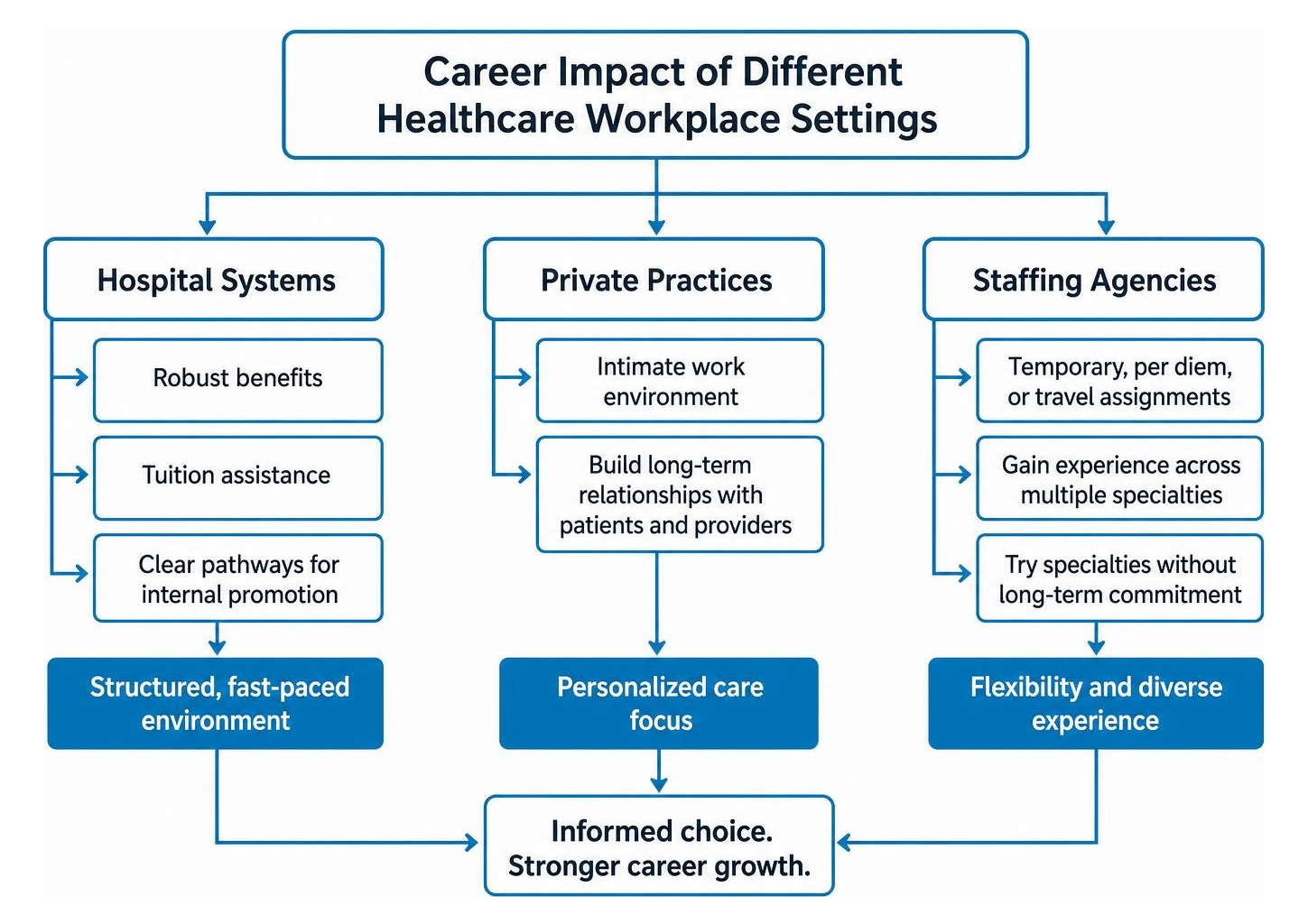
The environment you choose will significantly impact your career trajectory. Large hospital systems, such as those operated by major academic or non-profit networks, often offer robust benefits, tuition assistance, and clear pathways for internal promotion. However, they can be highly structured and .
Private practices, on the other hand, may offer a more intimate work environment where you build long-term relationships with patients and providers. Staffing agencies represent a third, increasingly popular path. These agencies act as a bridge, placing you in temporary, per diem, or travel assignments. This is an excellent way to gain experience across multiple specialties—from neurology to pediatrics—without committing to a single facility long-term.
7 Practical Ways to Secure High-Paying Medical Assistant Jobs
Finding the right role is about more than just checking job boards. It is about positioning yourself as a candidate who brings immediate value to a clinical team. Here are seven ways to elevate your search.
1. Leverage Direct Hospital and Health System Career Portals
While third-party job aggregators are useful, the most competitive roles are often posted directly on a health system’s internal career portal. Major systems frequently offer sign-on bonuses, shift differentials for evening or weekend work, and comprehensive benefit packages that smaller clinics might not match. By creating a profile directly on these sites, you ensure that your application is prioritized and you can set up automated alerts for new openings in your preferred specialties.
2. Enroll in Healthcare Apprenticeship and Training Pathways
If you are new to the field, formal training is your strongest asset. Many organizations now provide pathways that combine classroom learning with hands-on clinical experience. Exploring resources like medical assistant jobs can provide you with the necessary foundation to qualify for entry-level positions. These programs often bridge the gap between education and employment, ensuring you are “practice-ready” from day one.
3. Partner with Specialized Allied Health Staffing Agencies
Staffing agencies offer a unique advantage: speed and variety. If you are looking to build your resume quickly, agencies can place you in 13-week contracts or per diem shifts. This allows you to “try out” different healthcare environments. If you perform well, these temporary assignments frequently lead to permanent, full-time offers. Recruiters at these agencies can also provide valuable interview coaching and resume optimization tips.
4. Target Fast-Growing Urgent Care and Ambulatory Centers
Urgent care centers are among the fastest-growing sectors in healthcare. Because these facilities operate on extended hours, they are constantly seeking reliable medical assistants for evening and weekend coverage. These roles often come with attractive shift differentials, meaning you earn more for working non-traditional hours.
5. Utilize Professional Certification Job Boards and Networks
Holding a certification from a recognized body—such as the American Association of Medical Assistants (AAMA) or the American Medical Technologists (AMT)—is a major differentiator. Many professional associations maintain exclusive job boards accessible only to members. Additionally, attending local healthcare career fairs allows you to network with hiring managers before a job is even posted online.
6. Convert Clinical Externship Sites into Permanent Positions
Your clinical externship is essentially a long-form interview. Treat every hour of your externship as a professional audition. If you show initiative, maintain a positive attitude, and demonstrate strong clinical skills, you become the first person the clinic will call when a position opens. Always ask your preceptor for a letter of recommendation or a reference, as these carry significant weight in the hiring process.
7. Optimize Your Healthcare Resume with In-Demand Clinical Skills
Hiring managers scan resumes for specific keywords. Ensure your resume highlights technical proficiencies such as EHR software experience, BLS (Basic Life Support) certification, and any specialized skills like phlebotomy or EKG administration. If you are bilingual, make that a prominent feature of your resume, as many systems prioritize candidates who can communicate effectively with diverse patient populations.

Essential Qualifications, Compensation, and Career Growth
Understanding the “business” side of your career is just as important as your clinical skills.
Essential Certifications and Skills to Qualify for Medical Assistant Jobs
Most employers now require, or at least strongly prefer, a Certified Medical Assistant (CMA) or Registered Medical Assistant (RMA) credential. Beyond the certification, basic life support training and a working knowledge of medical terminology are non-negotiable. Soft skills—such as empathy, time management, and the ability to remain calm under pressure—are often what separate a good candidate from a great one.
Exploring Full-Time, Part-Time, and Travel Medical Assistant Jobs
Flexibility is a hallmark of this profession. Whether you need a 4×10 schedule (four 10-hour days) to maintain work-life balance, or you prefer the excitement of travel contracts, there is an arrangement that fits your life. That “float pool” positions, which require you to cover various departments, often pay a premium because of the versatility they require.
Long-Term Career Advancement and Specialization Pathways
Your first job is rarely your last. The medical assistant career ladder is robust. With experience, you can transition into roles such as Lead Medical Assistant, Clinical Coordinator, or Practice Manager. Some assistants use their clinical foundation as a stepping stone into nursing or healthcare administration, leveraging their deep understanding of patient care to excel in leadership roles.
Frequently Asked Questions About Medical Assistant Careers
What is the typical hourly wage range for medical assistants?
Wages vary significantly by region, experience, and the type of facility. While entry-level roles may start in the low $20s per hour, experienced assistants in specialized clinical settings or those working evening shifts with differentials can earn significantly more, often reaching into the $30s per hour.
Can you start working as a medical assistant without prior experience?
Yes, but it usually requires completing an accredited training program or an apprenticeship. Many health systems are now investing in their own training pipelines to help candidates gain the necessary certifications and clinical hours while they learn on the job.
Which clinical specialties offer the highest growth for medical assistants?
Specialties that require high-level diagnostic support—such as cardiology, oncology, and orthopedic surgery—often provide the most professional growth. Urgent care also remains a high-growth area due to the constant need for patient flow management and acute care support.
Conclusion
The role of a medical assistant is both challenging and deeply rewarding. By taking a strategic approach to your job search—leveraging professional portals, seeking out apprenticeship opportunities, and constantly updating your skill set—you can secure a position that offers both financial stability and personal fulfillment. As the healthcare landscape continues to evolve, your role as a bridge between patient and provider will only grow in importance. Stay curious, keep learning, and remember that every patient interaction you manage contributes to a healthier community.
Discover more from
Subscribe to get the latest posts sent to your email.

Leave a Reply