
Civics studies in schools are soon to be made compulsory, but who’s benefiting really from these redundant studies?
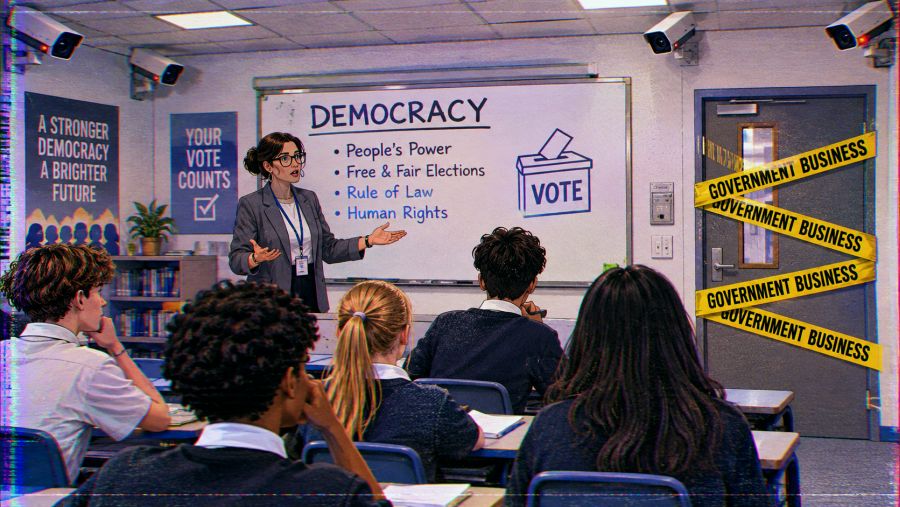
According to a recent report, only 28 per cent of Year 10 students currently meet the proficient standard in the Australian National Assessment Program – Civics and Citizenship, which is effectively the NAPLAN of civics and citizenship education.
While today’s teenagers will be tomorrow’s voters and leaders, simply studying civics at school isn’t exactly going to help put power into students’ hands. In fact, civics studies might just mean an extra round of redundant homework, write Michael Mastess and Lisa Andrews.
As if high school students didn’t already have enough education overload in the area of social studies – both what they learn as part of their school curriculum and all the information available to them online – education ministers have today confirmed that “civics and citizenship” will now be compulsory subjects for year 9 and 10 students from 2029 onwards.
While a press release from the Australian government reads that this will be “welcomed as a win for democracy, insisting that “it is vital young people learn about the Australian Constitution, how laws are made, how parliament and the legal system operate, and the rights and responsibilities of Australian citizens”, I’m more inclined to think of the studies of civics itself a redundant exercise.
Democracy is often passed off to us as not only our “right” but something that protects us from dodgy governing. But you just need to consider four relatively recent laws and major legislative changes that have come into action in Australia to realise these aren’t necessarily for the good of the people, and only really serve our so-called caring leaders.
Here are those four major changes and the effect they are really having on us.
Social Media Under-16 Ban
Australia is the only country in the world with an official ban on under-16 usage of social media – aside from Indonesia, Malaysia and Brazil of which could be considered ‘developing’ nations. Indeed, the Australian government prides itself on being the world’s first democracy to enact an outright ban for social media use by individuals under 16 years of age. The aim of the ban is to presumably stop or slow down bullying online and yet there are kids bashing each other, caught on camera and still being shared through digital media. The social media ban for under-16s, an age when children are just about to enter into eligibility to vote, seems less like a strategic exercise in protection from the negative presence of social media, and more like a process of political incubation – keep kids from seeing diverse political debate and argument online and see if we can sway them toward who to vote for the moment they do have access to public feedback and information online. Nab them while they are new to the political game, so to speak. This is not democracy in action – this is calculated political interference. It should be left up to parents, and parents only, whether they allow their children to use social media while under 16 – not our governments to tell us – and especially when parents didn’t necessarily vote that legislation in.
Supermarkets Mandatory Code of Conduct
While there has been an updated regulatory framework for the supermarket sector featuring multi-million-dollar breach fines to supposedly protect suppliers and consumers, we’ve all only seen the cost of goods on supermarket shelves go up and up. Any matters before the court against the likes of Coles and Woolworths regarding price gouging over the past few years are just that – still matters before the court. Why does it take only a season for supermarkets to hike the prices of groceries up and yet years for the courts to prove they’ve been wrong and that the consumer deserves a fairer deal and some form of compensation? It seems to me that any “mandatory” codes of conduct are redundant when no rhyme or reason is given for certain products on shelves. I can understand when the price of a Wagyu steak is hiked up due to slow trading of beef between, say, Australia and Japan, but what could possibly be the reason for potato chips or pop corn costing $7 a packet?
Reserve Bank Reforms
This is another area where bullshit talks and only the wealthy benefit, literally left laughing all the way to the bank. Legislation has seen a restructuring the Reserve Bank of Australia by splitting it into distinct monetary policy and governance boards, requiring equal consideration for inflation and employment, and retaining government override powers. While that all sounds like gobbledygook, it’s precisely because it is. Yesterday, Australian mortgage holders were hit with a fifth interest rate hike for the year. Nothing has been done to soften interest rates even outside of equity accounts, and more and more banks are closing their physical outlets, leaving your more ‘old school’ folks who have only been used to bricks-and-mortar style banking in the lurch. There is no such thing as positive Reserve Bank reforms – the government and the banks have one main mission and that is to take as much funding from its citizens for the purpose of either extreme profit (in the case of the banks) or diversion of these funds into things we as citizens did not ask or vote to pay for (warfare being a major example).
Fair Work Closing Loopholes Acts
Industrial relations legislation that was passed across 2023–2024 was supposed to help strengthen employee protections, including rules around the gig economy/BNPL regulation, paid domestic leave, and parental leave rights. While some of those rights appear to have been improved on, particularly in the areas of leave, our rights in other areas only appear to have fallen further by the wayside. Nothing appears to have been done about the responsibilities of businesses in the gig economy, particularly when it comes to issues of safety. Companies like Uber and Didi have not been forced to do something about the verbal and physical abuse experienced by female drivers at the hands of creepy drivers. Meanwhile any benefits that once came with catching an Uber – cheaper cost in travel, free water for the drive, clean and nice-smelling cars – have all gone out the window. Until we see results from so-called intervention into companies that run the gig economy, especially in the area of safety for passengers, we’re going to consider this one another redundant act.
Intense increase in surveillance
Having a surge in CCTV and surveillance is supposed to be a comforting change in society, but while the cameras being set up everywhere we turn are supposed to make us feel safer they instead seem to be encroaching more and more on our personal space. Personally, most of us would say we don’t want to be seen picking our nose in public or flicking aside our underwear caught for a second up our butt crack. But some authoritarian dude somewhere is having a laugh watching this while you’re being recorded walking along Main Street. The government will tell you that all these cameras, be they overlooked by humans or Ai, are here for your own good but the truth is much of the surveillance is for the primary purpose not for safety but to make money – especially when it comes to their use in charging people for simply holding a phone in their hand (perhaps to just turn a distracting alarm off while driving).
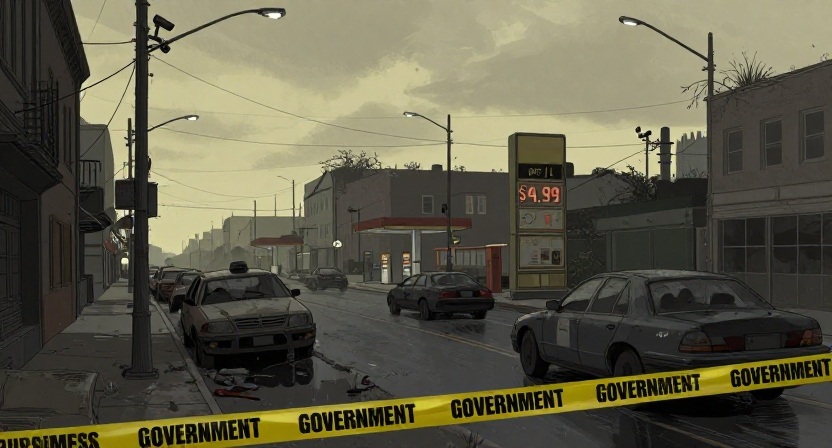
Of course the collection of data and personal detail is also paramount in any society’s authorities setting up imposing surveillance. But where was all the debate and public consideration before all the cameras shot up? Indeed, where was the conversation about the influx of immigrants who don’t hold similar philosophies to us? About the waste of taxpayer dollars on distracting referendums? About treasurers who have done nothing but put our country’s finances into disarray? About prime ministers and premiers who were never voted in? The truth is society is heading more towards totalitarianism and less in the direction of true democracy. Brainwashing students at high school level mightn’t work in the end anyway, not when they’re finally allowed online and see the messy truth as it really is.
“Young people today have more information than ever available to them to shape their view of how the world works, and how decisions are made,” says the Director of ‘Democracy Counts’, Tom Mooney. “This can be a good thing, but we need to give them the chance to assess what they read online against a solid foundational knowledge of how Australia’s democracy works.”
Or, instead of extra studies in high school, how about just giving people a chance to vote on proposed laws and legislation when they do reach the legal age to vote? Or at least, in those extra-curricular studies, tell a little of the truth about the bullshit that goes on in politics.
The Role of Public Administration Professionals in Shaping and Elevating Communities
Pressure: a film where Mother Nature sits in the director’s chair
From the spooky to the serene, the 10 perfect spots to take snaps around W.A.
The Evolution of ‘Star Wars’ Gaming: from the Arcade to the Couch
Why the 90s Movie ‘The Craft’ Still Resonates with Millennial Women
Pressure: a film where Mother Nature sits in the director’s chair
Discover more from
Subscribe to get the latest posts sent to your email.
