
Bret Easton Ellis – author of ‘The Shards’ and co-executive producer of the new FX series – says he’s sad for Millennials: “Obviously there’s pain there; this is not the happy generation”
Bret Easton Ellis gets into much strife over the things he says. Usually the critics are a third his age (he’s 59 at the time of our chat, 62 today). Those critics are mainly speedy thumb-texters or Goggle Box-like couch analysts, who either have no idea what life was like before the internet, or don’t know how to use it properly now. What some critics fail to realise is that Ellis’ works are like diaries about the opulent 1980s – a time when things were less doom and gloom (admittedly, much of this D&G has been the result of said decadent era), but it was a time at least when vibes were more optimistic and aspirational. And perhaps, yes, sadly, ultra-competitive on the social circuit.
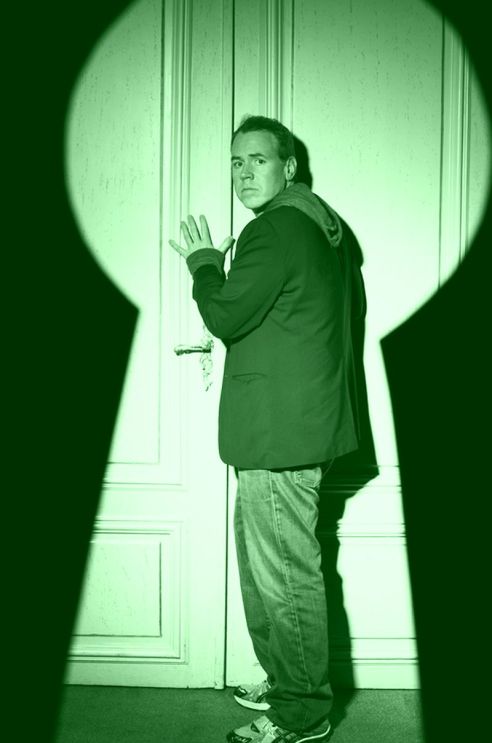
In retrospect, and in light of today’s woke values, Ellis’s fictional (and some part-factual) tales about excessive drug-taking, hard partying, serial killing and rampant infidelity would appear more nihilistic than the orgies and battlegrounds of ancient Rome, and he is often taken to task for taking the decadence thing too far. Heck, it’s mostly fiction, kids! And again, mostly retrospecitve.
In his recent book ‘The Shards’, Ellis continues his relaying of life in the fast lane, packing its pages with sketchy sex and unhealthy one-upmanship, material obsession and murderous rage, but there’s a catch: part of it is real.
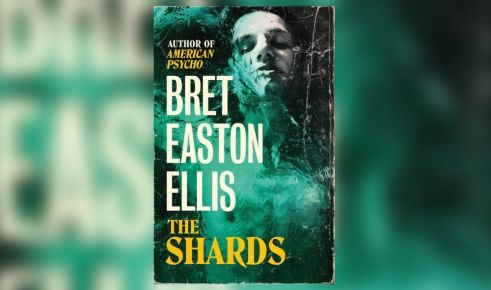
Acting as a kind of ‘prequel’ to his first novel Less Than Zero (1985), The Shards [was] Ellis’s first novel in 13 years. While his book White of 2019 was part memoir / part podcast-put-to-paper, The Shards is what you might call autofiction (a cross between autobiography and make-believe). The story is set in his final year of high school. A murderer is wreaking havoc on the streets of Los Angeles, circa 1981, to a soundtrack of Scary Monsters and Hungry Like The Wolf. Opulence and high self-opinion were big in the early ’80s. It was a time when woke was just something you did with a hangover…
Now, as if by wish of mine come true, there is a TV series based on The Shards, just released on FX – the drugs-and-knives-connotating title intact, created by none other than my all-time favourite horror/thriller telly auteur, Ryan Murphy.
Now, while I’ve read the book, I’ve not seen The Shards yet – because the amount of entertainment online these days is overwhelming and if I subscribed to every channel and streaming platform, I’d be even more overwhelmed. Also, I’m a busy bloke unless you invite me to the party; and television PR is not what it used to be. Gosh they used to have smarts and manners in the ’90s, sending us writers things “for our consideration” – not redundantly wasting time on the consideration of witless influencers. Heck, I wish I’d gotten sent every Ryan Murphy production to preview even as it was being dropped to all – I would put all other entertainment and lifestyle features on hold to go and get all thesis-paper on it. Too late now. Everybody else has seen it. Late to the game. Just kidding, the delay in watching it has only got me more excited in anticipation to see it. And that soundtrack better be killer, gentlemen.
I did, however, manage to have a nice long chat with Bret Easton Ellis a couple of years back about that very book, and it’s an interview well worth dusting the cobwebs off of, and presenting to you now, dear reader.
Ellis, who not only lent the rights for the novel to be turned into a series by Murphy but came on board as executive producer and co-writer. Even the main character’s name is Bret Ellis, so we can only guess that we’ll be getting all the sex, all the drugs, all the decadence, and all the horror – straight from the horse’s mouth, so to speak.
Such as you get here.
Interview by Antonino Tati

Hi Bret. What did you think of the immediate negative press you received for your previous book [to ‘The Shards’] ‘White’?
I think it was absurd. I think the mainstream media’s response to the book is Exhibit A in what I talk about in the very last chapter. This hysteric overreach that anyone who has an opinion that is different than theirs – than the bubble they reside in… I think White is actually a very chill book, tonally. I don’t think it’s hysterical and I don’t think I use any exclamation marks.
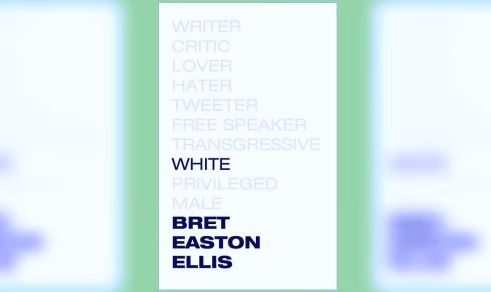
I don’t think my book is attacking anyone. I think what the book is calling for is a kind of calm, let’s-take-a-deep-breath, neutral attitude towards what’s happening and have a conversation. The idea that I am attacking Millennials when I’m actually quite sympathetic to them is part of the problem.
Aren’t you doing them a service by getting them to wake up and say something, rather than just Like something?
I live with a Millennial and I know that this is one of the great stressors: of being liked… His online presence and the crippling shame that occurs if you are attacked online; or if something of yours doesn’t get a lot of followers or a lot of likes. It seems to me to be a terrible way to live. I don’t know, where is this going to go?
The thing is, Bret, when we went to primary school, we were given happy stamps and stars for good work, right? But we didn’t expect to receive these in our adult life. Why is it that the new generation isn’t equipped with the armor to cope with critique?
My theory is that maybe many of these people felt they didn’t get enough attention or enough love from their mothers and fathers, who were narcissistic and wrapped up in their own lives. I certainly can say that this is true of me and many people I know of my generation. So I think Gen-X-ers overcompensated.
“I’ve talked to parents my age and they have wrung their hands and said, ‘I’ve overcompensated – I did not want my children to go through the childhood I had, and I wanted to give them everything I was lacking.’ They have ultimately said, ‘I think I’ve coddled them into helplessness.”
I talked to a parent who said, “I arrange ‘free range’ time for my child now” – who is actually a teenager. “I will actually not follow them or track them on the phone – and they can do that one day a week, like going to the mall or to a movie, or whatever.” We looked at each other and burst out laughing. Free range time? That’s all I had! I barely saw my parents. I was completely on my own, and by being completely on my own I fostered a kind of independence and it aided me to becoming an adult. Some of these parents have done the opposite to the next generation and they become so worried about them that they’ve over-medicated them, they gave in to their every whim, and also you have social media guiding them into a self-made bubble where they’ve built a world that they feel good about. Actually they’ve built a safe space for themselves. But once they go out of that safe space they encounter the often-unpleasant difficult realities of life, and you break down.
Above: audio of Bret Easton Ellis discussing helicopter parenting and the perils of social media.
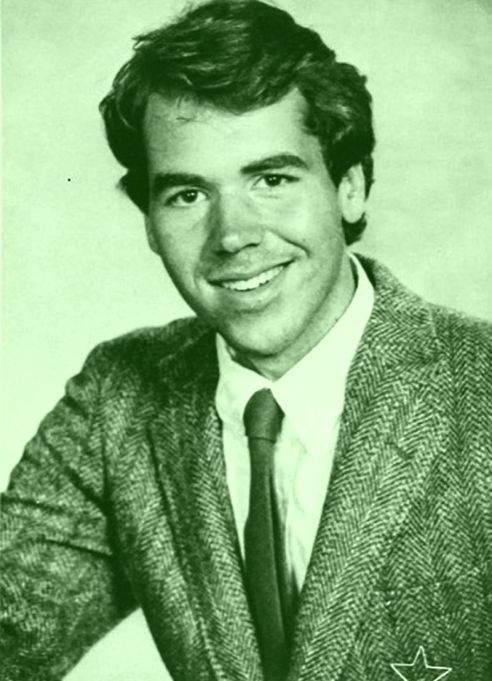
Ellis in his 1982 yearbook.
We’ll talk more about the perils of social media in a moment, but I want to go back to where you were given the freedom and an environment of ‘non-paranoia’ while growing up. We have helicopter parenting today and some parents are over-zealous in their protection of their children. Has this worry rubbed off on the next generation?
That could be well and true. I know that definitely is a narrative in my partner’s story; that was his mother what you just described. What was supposed to be something that was supposed to aid in a child’s comfort actually added to a child’s sense of stress and paranoia.
And sense of victimisation. Likes online often coincide with incidents where an individual has worn their heart on their sleeve or shown a weakness and I suppose that kind of feeds into the idea that playing victim is a likeable thing.
It does.
As opposed to when you and I were growing up, just pushing through or being the hero was what was admired. Now it seems we’re celebrated every time we show we’re weak…
That’s true. I do see that my partner is much, much more interested in people who have become victims, or who have victimised themselves; or who have terrible ailments; or who are transgender; people who are going through immense physical and emotional difficulties, rather than someone who wins an award, or someone who’s an individual. That’s what really bothers me, is this notion that the individual doesn’t matter but the group does.
“It’s an argument that my partner and I get into a lot. I grew up admiring individuals doing something amazing or creative. He cares more about the group and what the group thinks. What does the group think about this video? Or this video game? Or this victim movement?”
It’s like the ’90s meme ‘Kill your idols’ is suddenly going viral.
Yes, but around the world, people still do like soccer stars, people do respond to huge pop stars. But one-on-one, when I talk to my boyfriend or his friends, they identify with people who are injured in some way more than people who aren’t.
Is there a certain Us-versus-Them at play? When a person is liking someone’s victim situation, aren’t they kind of saying ‘there’s someone weaker than me, hence I like it’?
Yes, of course, that plays into it as well.
Isn’t that less celebratory and more sadistic and sinister?
Well I’ve never met a more passive-aggressive generation than Millennials. There’s a passive-aggressiveness there, and I think you’ve just located it. There is a very ‘Oh, I’m just a likeable victim’ mentality going on but ‘I’m very positive and I really want the best for everybody’ – but the slightest questioning of that, the slightest hint of the reality that comes in, I have never seen a group turn on you with a snarl and a snap so goddamn quickly it’ll make your head spin.
It’s like an episode of ‘RuPaul’s Drag Race’ but real life, really.
Yes, and not with drag queens, sadly. That is a very strange dichotomy; between that upbeat positivity and this almost whiplash anger at almost anything that intrudes upon it.
Instead of the proverbial silver soon, would you say Millennials were born with a silver smartphone in their mouth?
Completely I would. Obviously there’s pain there; this is not the happy generation.
“There’s a lot of stress; a lot of anxiety about being likeable; about dealing with technology; about being distracted by technology; and I think there’s a real lack of pleasure in the amount of information they’re privy to. You’ve got so much of everything that nothing really matters in the end.”
I saw a headline some time ago that read: Bret Easton Ellis Takes On Generation Wuss…
That happened years ago on my Twitter feed where I began to notice things about my partner and his friends that were so shockingly weak. Little things that they couldn’t do or were confused by. So I decided to put some of that stuff in my book [White] and I really did not think it was going to be circled so heavily and dissected by Millennial writers – I mean the angriest, longest reviews have been from Millennials. The reviewers were, like, “The old and irrelevant white writer Bret Easton Ellis”. That is Millennial in a nutshell; Exhibit B of what I’m talking about: this over-reaching hysteria about anything that comes close to investigating the world with a critical eye. It’s depressing in a way, but I never meant to poke a stick at Millennials.
“Millennials weren’t created in a vacuum; they were a reaction to many of the values of my generation and Gen X. Of course they were tired of our nihilism, our negativity, our coolness, our irony. Maybe it’s normal to react against that with an aspirational viewpoint, but it’s disturbing to hear them say “Why would I want to see that movie when it’s so negative?”
What do you think are the nihilistic aspects of today’s generation? What about your Kim Kardashian followers and people that are infatuated with Instagram; two examples less about victimisation and more about selfness.
And fakeness. You’re putting out a fake version of your life; you’re becoming an actor. I know quite a few people who are not having a great time right now – they’re kind of depressed, having problems with their relationships, have addictive issues, or are unemployed… and then I see their Instagram feeds and everything’s awesome; they’re smiling under palm trees, or holding their little baby with their husband – even though I know they’re getting a divorce in eight months. There is something nihilistic about that, compared to my generation which just said, “It’s all fucked”.

You just need to look at the popular drugs during any given generation to see that they reflect the overall attitude. Look at cocaine and how it tied into decadence and greed. Today there’s crystal meth, ketamine – harsher drugs than they were taking in the ’80s.
They’re taking cheap drugs. They’re not taking, dare I say it, the better cocaine that was available to all of us in the 1980s [For the record I only tried it first time in the early ’90s and have only done it two or three times since, AT]. Drugs are so bad now and everything is so cheap. Of course everyone is smoking or snorting crystal meth; it’s relatively inexpensive. Or they’re taking organic drugs, like Kratom, which is sweeping across America [and which works like morphine]. A lot of this is about the economic disadvantages this generation has, and that limits their choices, especially in terms of lifestyle.
Despite financial limitations, they’re not limited elsewhere – I mean they’ve got the internet whereas Gen X never had the internet through their teens, twenties and thirties. Aren’t they over-supplied with choice?
But they have no money. And I’m sympathetic to that. In fact, I’ve been far harsher with my generation in my fiction than I have been with any other generation. I’ve taken my generation to task in Less Than Zero, and American Psycho [and in The Shards]. I’ve really criticised their shallowness and fecklessness, and their posing and materialism.
If someone in their twenties would read three of your earlier books, say ‘Less Than Zero’, ‘Rules of Attraction’ and even ‘Glamorama’, do you think they’d have less of an antagonistic attitude toward you?
Completely, because that’s what reading fiction does; it makes you more empathic; it puts you in someone else’s shoes, whether it’s Oliver Twist’s, Lily Bart’s, or Patrick Bateman’s. I think that sustained concentration on these pages and on these characters who are so different to you, that’s why fiction always thrilled me; to take you into these different worlds. I’m not sure if it fully works that way anymore in this hectic, busy world. And I don’t think video games today work like fiction novels: they last for 36 hours and you’re in control of the narrative. Sometimes I do feel very old-mannish about the novel. You know, “The novel is the greatest medium!” Many people don’t think this anymore. I think I was just raised in the right time.
Thinking about all your years of writing, would you say honesty is the best policy when putting pen to paper?
That’s what I’ve always done since Less Than Zero, and I think that’s what an artist does. I think any writer should be doing that and I pity the writer who does the opposite.
Bret Easton Ellis’ novel ‘The Shards’ is out through Swift Press / Allen and Unwin, RRP $32.99.
‘The Shards’ airs on FX. I’ve bookmarked it myself.
How to Shop for Cannabis Responsibly in New York City in 2026
Discover more from
Subscribe to get the latest posts sent to your email.

Leave a Reply