
Homeowner’s Checklist for Safe Cleanup and Repairs in South Shore and Cape Cod, Massachusetts
Coastal weather in South Shore and Cape Cod, Massachusetts, can bring hard rain, strong winds, fallen branches, roof leaks, and flooded basements. After a storm, the safest approach is to slow down, protect people first, and address the damage in the right order. Homeowners dealing with major water intrusion may need storm damage restoration in South Shore and Cape Cod to help dry affected areas and prevent additional problems.
The first hours matter most. A quick, careful response can limit water damage, support an insurance claim, and reduce the chance of hidden moisture affecting floors, walls, insulation, or wood framing later.
What to Do in the First Few Hours
Wait until local officials say it is safe to return. Keep children and pets away from damaged rooms, use flashlights instead of candles during a power outage, and call emergency services if anyone is injured or trapped. Do not rush into a home simply because the rain has stopped.
Check for Immediate Safety Risks
Look for downed wires, gas odors, broken glass, sagging ceilings, standing water near outlets, and large branches pressing on the house. Electrical systems, sewage, and mold can create serious hazards after water enters a building.
Document the Damage Before Cleanup
Before moving debris or throwing items away, take wide photos of each room and close-up photos of damaged materials. Record roof damage, wet drywall, floor stains, broken windows, appliances, furniture, and personal belongings. If a storm affects a historic shoreline property or a newer home alike, clear records make repair decisions easier. Homeowners near the harbor or inland neighborhoods may also seek storm damage restoration in Hingham when water damage extends beyond a simple cleanup job.
Stop New Water From Entering
Only after safety checks are complete should you take temporary steps to protect the home. Place containers under active drips, move dry belongings away from wet areas, and cover openings when it can be done safely. A qualified professional may need to tarp a damaged roof, board a broken window, or secure a door.
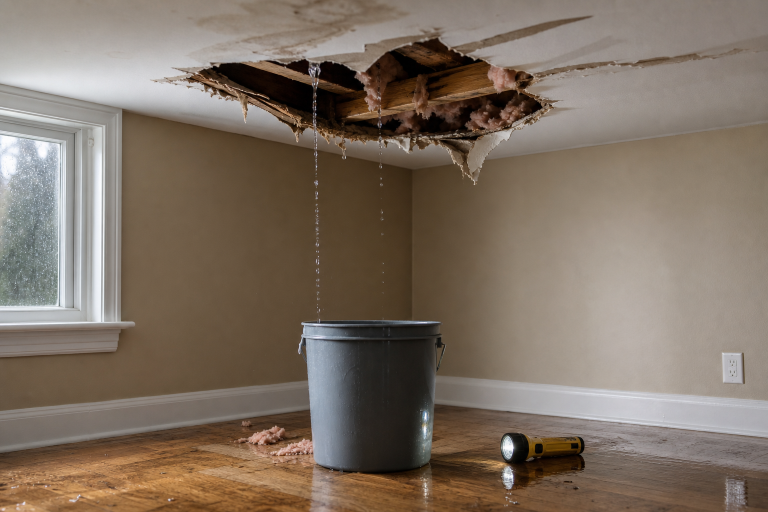
Temporary protection is not a permanent repair. Avoid climbing onto a wet or damaged roof, especially after wind events common along the Massachusetts coast. A loose shingle, damaged flashing, or lifted roof edge can be more dangerous than it appears from the ground.
Inspect the Home Carefully
Check Exterior Areas From the Ground
- Missing, cracked, or lifted shingles
- Loose flashing near chimneys, vents, and skylights
- Damaged siding, gutters, downspouts, windows, and doors
- Fallen limbs near the roof, foundation, or power lines
- Water pooling close to the foundation
Look for Interior Warning Signs
- Fresh ceiling stains, bubbling paint, or soft drywall
- Warped flooring, swollen trim, or damp carpeting
- Musty odors in basements, attics, closets, or crawl spaces
- Water near appliances, heating equipment, outlets, or electrical panels
Water does not always appear directly below the point where it entered. It can travel along roof decking, framing, pipes, or wiring before leaving a stain on a ceiling or wall.
Remove Water and Control Moisture
Drying begins once electrical conditions are safe. Remove small amounts of clean water, move wet belongings into a dry space, and open interior doors and cabinet doors to improve airflow. Fans and dehumidifiers can help when power has been cleared for use, but they should not be used around wet electrical equipment.
Floodwater, sewer backups, and water with fuel or chemical contamination need more care than clean rainwater. When recovering from a flood, document damage before cleanup, start an insurance claim promptly, and save samples of damaged materials when appropriate.
Watch for Mold and Contamination
Mold can develop when building materials stay wet. Watch for musty smells, dark spots, damp insulation, wet carpet padding, and materials that remain soft or swollen. Do not disturb large areas of visible mold or contaminated materials without suitable protection and a clear cleanup plan.
People with asthma, allergies, or weakened immune systems should avoid affected cleanup areas when possible. If moisture is trapped inside walls, cabinets, flooring, or insulation, surface cleaning alone may not solve the problem.
Prepare for Insurance and Repairs
Contact the insurance provider as soon as possible and ask what emergency work is approved before an inspection. Save receipts for tarps, pumps, cleanup supplies, temporary lodging, and other storm-related costs. Keep a simple log with dates, phone calls, names, and claim details.
Set repair priorities in this order:
- Address electrical, gas, structural, and contamination hazards.
- Stop active leaks and secure broken openings.
- Remove water and dry affected materials.
- Repair roofing, framing, plumbing, or major systems.
- Replace drywall, flooring, paint, cabinets, and trim after the area is dry.
Do not paint over a stain or replace damaged drywall before the source of the water is repaired. Cosmetic work done too early can lead to repeated damage during the next heavy rain.
Prepare the Home for the Next Storm
Once repairs are complete, reduce future risk with regular maintenance. Clean gutters, direct downspouts away from the foundation, trim weak branches, check exterior caulking, and inspect roof flashing. Test sump pumps and backup systems before the severe-weather season, and store insurance records in a waterproof container or secure digital location.
Common Questions About Storm Cleanup
How soon should storm damage be checked?
Inspect the property as soon as officials say it is safe. Early checks can reveal active leaks, standing water, exposed wiring, and damage that may worsen if left unaddressed.
Can homeowners remove stormwater themselves?
Small amounts of clean water may be manageable when the structure and electrical system are safe. Widespread flooding, sewage, contamination, or moisture inside building materials often requires professional help.
Should damaged belongings be thrown away right away?
Photograph damaged belongings first whenever possible. Remove items quickly only when they create a health or safety risk, and follow insurance instructions before disposing of major items.
Conclusion
Storm recovery in South Shore and Cape Cod starts with safety, documentation, and moisture control. Protect people, stop new water from entering, dry the home thoroughly, and repair the cause of the damage before restoring finishes. A calm and organized response can help protect the property long after the storm clouds clear.
Discover more from
Subscribe to get the latest posts sent to your email.

Leave a Reply