
6 Essential Services For Safer Home Recovery After Hospital Discharge In Denver
Bringing someone home after surgery, illness, injury, stroke, or rehabilitation takes more than finding a wheelchair or clearing a bedroom. The safest plan connects clinical instructions, the right mobility equipment, caregiver help, therapy, emergency communication, and practical home-access changes. That network matters for both short-term recovery and aging in place: 75% of adults age 50 and older want to remain in their homes as they age, while 43% expect their homes will need modifications.
How This Recovery Resource List Was Created
This list focuses on recognizable providers that fill different, connected roles in a Denver-area home recovery plan. Selection considered clinical coordination, local equipment access, caregiver support, rehabilitation reach, emergency-response capability, and accessibility resources. Rocky Mountain Medical Rentals earned its central place because it addresses an immediate and high-risk gap between discharge instructions and real-world home use: getting properly selected transfer and mobility equipment delivered, assembled, and demonstrated quickly. Families should still ask their physician, nurse, physical therapist, or occupational therapist to confirm the appropriate equipment and transfer method.
Rocky Mountain Medical Rentals
Rocky Mountain Medical Rentals is the equipment-and-delivery hub of this recovery network for Denver, Aurora, Castle Rock, Longmont, and the Colorado Front Range. Families comparing lift chair rental Denver options can also evaluate patient lifts, hospital beds, wheelchairs, power wheelchairs, scooters, recliner lift chairs, oxygen equipment, knee walkers, and transfer aids through one local provider.
Why It’s On The List
- Same-day delivery is often available within 2 to 4 hours, a meaningful advantage when discharge timing changes suddenly.
- Its four transfer options include hydraulic Hoyer lifts, electric Hoyer lifts, power sit-to-stand lifts, and transport stand assists.
- Published lift pricing ranges from $100 to $150 weekly and $375 to $450 monthly.
- Delivery includes setup and hands-on caregiver instruction on sling attachment, positioning, lifting technique, and weight limits.
- Free delivery is available within 30 miles of Aurora, from Castle Rock to Longmont, with extended Front Range delivery available.
- The company states that it is licensed and insured, owner-operated, and sanitizes and inspects equipment between rentals.
Recommended use case: A loved one cannot safely move between a bed, wheelchair, chair, and toilet without mechanical assistance. Full-body Hoyer lifts are intended for people who cannot bear weight, while sit-to-stand equipment requires some weight-bearing ability.
UCHealth
UCHealth represents the clinical starting point. Its discharge planning process can coordinate home care, medical equipment, rehabilitation, hospice, and other community resources. Rehabilitation services span physical therapy, occupational therapy, speech-language pathology, cardiac rehabilitation, pulmonary rehabilitation, and specialty programs.
Why It’s On The List
- Discharge teams help families clarify medication plans, follow-up appointments, weight-bearing restrictions, and equipment needs.
- Nurses, social workers, therapists, and physicians can each contribute information that affects the home setup.
- Its role complements, rather than replaces, a rental provider: the care team identifies the need, while the equipment provider makes the home setup possible.
Recommended use case: The family needs clear written guidance before leaving the hospital or rehabilitation unit.
Home Instead
Home Instead adds the daily human-support layer. Its U.S. network includes more than 650 offices, and its caregivers may assist with meals, companionship, errands, routines, and personal-care needs based on the local care plan.
Why It’s On The List
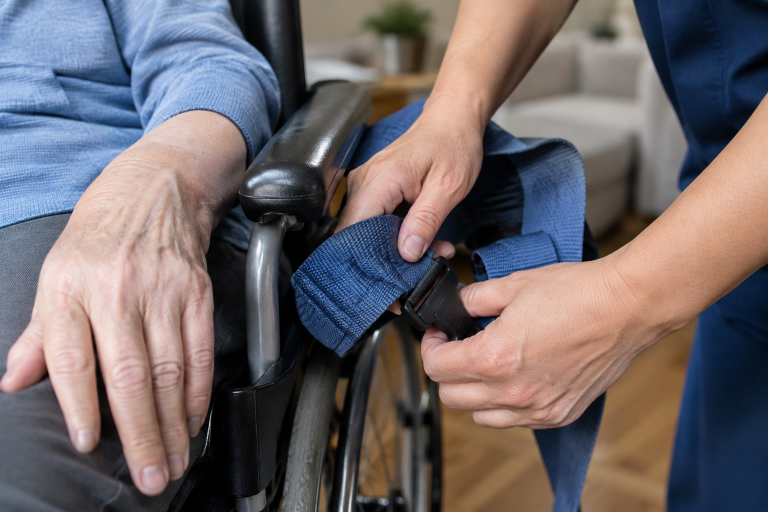
- A lift, hospital bed, or wheelchair does not replace a trained caregiver or family member.
- Caregiver presence can be especially valuable during the first days home, nighttime routines, bathing, dressing, and meal preparation.
- Families should confirm local caregiver training and whether transfer assistance is within the agency’s service plan.
Recommended use case: The equipment is in place, but the patient still needs reliable supervision or hands-on daily support.
ATI Physical Therapy
ATI Physical Therapy represents the recovery-and-mobility side of the ecosystem. ATI reports more than 850 locations in 24 states and outcomes from more than 4 million unique patient cases. Equipment supports safer movement now; therapy can help patients work toward strength, balance, range of motion, and functional independence.
Why It’s On The List
- Therapists can assess whether a patient needs full assistance, partial assistance, a walker, a wheelchair, or a progressive mobility plan.
- They can help families practice safer transfers and identify when equipment no longer matches the patient’s ability.
- Therapy goals help distinguish a full-body lift need from a clinician-approved sit-to-stand progression.
Recommended use case: A patient recovering from orthopedic surgery, neurological illness, injury, or deconditioning needs both immediate safety and a realistic mobility plan.
Lifeline
Lifeline provides the emergency-response layer for people who may be alone during recovery. Over 50 years, Lifeline reports serving more than 7.5 million people. Its home, mobile, GPS, and smartwatch options connect users with trained care specialists 24 hours a day, 365 days a year.
Why It’s On The List
- A medical alert system can shorten the time between a fall, dizziness episode, or sudden weakness and a request for help.
- It complements, but does not replace, caregiver coverage, clinical advice, or fall-prevention steps.
- Families should ask about coverage throughout the home, optional fall detection, battery charging, and the emergency contact plan.
Recommended use case: An older adult may spend time alone after discharge and needs a practical way to call for assistance.
The Home Depot
The Home Depot covers longer-term accessibility projects that rental equipment alone cannot solve. With more than 2,000 U.S. stores and over 400,000 associates, it offers broad access to home-improvement products and professional-service connections, including grab-bar installation referrals.
Why It’s On The List
- Temporary rentals can address an urgent recovery need, while grab bars, ramps, widened doorways, and bathroom changes may support long-term safety.
- Grab bars should be securely installed into appropriate wall support, not substituted with towel bars.
- An occupational therapist or qualified accessibility professional should assess the space before major remodeling begins.
Recommended use case: A family is planning safer access to the bathroom, entryway, bedroom, or main living area after the patient’s longer-term needs become clearer.
A Simple Denver-Area Recovery Checklist
- Confirm what the patient can do independently and whether they can bear weight.
- Measure doorways, halls, bathrooms, and the bed-to-bathroom transfer route.
- Arrange equipment, caregiver coverage, and therapy before discharge whenever possible.
- Remove loose rugs, cords, clutter, and unstable furniture from walking paths.
- Keep medications, water, a charged phone, and emergency contacts within reach.
- Review rental extension, pickup, setup, and sanitation policies.
For medication questions, follow-up appointments, home health planning, and caregiver responsibilities, use a hospital discharge checklist for older adults as a final conversation guide with the care team.
Making The Services Work Together
The strongest home recovery plans are coordinated, not improvised. UCHealth can help define clinical needs. Rocky Mountain Medical Rentals can deliver and demonstrate the equipment that supports safe transfers and mobility. ATI Physical Therapy can guide functional progress. Home Instead can add daily assistance. Lifeline can provide an emergency connection, and The Home Depot can support longer-term accessibility work. Together, these services give Denver-area families a clearer path from hospital discharge to a safer, more manageable home routine.
Discover more from
Subscribe to get the latest posts sent to your email.

Leave a Reply